by lspeed | May 24, 2026 | RESTAURANT BUSINESS: BEHIND THE KITCHEN DOOR
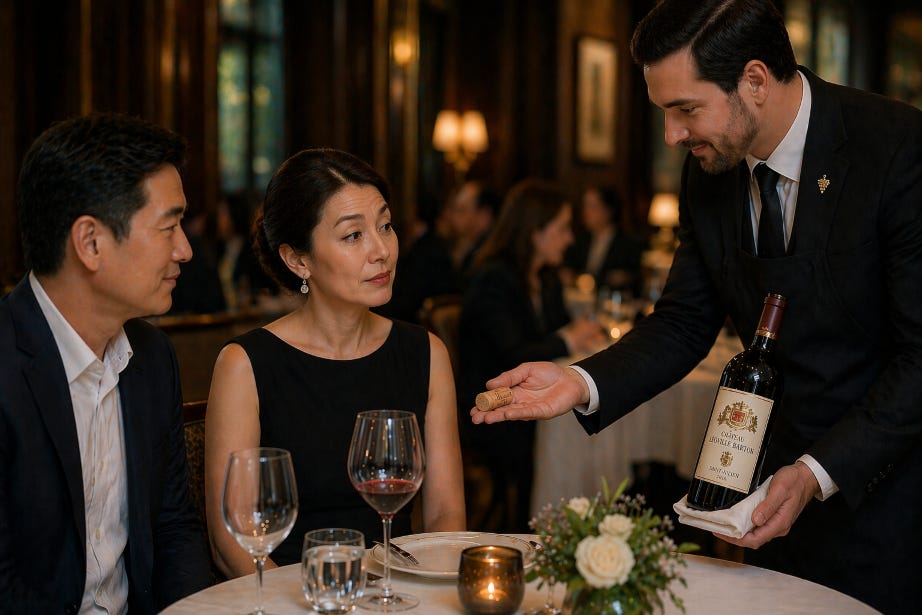
The restaurant guide world is a peculiar mix of tyre salesmen, rebel critics, anonymous inspectors, and nervous chefs overcooking their stress levels. At the centre of it all sit two enduring heavyweights: the Guide Michelin and Gault & Millau, locked in a decades-long disagreement about how best to judge your dinner.
Tyre giant Michelin did not set out to rule gastronomy, but simply wanted to get more cars on the road. Founded in 1900 by brothers André and Édouard Michelin, the Guide Michelin handed motorists maps, hotel listings, and the occasional place to eat, all in the hope that more driving would lead to more worn tyres. Somewhere along the way, diners began paying more attention to the food than the fuel stops. By 1926, stars appeared, and by 1931, the now-mythical one, two, three-star system was born. Today, earning a star can feel less like culinary recognition and more like being knighted, except the sword is replaced by a tasting menu and the ceremony happens without any fair warning.
Then came Gault & Millau in the late 1960s, looking at Michelin’s polished hierarchy and deciding it needed a bit of loosening up. Founded by Henri Gault and Christian Millau, two critics with a taste for disruption, it championed nouvelle cuisine, lighter sauces, shorter cooking times, and chefs who were encouraged to think rather than simply repeat. Where Michelin felt like a well-tailored suit, Gault & Millau arrived in something slightly more relaxed, collar open, ready to question the menu.
Their scoring systems mirror their personalities. Michelin is elegantly simple – up to three stars, no half measures, and no explanations beyond a few carefully chosen words. You are either in, or you are explaining to your investors why you are not. Gault & Millau prefers nuance, using a 20-point scale and awarding toques, allowing it to say – in effect – “very good, but perhaps rethink the sauce.” It is less thunderbolt, and more ongoing foodie conversation.
In terms of global clout, Michelin still carries the bigger spoon. Its expansion across Europe, Asia, and the Americas has turned it into a kind of culinary passport system. A star in Tokyo attracts a diner from Paris, a promotion will double bookings overnight, but a demotion can lead to an existential crises. And the occasional chef claiming they never wanted it anyway. Gault & Millau, meanwhile, enjoys a quieter authority. It is the guide chefs read when they want to know what other chefs really think, all in a less headline-grabbing, more kitchen-table discussion style.
Both insist on the same core rituals or anonymous inspectors, multiple visits, and a careful distance from the businesses they judge. Whether that distance always holds in a world of sponsorships, tourism boards, and global expansion is a question politely asked and rarely answered in full. What is clear is that both guides now operate in a dining landscape that has shifted dramatically under their feet. Casual concepts thrive, viral social media reviews travel faster than inspectors, and diners increasingly trust a well-lit photo over a discreet star.
They are no longer alone, either. The World’s 50 Best Restaurants offers a glossy, vote-driven ranking that feels part awards show, part culinary Eurovision. La Liste takes a data-heavy approach, compiling scores from across the globe to produce something resembling a gastronomic spreadsheet. And Zagat, the original voice of the crowd, reminds everyone that diners themselves have opinions, many of them loudly expressed.
In general, guides reveal less about food than about how much humans love to rank things. Michelin delivers verdicts, Gault & Millau offers commentary, and the rest provide noise, data, or spectacle. In the end though, nothing will ever replace the ultimate culinary verdict.
That of the guest.
Image Credit: https://www.churrascophuket.com (AI Generated)
_ _ _
© CHURRASCO PHUKET STEAKHOUSE / ALL RIGHTS RESERVED
Reprinting, reposting & sharing allowed, in exchange for a backlink and credits
Churrasco Phuket Steakhouse serves affordable Wagyu and Black Angus steaks and burgers. We are open daily from 12noon to 11pm at Jungceylon Shopping Center in Patong / Phuket.
We are family-friendly and offer free parking and Wi-Fi for guests. See our menus, reserve your table, find our location, and check all guest reviews here:
https://ChurrascoPhuket.com/
#Churrascophuket #jungceylon #phuketsteakhouse #affordablewagyu #wagyu
by lspeed | May 17, 2026 | WINES: UNCORKING THE MYSTERY
We are a family-friendly, casual steakhouse, located in one of the world’s busiest tourist destinations. Our guests are holidaymakers from over 100 nationalities, looking for an affordable Wagyu steak and a bill that doesn’t require a second mortgage. We cater to exactly that guest profile, as we have since opening in January 2012. One thing we have always insisted on, however, is offering five-star service standards, including a professional tableside wine service.
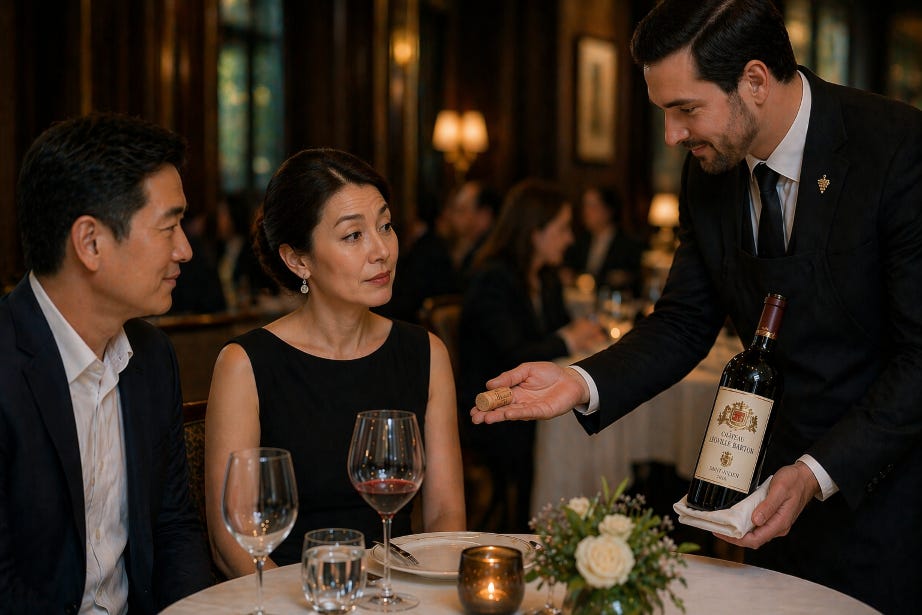
This ritual did not begin as pretence or pomp, but as a safeguard. In earlier centuries, wine travelled long distances and changed hands often. It was not always handled with the best care, so the ritual served a serious purpose. The host would taste first to ensure the wine was sound and, in more paranoid settings, not poisoned. The label was presented to confirm the right bottle, avoiding awkward disputes later. The cork was inspected because it actually told you something useful about quality.
Somewhere along the way, the danger faded, but the ritual stayed. Like many things in hospitality, it picked up a layer of polish, then another, until it became a quiet performance that most guests recognise instantly. The bottle arrives with a sense of occasion. The label is shown, the cork is drawn with care, and a small pour is offered for approval. A swirl and sniff follow, then a thoughtful pause that suggests something meaningful is being processed. Whether that is the case is another question, but it is part of the charm.
For all its theatrical edges, the ritual does something useful. It slows the pace of the table, gives people a shared moment, and signals that the evening has properly begun. It creates a pocket of attention where everyone briefly focuses on the same thing, even if half the table is quietly hoping no one asks them to describe what they taste.
The role for restaurants like ours is not to abandon this ritual, but to handle it with a sense of proportion. When taken too seriously, it can feel like an unannounced exam, complete with invisible marking criteria. When handled lightly, it becomes an enjoyable pause, something that adds texture without demanding too much in return. A busy table of friends, deep in conversation, will not welcome a slow, reverent presentation. In that setting, a confident suggestion and a relaxed pour tend to fit the mood far better.
On the other hand, a quieter table marking a special occasion may welcome a bit more ceremony, as long as it feels natural rather than rehearsed. This is also where wine service occasionally trips over its own language. Descriptions like “hints of forest floor” or “a whisper of leather” can feel like inside jokes delivered without context. There is also the quiet reality that many guests participate in the ritual with a degree of polite improvisation. The nod of approval after the first sip is sometimes less about assessment and more about keeping things moving. No one wants to be the person who sends a perfectly good bottle back on the grounds that it tastes like wine.
Then there is the latest layer to all this: non-alcoholic wines. Their presence raises questions about the ritual itself. Wine service was never really about the alcohol, but about attention, inclusion, and a shared sense of occasion. Applying a lighter version of the same ritual to a non-alcoholic bottle quietly reinforces that everyone at the table is part of the same experience.
Which is at the heart of it all. Wine service works when it remembers where it came from and recognises what it has become, a practical check sitting somewhere between tradition and gentle performance. Glasses are raised, the moment unfolds, and, more often than not, it is remembered for exactly the right reasons.
And if someone at the table takes a thoughtful sniff before declaring the wine “very interesting”, it is probably best to smile and let that moment breathe too.
Image Credit: https://www.churrascophuket.com (AI Generated)
_ _ _
© CHURRASCO PHUKET STEAKHOUSE / ALL RIGHTS RESERVED
Reprinting, reposting & sharing allowed, in exchange for a backlink and credits
Churrasco Phuket Steakhouse serves affordable Wagyu and Black Angus steaks and burgers. We are open daily from 12noon to 11pm at Jungceylon Shopping Center in Patong / Phuket.
We are family-friendly and offer free parking and Wi-Fi for guests. See our menus, reserve your table, find our location, and check all guest reviews here:
https://ChurrascoPhuket.com/
#Churrascophuket #jungceylon #phuketsteakhouse #affordablewagyu #wagyu
by lspeed | May 10, 2026 | KNOWLEDGE: MEAT ESSENTIALS
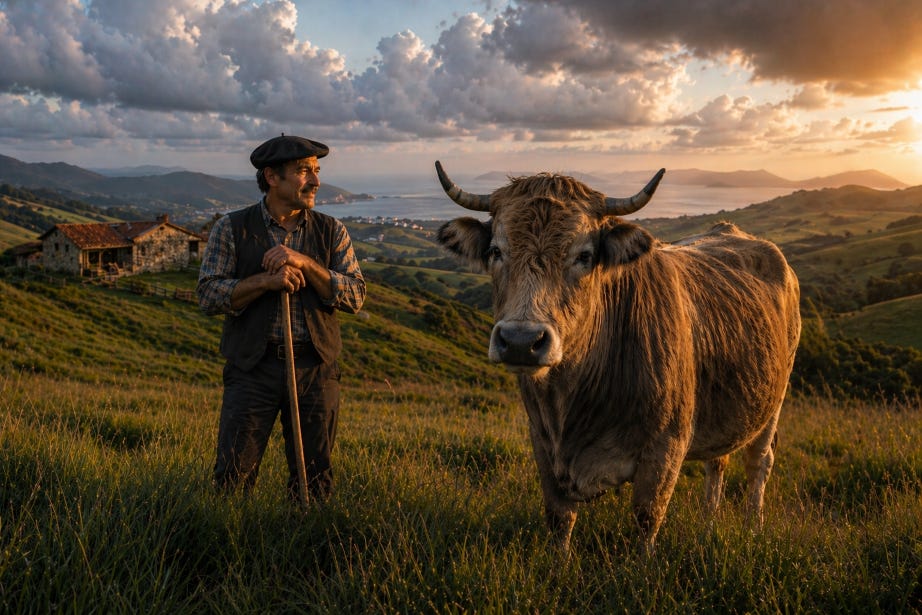
We don’t use it, and it has not exactly been lobbying for a place on menus around the world – ours included. But the term Vaca Vieja has a habit of sticking in the mind once encountered. It sounds like something disgruntled diners may mutter under their breath, yet in certain beef-obsessed circles it carries respect.
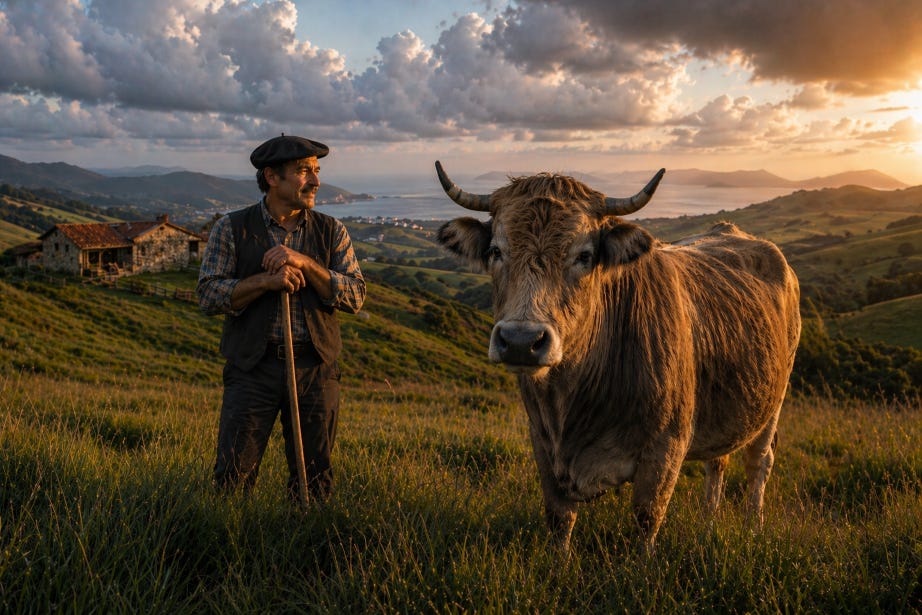
As it turns out, “old cow” is not an insult but a sign that things may get interesting. The story begins in northern Spain’s Galicia and Asturias regions, where cattle historically had long and productive lives before anyone considered turning them into dinner. These were working animals first and foremost which pulled, produced, and contributed. The idea that they should be eaten young and efficiently was seen as downright idiotic. Slaughter was not the starting point, but the epilogue.
Which brings us to the defining feature – Vaca Vieja refers to cows that have taken their time, often five to ten years, while most modern beef barely ever makes it past its second birthday. The result is not subtle, but shows up as meat that is darker, with much firmer texture, and flavour that arrives with a distinct point of view. There are nutty notes, mineral edges, and the suggestion that the animal has seen life and is not shy about it.
For a long time, this was not at all a premium pitch. Older animals were, quite sensibly, directed towards stews and slow cooking where patience would do the heavy lifting. Then, somewhere between curiosity and stubbornness, a handful of chefs and butchers looked at the situation and decided that perhaps the problem was not the meat, but the expectations placed upon it. Instead of trying to make the meat behave younger, they leaned into what it already was.
Restaurants such as Casa Julián de Tolosa and Asador Etxebarri began treating Vaca Vieja with care rather than caution. Proper ageing, careful butchery, and a confident hand with fire transformed it from an afterthought into something that commands attention. There is also a broader cultural thread running through all of this. Spanish food traditions tend to favour character over uniformity, and Vaca Vieja fits neatly into that philosophy. It sits comfortably alongside cheeses requiring consideration, cured meats that reward patience, and wines that are not constantly concerned with pleasing everyone at the table.
Today, Spain remains its natural home, but the idea has started to travel. Butchers and chefs in France, Italy, England, and amongst Latino communities in the United States have begun exploring the territory. The aim is not to chase tenderness at all costs, but to see what happens when flavour is given time to develop.
It does remain, by any measure, a niche, because older beef demands skill and a willingness to accept that it may not behave quite as expected. But that, arguably, is part of the appeal. Instead of smoothen things out, Vaca Vieja keeps a few edges intact.
In doing so, it reminds us that not all good things in life need to be easy.
Image Credit: https://www.churrascophuket.com (AI Generated)
_ _ _
© CHURRASCO PHUKET STEAKHOUSE / ALL RIGHTS RESERVED
Reprinting, reposting & sharing allowed, in exchange for a backlink and credits
Churrasco Phuket Steakhouse serves affordable Wagyu and Black Angus steaks and burgers. We are open daily from 12noon to 11pm at Jungceylon Shopping Center in Patong / Phuket.
We are family-friendly and offer free parking and Wi-Fi for guests. See our menus, reserve your table, find our location, and check all guest reviews here:
https://ChurrascoPhuket.com/
#Churrascophuket #jungceylon #phuketsteakhouse #affordablewagyu #wagyu
by lspeed | May 3, 2026 | RESTAURANT BUSINESS: BEHIND THE KITCHEN DOOR
“Enjoy your job” sounds like the sort of advice best ignored when spotted on a laminated poster, or when muttered by an unpopular boss. Yet in restaurants, it is crucial rather than philosophical or optional. There still is that faint belief in our world that seriousness equals quality, as though a slightly grim expression is the secret ingredient behind a perfect Wagyu steak. I still encounter dining rooms that run like well oiled machines yet feel faintly joyless, and kitchens where intensity is worn like a badge of honour rather than a warning sign.
It is an odd posture for an industry whose entire purpose is to give people a good time. Barry Sternlicht of Starwood Capital and W Hotels fame offers a useful test – if you do not like people, choose another profession. Restaurant work quickly sharpens that further, so if you do not like noise, enjoy pace, repetition, and improvisation – plus the peculiar satisfaction of rescuing a service that is coming off the rails – you are in the wrong line of work.
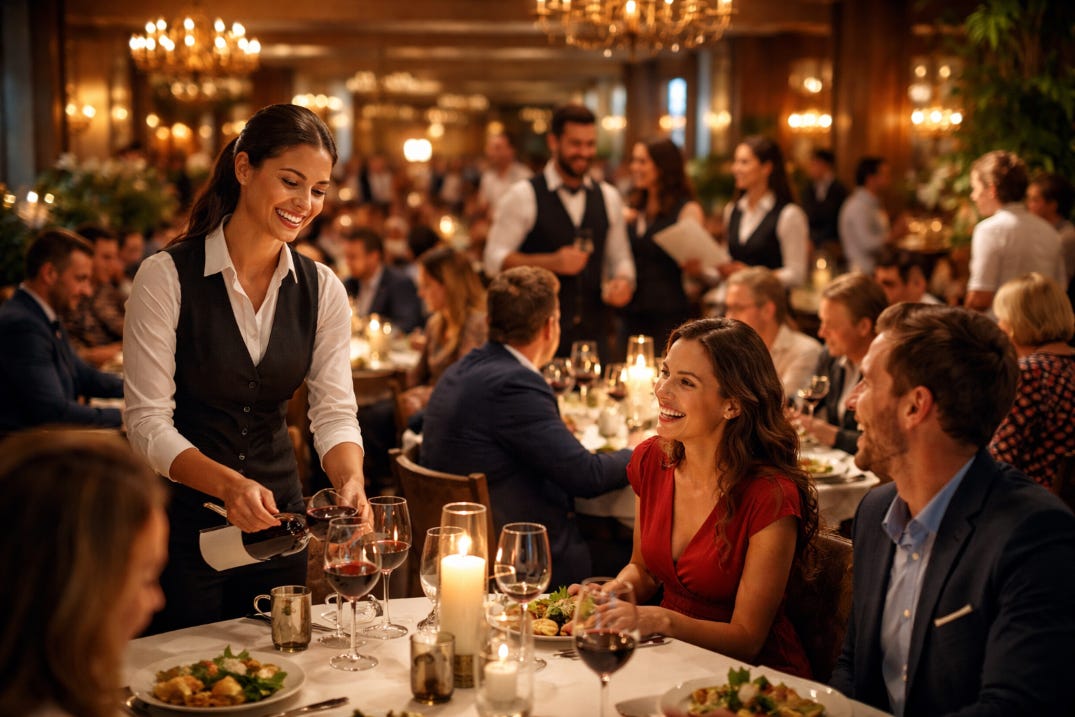
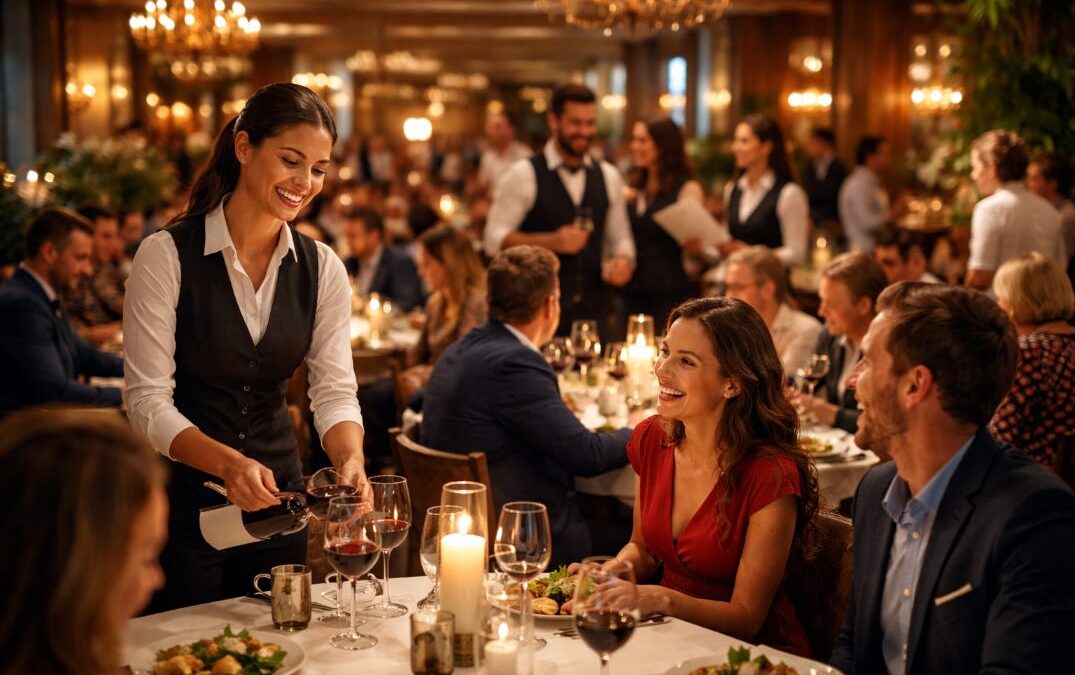
Ours is not a business for the detached, but for the observant, the ones who notice that a table is celebrating something before a word is said, or that the background music is cool until it suddenly is not. A team taking pleasure in the craft moves with a different energy, and not like a checklist being executed. The kitchen flows instead of flails, the floor reads the room rather than recites a script, and the whole place acquires that elusive quality that guests describe – unhelpfully but accurately – as “a good vibe.”
Strip that away and what remains is competence without memory. Orders are taken, plates arrive, bills are settled, and nothing quite lands. Guests rarely recall efficiency unless it fails them, but they do remember the waiter who nudged them toward the right dish, the bartender who improvised, or the small, unnecessary flourish that made the evening feel considered. Our experience has been that restaurants are best remembered for small gestures and those little unexpected extra touches.
Leadership, in this context, has to be less about tightening screws and more about setting the tone. The best operators read a room as closely as they read a report, knowing when to intervene, when to step back, and when to allow a moment of humanity to unfold. Culture is not what is written down, but what happens when the restaurant is full, the tickets are stacking, and someone still finds the time to get the small things right.
Successful restaurants like ours trade in these details, because the product is not just what is on the plate but how it is experienced and remembered. The conclusion, if one insists on having one, is disarmingly simple. Enjoyment in restaurants is not decorative, and it is certainly not optional. It is the mechanism by which places acquire character, teams find reasons to stay, and guests decide to come back without needing to be reminded.
And that is makes makes up great hospitality.
Image Credit: https://www.churrascophuket.com (AI Generated)
_ _ _
© CHURRASCO PHUKET STEAKHOUSE / ALL RIGHTS RESERVED
Reprinting, reposting & sharing allowed, in exchange for a backlink and credits
Churrasco Phuket Steakhouse serves affordable Wagyu and Black Angus steaks and burgers. We are open daily from 12noon to 11pm at Jungceylon Shopping Center in Patong / Phuket.
We are family-friendly and offer free parking and Wi-Fi for guests. See our menus, reserve your table, find our location, and check all guest reviews here:
https://ChurrascoPhuket.com/
#Churrascophuket #jungceylon #phuketsteakhouse #affordablewagyu #wagyu

by lspeed | Apr 26, 2026 | LIQUORS: LIFT YOUR SPIRITS
Some drinks arrive quietly, but the Martini enters the room like Bond adjusting his cufflinks, aware of the attention while scanning for targets – females included. Few cocktails have been so mythologised, and fewer still owe their personality to one fictional man in a tuxedo and very firm opinions about dilution.
The famous line, “shaken, not stirred,” did not begin as generally understood and remembered. In the novels by Ian Fleming, Bond is less doctrinaire, occasionally favouring the quieter, more traditional stir. The films, however, sharpened the line into something crisp and iconic. It is less a technical instruction than a personality statement, because Bond does not sip a Martini, he stakes his claim.
Behind the theatrics lies a serious choice – shaken or stirred. Shaking is more dramatic, all show, clatter and urgency, while introducing air and ice shards into the mix. The result is colder, slightly more diluted, and just a touch cloudy. Vodka Martinis tend to thrive here, because subtlety is not the main event. Stirring, by contrast, is the quiet professional – a slow rotation, a controlled chill, an a glass as clear as intent. Gin, with its botanicals and quiet complexities, generally prefers this calmer handling.
If the method is Bond’s opening move, dryness is where things get specific. A Dry Martini does not refer to taste so much as restraint by using less vermouth and more spirit. An Extra Dry Martini borders on philosophical minimalism, with vermouth reduced to a negligible side show. One imagines this as the drink of a familiar Bond villain – austere, precise, and quietly menacing. The kind who owns too many identical suits, loves weird pets and trusts no one.
Then comes the Dirty Martini, which feels like a sudden plot twist. A splash of olive brine shifts the entire scene, adding salt, savoury depth, and a sense that rules are being severely bent. This is not Bond at the baccarat table, but in a dingy backroom deciding how to make his next move “look like an accident”. If the dry Martini is the villain with a contrived monologue about world domination, the dirty Martini is the one who cuts the small talk and opens fire.
Then we have the variations, because the Martini is remarkably adaptable. The Vesper Martini, famously ordered by Bond in Casino Royale, blends gin, vodka, and Lillet Blanc into something that feels like overachievement nowadays. The Gibson swaps the olive for a cocktail onion, introducing a mischievous bite. Further afield, the family expands into different territory, and with mixed results. The Espresso Martini trades espionage for late night momentum, while the Chocolate Martini abandons all shame and wanders off into non-Bond territory.
The Martini is less a single drink than a bonfire of personalities, with each variation feeling like a casting choice. Bond himself understood best that it is never just a cocktail, but a signal.
Order carefully.
Image Credit: https://www.churrascophuket.com (AI Generated)
_ _ _
© CHURRASCO PHUKET STEAKHOUSE / ALL RIGHTS RESERVED
Reprinting, reposting & sharing allowed, in exchange for a backlink and credits
Churrasco Phuket Steakhouse serves affordable Wagyu and Black Angus steaks and burgers. We are open daily from 12noon to 11pm at Jungceylon Shopping Center in Patong / Phuket.
We are family-friendly and offer free parking and Wi-Fi for guests. See our menus, reserve your table, find our location, and check all guest reviews here:
https://ChurrascoPhuket.com/
#Churrascophuket #jungceylon #phuketsteakhouse #affordablewagyu #wagyu