by lspeed | Jun 28, 2026 | WINES: UNCORKING THE MYSTERY
My first brush with what are known as “New World wines” came during a trip to a convention in Australia in the early 1980s. I was travelling with several fellow wine enthusiasts, and that meant finding local wines became as important as attending the event itself.
Australia wasn’t yet the wine powerhouse we know today, so we approached these “Aussie Grogs” with curiosity and modest expectations. Some bottles were enjoyable, others less so. A few had a distinctly soapy character that made us wonder whether the winery had accidentally dropped in a splash of dishwashing liquid.
To be fair, despite our curiosity, we arrived with preconceived ideas. Back then, serious wine meant Europe — and more specifically France, with a side order of Italy. Bordeaux was Bordeaux, Burgundy was Burgundy, Amarone and Barolo were exactly that and nothing else, while the rest of the world was still trying to secure a seat at important tasting tables.
Enter the “Judgment of Paris”, held on 24 May 1976. Intended as a pleasant celebration of the United States Bicentennial, it became one of the biggest wine world shocks ever since somebody decided grapes were better fermented than eaten. Organised in Paris by British wine merchant Steven Spurrier and his American colleague Patricia Gallagher, the event brought together a panel of respected French wine experts for a blind tasting of top French wines against challengers from California.
Few expected much drama. France and Italy were widely regarded as the undisputed homes of the world’s finest wines. Even Spurrier himself, who made his living selling French wines, assumed the French entries would prevail comfortably. They did not. When the scores were revealed, Napa Valley wines had beaten notable French wines in both the Chardonnay and Cabernet Sauvignon categories. In addition to raising the collective French eyebrow, the result also landed in the wine trade like a champagne cork fired in a library.
But what it really did was open the door for New World wine regions around the globe. The decades that followed saw an explosion of confidence throughout the New World. Investment increased, oenological knowledge spread, and viticultural practices improved. Regions once viewed as curious outsiders began producing wines capable of standing alongside the world’s best. California rapidly capitalised on its success in Paris. Australia, meanwhile, went from the country that had served me those questionable glasses in the early 1980s to one producing internationally acclaimed Shiraz, Cabernet Sauvignon and Chardonnay.
New Zealand transformed Sauvignon Blanc into a global phenomenon, spreading its fame far beyond the iconic French labels of Sancerre and Pouilly-Fumé. Argentina found international recognition through Malbec, one of my personal favourites, while Chile and South Africa steadily earned their places on some of the world’s better wine lists. Even established Old World producers such as Spain, and particularly Portugal, benefited from the broader horizons of wine lovers, sommeliers and F&B professionals.
What I particularly like about the Judgement of Paris is that it wasn’t a victory of California over France, but a welcome triumph for wine lovers everywhere. France remains one of the world’s greatest wine-producing nations, but the event helped transform wine from an exclusive European club into a genuinely international conversation. It encouraged people to judge what was in the glass rather than where the label was printed.
And that can only be considered a very good thing indeed.
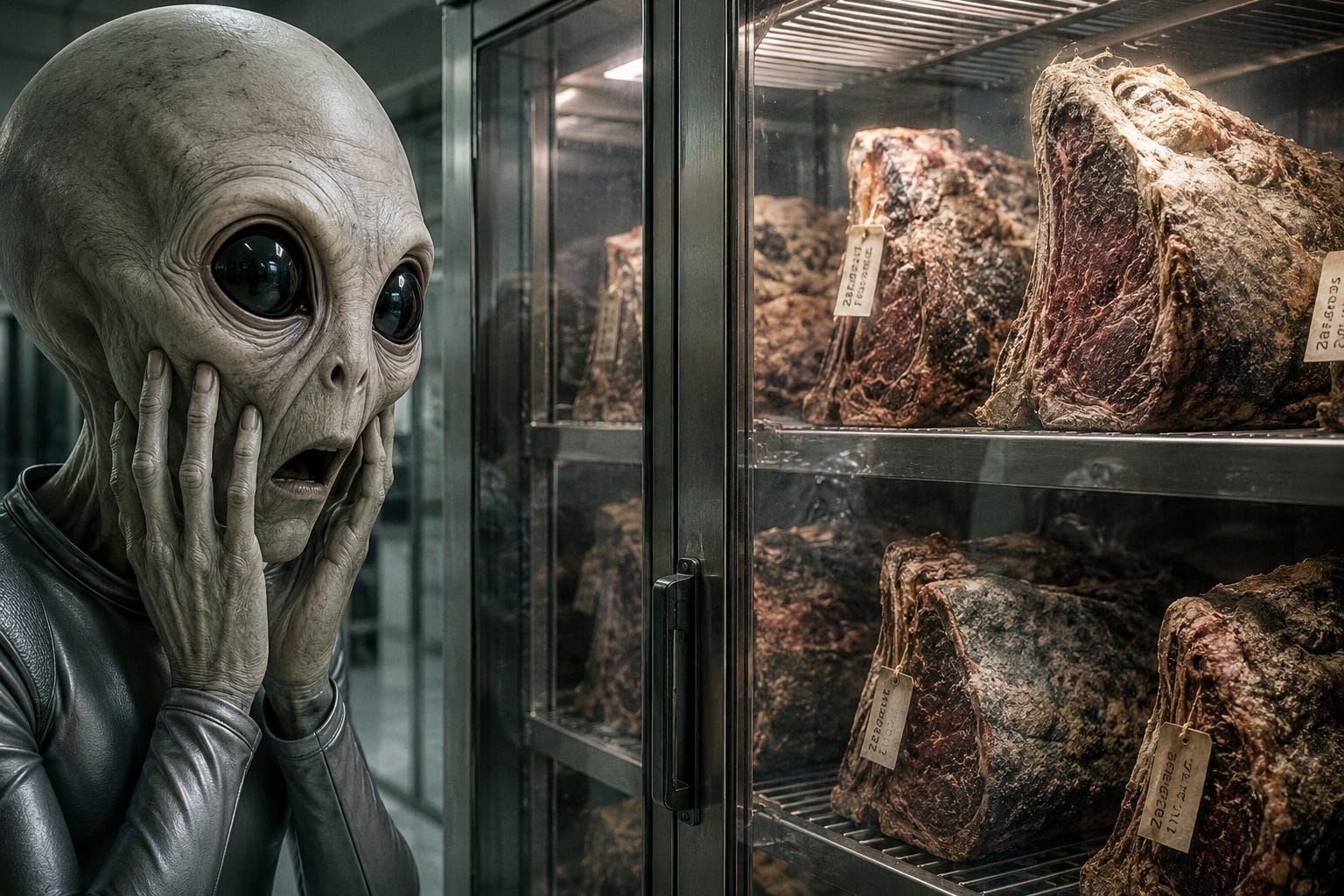
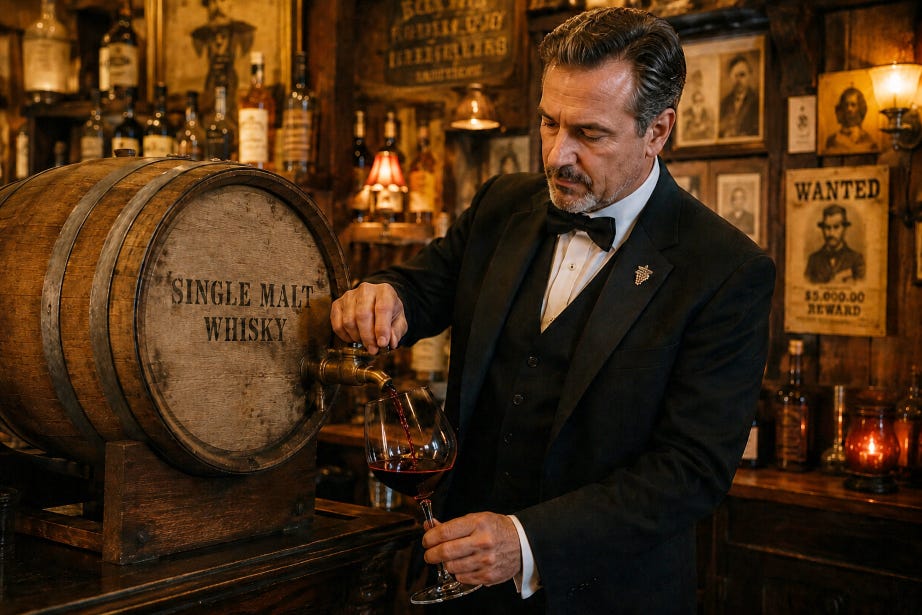
Image Credit: https://www.churrascophuket.com (AI Generated)
_ _ _
© CHURRASCO PHUKET STEAKHOUSE / ALL RIGHTS RESERVED
Reprinting, reposting & sharing allowed, in exchange for a backlink and credits
Churrasco Phuket Steakhouse serves affordable Wagyu and Black Angus steaks and burgers. We are open daily from 12noon to 11pm at Jungceylon Shopping Center in Patong / Phuket.
We are family-friendly and offer free parking and Wi-Fi for guests. See our menus, reserve your table, find our location, and check all guest reviews here:
https://ChurrascoPhuket.com/
#Churrascophuket #jungceylon #phuketsteakhouse #affordablewagyu #wagyu
by lspeed | Jun 21, 2026 | KNOWLEDGE: MEAT ESSENTIALS
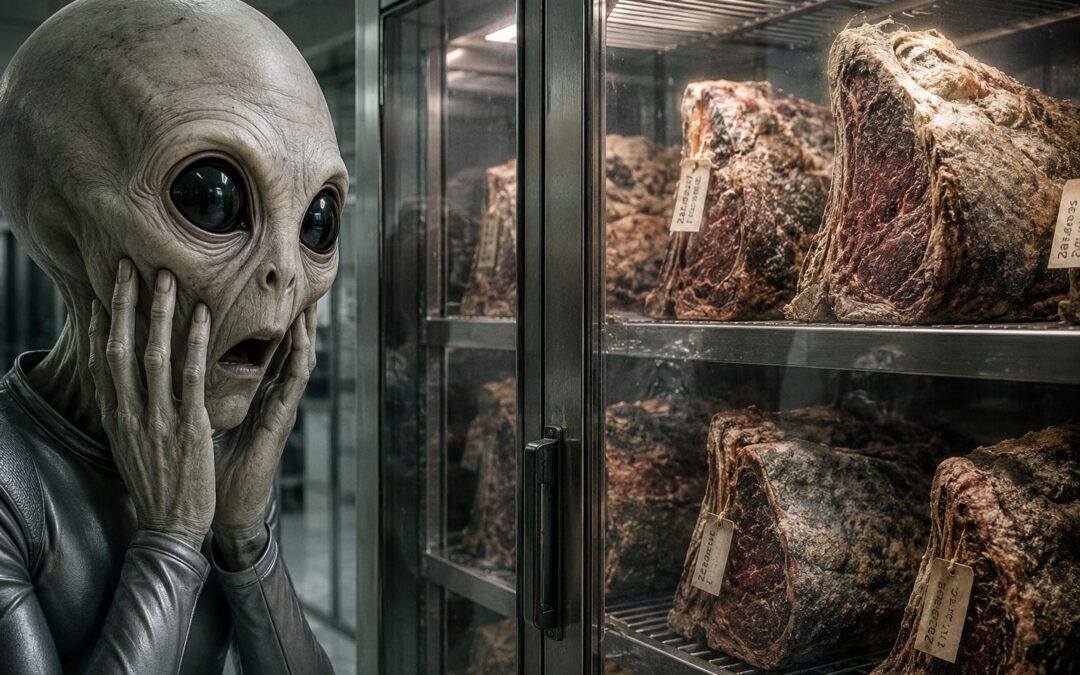
Imagine an alien landing on earth, and discovering a dry-aging chamber full of large mould-covered hunks of beef. Chances are that it would immediately turn around its space ship, hurry on back home, and report that earth’s inhabitants are a lost civilisation. Understandably so too, because to the uninitiated, dry-aged beef looks very very wrong.
Cuts of meat hang for weeks inside glass-fronted cabinets, surfaces darkened and hardened, with green and grey patches all over it. In any other context, these would be clear warning signals that something has gone horribly wrong. But in the hardcore carnivore world, aficionados celebrate this as evidence that something has gone gloriously right.
Welcome to the curious world of dry aging, a practice that is far older than most people realise. Long before vacuum sealers, refrigeration systems – or marketing departments – discovered the phrase “premium dining experience”, butchers observed that beef sometimes improved when stored under the right conditions and for extended periods. From there, the technique moved on from something headed for the trash can to becoming a “thing”.
Advocates of dry-aged beef speak about the results with enthusiasm. The flavour becomes deeper and more intense. Depending on the cut and aging period, converts describe notes of roasted nuts, butter, mushrooms, blue cheese, or even truffle. Whether those flavours sound irresistible or alarming depends largely on your personal taste, and this is where reality catches up with hype.
There is no doubt that dry aging changes beef. The process creates flavours that fresh beef does not possess. The real question is whether those differences justify the significant cost premiums of dry-aged steaks, or the potential health risks taken when eating them in the wrong place. Some diners become lifelong converts who swear by it. Others simply swear at the price, wondering why they are paying more for something that tastes funkier than the left-over steak they found in their fridge last week.
Whatever the philosophy or preference, dry aging is one of the least forgiving processes in the meat handling industry. It involves preparing and storing large cuts of beef in carefully calibrated environments for several weeks, and occasionally months. Temperature, humidity, and air circulation must be kept very precise, requiring specially trained and well supervised kitchen teams. During this controlled rotting period, naturally occurring enzymes break down muscle fibres, meant to increase tenderness, while at the same time concentrating flavour as moisture slowly evaporated. If any of these variables drift too far, spoilage and food bourne illness become real and very expensive outcomes.
The expense is further increased by simple mathematics. As beef loses moisture, it loses weight, and a dry-aged cut can lose up to 30 percent of its original mass – before it ever reaches a grill. The hardened outer layer must also be trimmed away and discarded. Less saleable meat means noticeable higher menu prices, which explains why the vast majority of the world’s beef is wet aged instead. Vacuum-sealed beef tenderises in its own juices while maintaining weight, consistency, and yield. It may show a bit less of the distinctive flavours associated with dry aging, but it remains not only recognisable, but highly effective and considerably more economical.
This is the reason why ever since our opening in January 2012, we at Churrasco Phuket have focused on always sourcing top-quality imported beef that arrives deep chilled, never frozen. From there, we wet age it further in-house, before char-grilling it to order. Convincing people to instead pay more for beef that has been dry aged may well be one of gastronomy’s latest marketing achievements.
But for a busy steakhouse like ours with guests from over 100 nationalities, priorities are consistency, reliability, and offering our guests the best possible value for money. Our stellar success has proven us right.
Image Credit: https://www.churrascophuket.com (AI Generated)
_ _ _
© CHURRASCO PHUKET STEAKHOUSE / ALL RIGHTS RESERVED
Reprinting, reposting & sharing allowed, in exchange for a backlink and credits
Churrasco Phuket Steakhouse serves affordable Wagyu and Black Angus steaks and burgers. We are open daily from 12noon to 11pm at Jungceylon Shopping Center in Patong / Phuket.
We are family-friendly and offer free parking and Wi-Fi for guests. See our menus, reserve your table, find our location, and check all guest reviews here:
https://ChurrascoPhuket.com/
#Churrascophuket #jungceylon #phuketsteakhouse #affordablewagyu #wagyu
by lspeed | Jun 14, 2026 | WINES: UNCORKING THE MYSTERY
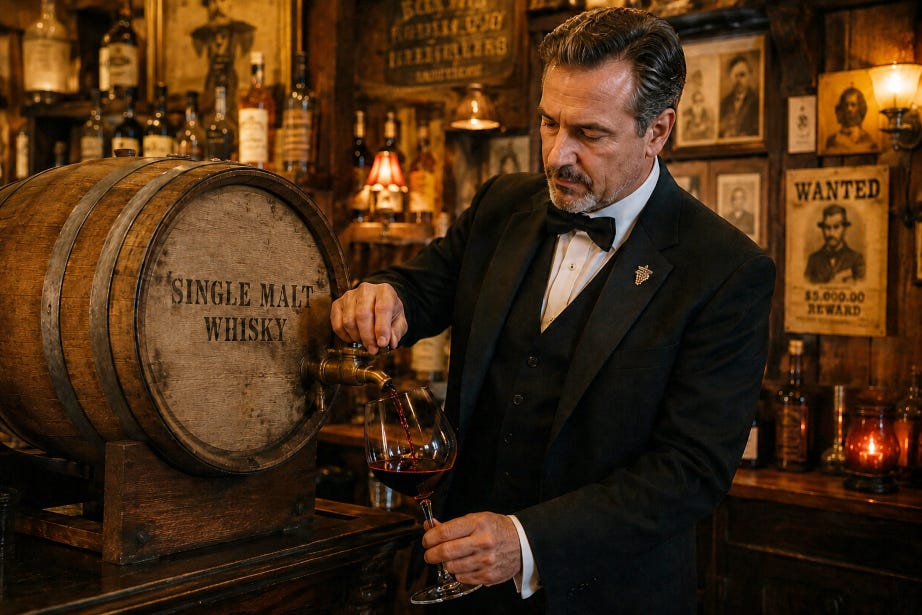
A few weeks ago, a friend met me for dinner at our steakhouse Churrasco Phuket, carrying a bottle of red wine that looked like it was ‘liberated’ from behind the counter of a dingy frontier saloon. The label read Three Finger Jack Rum Barrel Aged Red Blend, inspired by a legendary outlaw of the same name. He supposedly was some rogue character wandering through California’s foothills during the Gold Rush era in pursuit of riches and trouble in equal measure. The bottle looked dark, dramatic and somewhere reminiscent of a container for barbecue sauce.
As its label stated, this wine was partially aged in former rum barrels. To me as a traditionalist old school wine loving boomer, the whole concept of having wines aged in spirit barrels sounds like one of those ideas developed during a late night marketing meeting. One of those that involved too much bourbon or other suspect substances, and not enough restraint.
But curiosity tends to win at steak dinners, so we opened it. The wine itself turned out to be drinkable, built around Merlot, Syrah, and a touch of Petite Sirah, which delivered fruit, spice and a distinct but mild sweetness from the rum barrel ageing. There were other hints of something slightly molasses-like, ending in a rich, warm and unapologetically modern finish.
Not particularly subtle or elegant, but undeniably interesting and different.
And that seems to be the entire point of spirit barrel aged wine. Traditional wine regions spent generations, centuries even, refining strict rules around barrels and ageing and an endless list of other things. Bordeaux did not dedicate 200 years to perfecting Cabernet merely so somebody in California could finish Merlot inside an ex rum cask and sell it with outlaw branding. Scotch tasted like scotch, rum lived in the Caribbean, and bourbon dwelled in Kentucky. End of story.
That is, until someone somewhere decided to roll red wine into used spirit barrels and discovered that consumers rather liked the strange hybrid that emerged. The category exploded particularly in the United States during the 2010s, where experimentation in wine tends to be viewed not as heresy but as healthy entrepreneurship.
One of the better known examples is Robert Mondavi Private Selection Rum Barrel Aged Merlot, which combines plush California fruit with dark rum barrel influence. It became one of the first widely distributed wines of this category, proving that spirit barrel ageing was not just a passing fad. Then came Bota Box Rum Barrel Red Blend, which demonstrated that the category had moved into the mainstream. Once boxed wine joined the movement, it was safe to say the experiment had officially and successfully escaped the laboratory.
Bourbon barrel ageing soon entered the scene, and became even more popular than rum finishes. Apothic released Inferno, aged in whiskey barrels for 60 days. Josh Cellars launched Bourbon Barrel Cabernet. 19 Crimes embraced the style enthusiastically with its California red blends and celebrity collaborations. Cooper & Thief practically built an entire business model around spirit finished wines, experimenting with bourbon, rye whiskey, and brandy.
Some producers went even further. There are now tequila barrel aged Sauvignon Blancs, rye barrel Zinfandels, Scotch finished Pinot Noirs, and port wine cask Cabernet blends floating around the market. Some work surprisingly well, but many taste like a cocktail searching for the meaning of its existence.
Not surprisingly, traditional sommeliers are and will remain deeply skeptical. Their criticism is not unfair or snob-based, because spirit barrel ageing can overwhelm varietal character and mask terroir expression under layers of sweetness, smoke and oak. Clearly, a delicate Pinot Noir will not emerge from a bourbon barrel with much of its dignity intact.
But these boozy wines are not trying to compete with first growth Bordeaux or fine Burgundy. They occupy a completely different cultural lane, being designed for curiosity, accessibility and flavour impact rather than quiet refinement. Commercially, the strategy has been effective because it attracts drinkers who may not normally buy wine at all. Bourbon lovers understand bourbon barrels, and rum drinkers understand finely differentiated sweetness.
The flavour profile becomes immediately approachable without requiring encyclopedic wine knowledge or the skillful faking of it. It also reflects a wider shift in modern drinking culture. Younger consumers happily move between wine, cocktails, craft beer and whisky, without much concern for traditional boundaries. The old tribal loyalties between beverage categories are falling, and that is why these weird new wines will continue to grow.
As for that bottle of Three Finger Jack at our steak dinner, I am certainly not converted, remaining loyal to classic full-on reds with long pedigrees and deeply serious labels. But I will admit that this particular outlaw bottle disappeared rather quickly that night.
Image Credit: https://www.churrascophuket.com (AI Generated)
_ _ _
© CHURRASCO PHUKET STEAKHOUSE / ALL RIGHTS RESERVED
Reprinting, reposting & sharing allowed, in exchange for a backlink and credits
Churrasco Phuket Steakhouse serves affordable Wagyu and Black Angus steaks and burgers. We are open daily from 12noon to 11pm at Jungceylon Shopping Center in Patong / Phuket.
We are family-friendly and offer free parking and Wi-Fi for guests. See our menus, reserve your table, find our location, and check all guest reviews here:
https://ChurrascoPhuket.com/
#Churrascophuket #jungceylon #phuketsteakhouse #affordablewagyu #wagyu

by lspeed | Jun 7, 2026 | RESTAURANT BUSINESS: BEHIND THE KITCHEN DOOR
Full service restaurants occupy a delicate corner of our life. People do not arrive to just consume calories, but to celebrate, flirt, negotiate, reconnect, decompress, apologise, show off, and occasionally propose marriage. The menu itself is part of that ritual. A proper menu has weight, texture, and exudes confidence. It arrives physically at the table like an invitation to slow down for two hours.
But then, Covid showed up and restaurants began asking diners to perform IT support duties before dinner. Laminated menus suddenly looked like biological weapons, printing budgets were collapsing, and everyone was searching for ways to reduce physical contact and staff numbers. Restaurants adapted quickly, and fair enough.
But when the pandemic fizzled out, the emergency solution stayed. Seemingly everywhere, supposedly atmospheric restaurant are making guests sit down, with candles flickering gently, Latin jazz humming in the background, and date seated opposite. Only to discover that the first shared activity of the evening is staring silently at individual mobile phones while waiting for a PDF or website to load over a dodgy WiFi.
Defenders of the QR code system speak about efficiency and flexibility. They mention instant menu updates, lower printing costs, easier translations, dynamic pricing, and integrated up-selling. All true, as even airlines are optimising procedures. But that does not mean anyone wants a steakhouse to feel like checking in at Gate C17.
There is also the matter of what phones on a dining table actually do to human beings. The moment they appear, dinner changes character entirely. One notification becomes six. Somebody checks Instagram “for one second.” A quick reply to a work message turns into an accidental detour through emails, football scores, geopolitical collapse, and three videos involving cats wearing sunglasses and bow ties.
At Churrasco Phuket Steakhouse, we have always noticed and addressed this divide. When our guests sit down, they not only immediately get a chilled watermelon juice welcome drink, and a cold lemon grass scented towel. We then present them with our full and traditionally leather-bound menu, with a side option to use a QR code if they really prefer a digital version. Roughly 99% of our guests though never start scanning, and well over 90% confess to actively dislike QR-only systems when asked. Not mildly dislike, but properly dislike like the kind usually reserved for delayed luggage or warm Chardonnay.
Many younger guests dislike them just as much. Plenty of digitally savvy guests are getting exhausted by the idea that every human interaction now requires scanning, downloading, logging in, verifying, subscribing, or accepting cookies. Sometimes, people simply want to order a Rib Eye without entering a technological ecosystem. And being able to order a real cookie from a real person.
Having said that, some QR menus are useful for translations, dietary information, live cocktail updates, and quick browsing. They work brilliantly in fast food environments where speed matters more than ceremony. Nobody expects a leather bound menu at a beach taco shack or bubble tea counter.
But in a full service restaurant, especially one aspiring to warmth, theatre, and hospitality, removing the physical menu strips away something subtle but utterly important. The experience begins feeling transactional, functional – and ultimately disposable.
Technology in restaurants works best when it stays quietly in the background. Guests appreciate online reservations, efficient payment systems, and digital convenience – right up until the moment the technology itself becomes the main character.
And to restaurateurs like us, this is the entire problem with QR menus. Nobody coming to us is hoping for an improved interface. They want a memorable evening.
Image Credit: https://www.churrascophuket.com (AI Generated)
_ _ _
© CHURRASCO PHUKET STEAKHOUSE / ALL RIGHTS RESERVED
Reprinting, reposting & sharing allowed, in exchange for a backlink and credits
Churrasco Phuket Steakhouse serves affordable Wagyu and Black Angus steaks and burgers. We are open daily from 12noon to 11pm at Jungceylon Shopping Center in Patong / Phuket.
We are family-friendly and offer free parking and Wi-Fi for guests. See our menus, reserve your table, find our location, and check all guest reviews here:
https://ChurrascoPhuket.com/
#Churrascophuket #jungceylon #phuketsteakhouse #affordablewagyu #wagyu

by lspeed | May 31, 2026 | KNOWLEDGE: MEAT ESSENTIALS
The word Churrasco sounds like it should come with a drum roll. Or at least a man in a wide hat, carrying a sword-length skewer of sizzling beef. In reality, it comes from something far more practical – fire, meat, and a group of hungry cattle herders with time on their hands. The term has pre-Latin roots and is closely related to Iberian terms for scorching or burning, such as the Salamanca dialect Churrusco (”piece of burnt toast”) or Spanish Socarrar (”to scorch”). In colloquial use, it simply means barbecue for grown ups.
The overall Churrasco culinary tradition though traces its roots to the Gauchos of southern Brazil, Argentina, and Uruguay. These are the cowboys of the Pampas, the wide open herding spaces of the southern part of the American continent. Their job demands long days riding, herding, and occasionally deciding that lunch should involve a serious cut of beef, roasted over open flames. No complicated marinades, no delicate plating, just salt, smoke, and patience. The result is meat that tastes unapologetically like itself, which is – as culinary philosophies go – refreshingly honest.
From there, Churrasco evolved. In Brazil, it became almost ceremonial. Enter the Rodízio, an endless parade of meats carved table-side, where the only real decision is when to surrender. In Argentina and Uruguay, the spirit remained closer to the Asado grill tradition, meaning slower, more communal, and arguably more philosophical. Fire is not rushed, and neither is conversation.
Travel north, and Churrasco starts to shift shape. In parts of Latin America, it can refer to a specific cut of grilled beef, often thinner, sometimes served with rice, beans, or chimichurri. The word stretches, adapts, and politely refuses to stay boxed into a single definition. It is less a recipe and more a mindset – cook meat over fire, do it well, and do not overcomplicate things.
Which brings us to the interesting bit. What does Churrasco signal in the context of an à la carte steakhouse like ours? It means borrowing the soul, not necessarily the format. The essence of Churrasco is respect for the product and confidence in simplicity. That aligns neatly with a well-run steakhouse like ours that focuses on individual cuts, precise cooking points, and letting each steak perform on its own terms.
At the same time, the Latin influence adds a certain looseness. A sense that dining should feel lively rather than ceremonial. Sauces like chimichurri or tomato salsa step in where classic steakhouse butter might otherwise dominate. Sides lean brighter, and Latin guitar music quietly doing its part. The atmosphere softens, the edges round off, and the whole vibe lands somewhere between precision and ease.
In that sense, Churrasco is less cooking method than culinary philosophy of fire, simplicity, and a bit of swagger. How very cool is that.
Image Credit: https://www.churrascophuket.com (AI Generated)
_ _ _
© CHURRASCO PHUKET STEAKHOUSE / ALL RIGHTS RESERVED
Reprinting, reposting & sharing allowed, in exchange for a backlink and credits
Churrasco Phuket Steakhouse serves affordable Wagyu and Black Angus steaks and burgers. We are open daily from 12noon to 11pm at Jungceylon Shopping Center in Patong / Phuket.
We are family-friendly and offer free parking and Wi-Fi for guests. See our menus, reserve your table, find our location, and check all guest reviews here:
https://ChurrascoPhuket.com/
#Churrascophuket #jungceylon #phuketsteakhouse #affordablewagyu #wagyu