by lspeed | Sep 6, 2026 | WINES: UNCORKING THE MYSTERY
I did a double take too when I heard this news. And no, it’s not about Mead, the stuff that grumpy giants with horned helmets made from fermented honey to fire up their hump fests en route to Valhalla. Another immediate association was that they must be talking about Ice Wine, and understandably so. Cold country, grapes, and harsh winters surely meant that these Swedes simply waited until everything froze over and then called it a great vintage.
But Swedish wine’s new trick is almost the opposite. The country’s emerging stars are mostly serious dry white wines, made from grapes that producers would prefer not to find frozen solid. More alarmingly for the French and Italians, some of these new labels are apparently becoming quite good. For now though, the established wine kings can relax, as there are no Swedish reds in the pipeline. Oenology, grape hybrids, and nature can only be pushed so far.
In essence, the whole thing is a reversal of centuries of Scandinavia’s relationship with wine. For most of it, Vikings sailed south, pillaging as they did, including vineyards, then decided to carry the stuff home to warm up during their brutal winters. This bitter northern cold has gone from being the defining feature of impossible winemaking to something their winemakers have had to learn to work around. The ambition is no longer to make a delicious dessert wine because winter arrived. Instead, it is to make a bottle good enough to beat established European wines before frost gets anywhere near their vineyards.
Swedish commercial wine is remarkably young. The EU approved Sweden and Denmark for commercial production only in 1999. Today Sweden has around 50 commercial wineries, a microscopic number when compared to France, Italy, or Spain. But large enough to establish that this is far more than a boatload of Vikings stomping on grapes in a shed. In the process, Sweden’s southern Skåne region has even acquired the very optimistic nickname of “Nordic Tuscany,” with its rolling fields, ambitious restaurants, and professionally run vineyards. The cypresses and Chianti bottles are missing, but the comparison no longer sounds ridiculous.
That breakthrough came spectacularly in August 2024 at The Swedish Wine Tasting, a nod to the legendary Judgment of Paris (spelling intentional, look it up). Twelve Swedish wines were put up blind against twelve European counterparts before an eighteen-strong international jury. Immelen 2021 from Kullabergs finished first, ahead of Louis Jadot’s Pouilly-Fuissé 2022, and was subsequently served up at a Nobel Prize winners’ banquet. This is about as close as a bottle can get to receiving a medal itself.
The interesting question for oenologists is why Swedish wine works at all. Climate change is a reason, but not the whole story. Southern Sweden is indeed warmer than it once was, extending the possibilities for viticulture. Yet warmer does not mean easier — growing seasons become less predictable, with frost, rain and temperature swings capable of ruining even a hardened Viking’s spirit.
But Sweden does possess one unusual advantage, extraordinarily long summer days. Grapes receive abundant light while temperatures remain relatively cool, allowing them to ripen slowly while retaining acidity. That combination is precisely what many warmer wine regions often struggle to achieve. The grape varieties are different too. Forget Cabernet Sauvignon sunbathing beside a Swedish farmhouse. The star is Solaris, a cold-resistant variety developed in Germany in the 1970s, with Riesling and Pinot Gris among its ancestry. Kullabergs’ Immelen combines Solaris with Souvignier Gris and Muscaris, producing something much more substantial than the thin, aggressively acidic northern wine one might expect.
Even Sweden’s famously restrictive alcohol system has helped. Systembolaget, the state retail monopoly, makes life difficult for small wineries but also forces producers seeking national distribution to demonstrate consistency and quality. In effect, this is a quality control mechanism, which has served the industry well.
Sweden’s wineries are not challenging the big established players. Their opportunity lies in being small, distinctive and improbable. No ice required.
Image Credit: https://www.churrascophuket.com (AI Generated)
_ _ _
© CHURRASCO PHUKET STEAKHOUSE / ALL RIGHTS RESERVED
Reprinting, reposting & sharing allowed, in exchange for a backlink and credits
Churrasco Phuket Steakhouse serves affordable Wagyu and Black Angus steaks and burgers. We are open daily from 12noon to 11pm at Jungceylon Shopping Center in Patong / Phuket.
We are family-friendly and offer free parking and Wi-Fi for guests. See our menus, reserve your table, find our location, and check all guest reviews here:
https://ChurrascoPhuket.com/
#Churrascophuket #jungceylon #phuketsteakhouse #affordablewagyu #wagyu

by lspeed | Aug 30, 2026 | LIQUORS: LIFT YOUR SPIRITS
Many Irish whiskey lovers (note the correct spelling) have never heard that for more than three centuries, Ireland had a national drink that officially didn’t exist. Made on remote farms, hidden in wonky sheds, and distilled behind lonely hills, it was only occasionally discovered by thirsty policemen who weren’t always surprised to find it.
Pronounced roughly put-cheen, the name comes from the Irish pota, meaning pot. Specifically the small pot stills in which it was traditionally distilled. Its ancestry stretches back centuries, to the uisce beatha, or the “water of life” produced in medieval Ireland. Long before whiskey became respectable enough for mahogany bars and airport duty-free shops, rural Irishmen were turning grain into something considerably more entertaining.
The trouble for them began, inevitably, with taxation. Licensing of distillation appeared in Ireland in the 16th century, and by the 1660s the authorities saw alcohol as an excellent source of revenue. Large licensed distillers paid their dues, but farmers with small stills opted for a more economical course of action. Thus emerged the distinction of taxed commercial whiskey on one side, and illicit unaged Poitín on the other.
For the next 300-odd years, making Poitín was part cottage industry, and part cat-and-mouse game. Stills migrated to remote valleys, islands and hillsides. Turf fires were lit in windy weather to disperse the smoke before attracting unwanted official attention. Stills were positioned near property boundaries, allowing ownership to become wonderfully uncertain when the revenue department showed up.
Over time, the drink acquired a formidably rogue reputation. During the Second World War, American servicemen stationed in Northern Ireland were warned about the local potheen in their pocket guides. The stated verdict was a concise “it is dynamite”, earned by its strength. Modern and now legal Poitín starts at 40% alcohol, but rogue or brave versions did and still can climb dramatically higher.
Traditionally made from barley or oats or whatever the countryside supplied. Alternatives were potatoes, sugar beet and other fermentable ingredients. Yet, Poitín was never merely Irish moonshine. It became part of folklore and identity, particularly in western counties such as Galway, Mayo and Donegal. It appears in literature and songs, including The Hills of Connemara and The Rare Old Mountain Dew. Frank McCourt wrote about it, and playwright Martin McDonagh put it into his characters’ hands.
The unlikely transformation from outlaw hooch to brand ambassador came in 1997, with the emergence of legal commercial Poitín in Ireland. Moving up in the polite world, Irish Poitín received European geographical protection in 2008, putting the former contraband booze into the same broad protected-origin world as other distinctly regional European drinks.
Its production is now formally defined and regulated, with names such as Bán, Micil, Mad March Hare and Frank Carr’s pushing Poitín beyond Ireland. Bartenders discovered that its grainy, earthy character works remarkably well in the wilder side of the cocktail spectrum. It even does amazingly well as the core ingredient in Irish Coffee.
The international drinks trade has started treating it less as an Irish curiosity and more as a serious spirits category. And that is its future, I think. Consumers want small-batch spirits with provenance, authenticity and a cool story.
Poitín possesses all three in abundance.
Image Credit: https://spiritstraining.com/cdn/shop/articles/Poitin_600x.png
_ _ _
© CHURRASCO PHUKET STEAKHOUSE / ALL RIGHTS RESERVED
Reprinting, reposting & sharing allowed, in exchange for a backlink and credits
Churrasco Phuket Steakhouse serves affordable Wagyu and Black Angus steaks and burgers. We are open daily from 12noon to 11pm at Jungceylon Shopping Center in Patong / Phuket.
We are family-friendly and offer free parking and Wi-Fi for guests. See our menus, reserve your table, find our location, and check all guest reviews here:
https://ChurrascoPhuket.com/
#Churrascophuket #jungceylon #phuketsteakhouse #affordablewagyu #wagyu
by lspeed | Aug 23, 2026 | RESTAURANT BUSINESS: BEHIND THE KITCHEN DOOR
Personally, I take great pleasure in seeing something mankind has been doing for thousand of years return as a fashionable latest greatest idea. Like walking after a meal, for example. Or taking power naps, something my grandma used to call her little snooze.
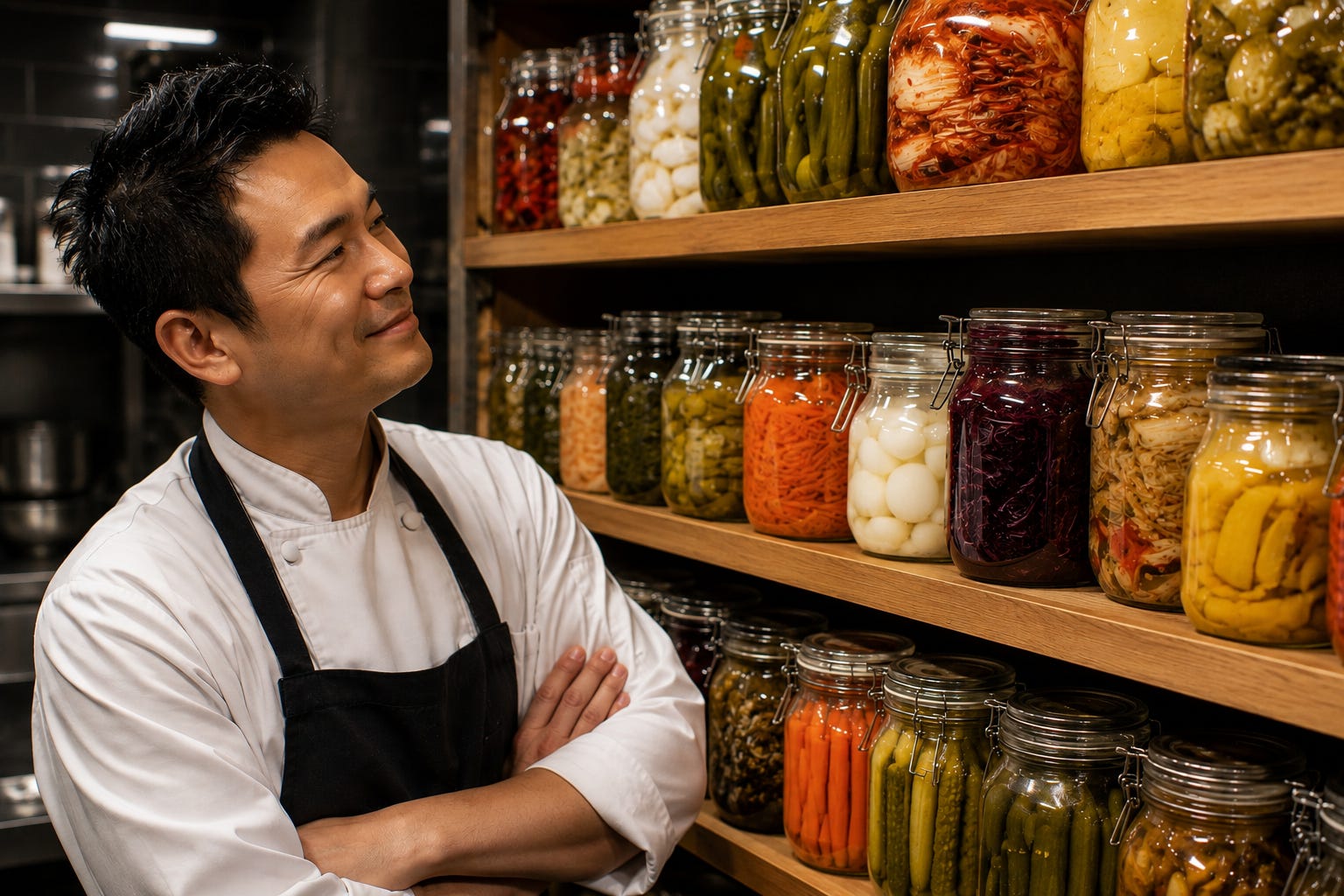
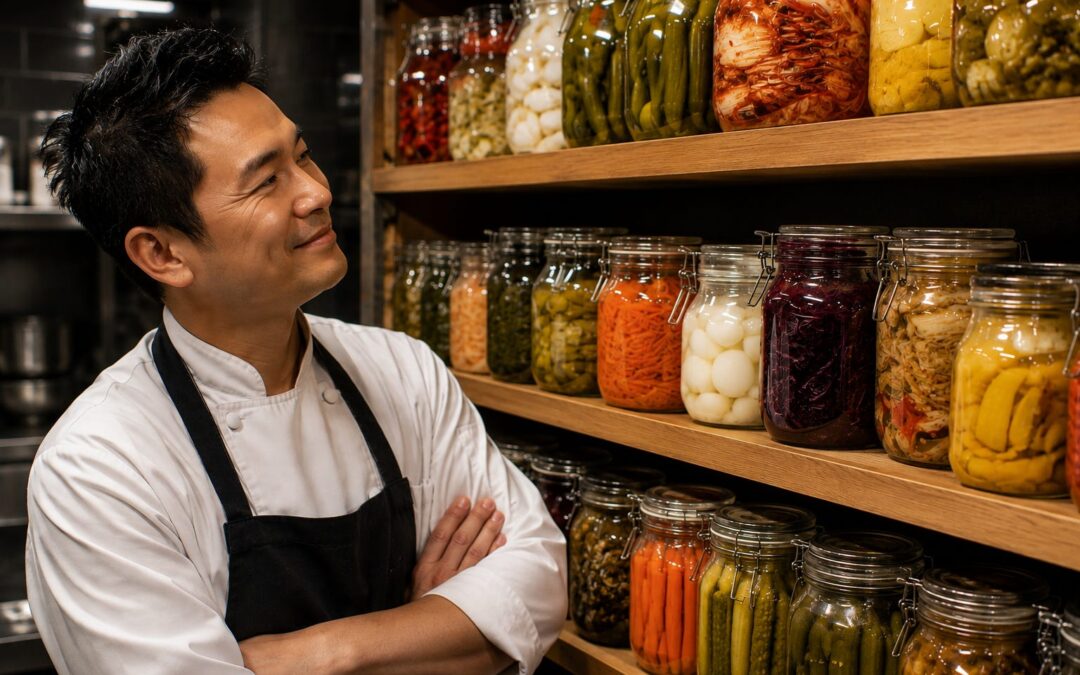
Fermentation, one of humanity’s oldest kitchen trick, is enjoying just such a moment. Kombucha occupies expensive refrigerator space. Kimchi escaped Korean restaurants and happily dwells next to burgers and scrambled eggs. Supermarkets sell Kefir to people who thought it’s a Russian airline. And when intestinal plumbing became the gut microbiome, it become fashionable enough for polite breakfast conversation.
Before Refrigerators, We Had Microbes
Our ancestors had no clue what bacteria and yeast were. They simply noticed that when handled correctly, food that should spoil instead became safer, longer-lasting and considerably more interesting.
Before refrigerators, freezers and vacuum packaging, that mattered. Fermentation helped preserve harvests and milk, while simultaneously producing new flavours. Yeast turned grain into bread, and beer and grapes into wine. Bacteria helped transform milk, vegetables and countless other ingredients. It was preservation technology with the happy side effect of making dinner better.
Eventually these practical solutions became part of national identities:
KOREA celebrates its kimchi, where salted vegetables ferment into the spicy, acidic companion to almost everything Korean.
GERMANY made us eat sauerkraut, proving that cabbage, salt and patience can survive winter and accompany a hearty sausage rather well.
JAPAN perfected it’s miso, using soybeans and koji to create one of the world’s great concentrations of savoury flavour.
The list is enormous – yoghurt, cheese, salami, sourdough, soy sauce, fish sauce, beer and wine all owe their existence to microorganisms doing unpaid kitchen work. But when refrigeration arrived, fermentation became less essential for survival. Fortunately, nobody told the cheesemakers, brewers, bakers or winemakers.
Meet Your Several Trillion Dinner Guests
Now fermentation has been rediscovered, but for a completely different reason. Research into the gut microbiome revealed vast communities of microorganisms. Rather than being unwanted passengers, they are involved in digestion, metabolism and immune function. Fermented foods have consequently attracted attention because some contain live microorganisms, while fermentation itself produces compounds that may interact beneficially with our digestive system.
Researchers are still working out exactly what constitutes an ideal microbiome, and anyone claiming to have solved the matter completely is probably trying to sell you a supplement. A recent Associated Press examination of the subject reflects the remarkable shift. Foods once eaten because they were practical, cheap and delicious are now being discussed in connection with probiotics, life and ageing science, even Alzheimer.
As they do, experts caution that fermented does not automatically mean miraculous, and that highly processed products wearing fashionable probiotic clothing are not equivalent to traditional fermented foods. The hope is that at least some people are listening, especially after they saw Dr. Google or Professor ChatGPT endorsing it so vehemently.
Enter The Delicious Irony
From our perspective as restaurant operators, the easily forgotten detail about the fermentation revival is that cooks never abandoned it in the first place. We pickle vegetables because acidity cuts through richness. We use fermented sauces because they deliver extraordinary depth, and not only since the the word umami became a thing. Bakers nurture sourdough starters, and cheesemakers cultivate bacteria. Winemakers worry obsessively about yeast, and charcutiers depend upon carefully controlled microbial activity.
None of these artisans needed the phrase gut health to justify doing so. They did it because fermentation makes food taste good. That in my opinion is the most sensible way to look at its latest renaissance. If traditional fermented foods contribute positively to the ecosystem living inside us, excellent. Science should investigate it more, and thankfully, it is.
As my grandma used to say: “Everything’s better with a pickle”.
Image Credit: https://www.churrascophuket.com (AI Generated)
_ _ _
© CHURRASCO PHUKET STEAKHOUSE / ALL RIGHTS RESERVED
Reprinting, reposting & sharing allowed, in exchange for a backlink and credits
Churrasco Phuket Steakhouse serves affordable Wagyu and Black Angus steaks and burgers. We are open daily from 12noon to 11pm at Jungceylon Shopping Center in Patong / Phuket.
We are family-friendly and offer free parking and Wi-Fi for guests. See our menus, reserve your table, find our location, and check all guest reviews here:
https://ChurrascoPhuket.com/
#Churrascophuket #jungceylon #phuketsteakhouse #affordablewagyu #wagyu

by lspeed | Aug 16, 2026 | BLACK BOX: RANTS, RAVES, REVIEWS & RECIPES
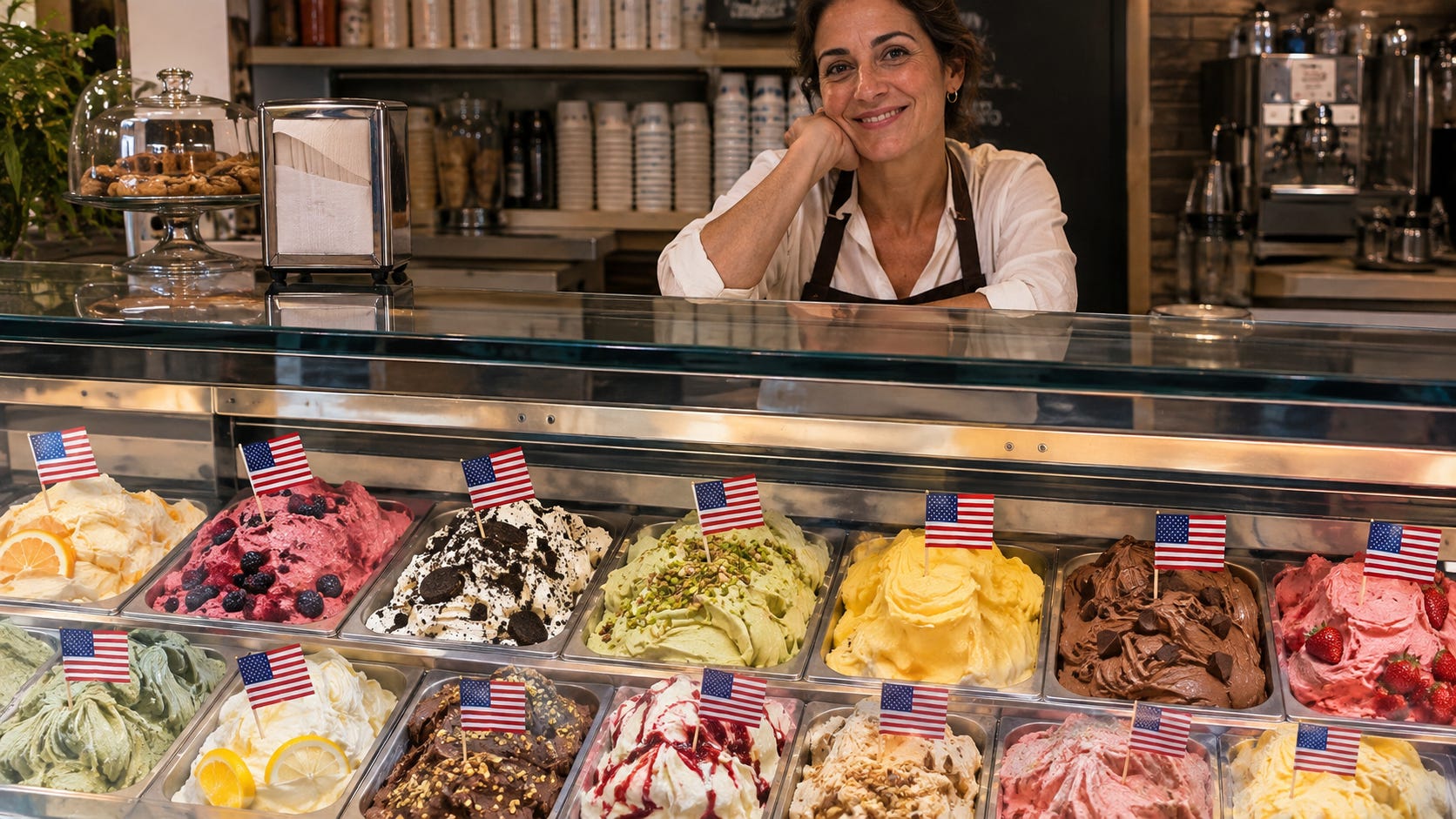
My long standing business partner being Italian, I learned early that there are subjects you better not argue about. Football is one, coffee another, and al dente or precooked pasta should never be a discussion subject anyway anywhere. But if you’re brave enough (which I am not), and want to ruin a perfectly nice conversation with an Italian, casually mention that gelato owes a debt to the United States.
The room around you will turn arctic immediately.
Unfortunately though, history is mischievous. Italy’s love affair with frozen desserts does indeed go back centuries. Florence gets most of the credit, thanks to architect, engineer, and general Renaissance overachiever Bernardo Buontalenti, who’s said to have whipped up an early milk-and-egg frozen cream. A century later, Sicilian emigrant Francesco Procopio dei Coltelli took the idea to Paris and opened Café Procope, turning frozen desserts into the hottest thing among people wearing far more lace than they should.
But the sticking point remained that actually making the stuff was brutal. Ice, salt, metal tubs, and a lot of frantic hand-stirring sounds charming in a cookbook, but considerably less so if you’re doing the stirring at 5am.
That is, until America blundered into the Italian ice cream parlour.
In 1843, American inventor Nancy Johnson patented a hand-cranked freezer with a rotating beater. A small idea that made a huge difference to to frozen desserts. But the real breakthrough came only decades later. In 1904, Harry Miller of Ohio built a horizontal freezer that circulated refrigerated brine around the mix. A year after that, New York’s Emery Thompson came up with a gravity-fed vertical batch freezer.
Suddenly you could freeze the mixture fast while churning it continuously, which meant tiny ice crystals, better texture, and way more control over how much air got folded in. And this is where the story gets awkward for gelato purists.
That batch freezer is, essentially, the mechanical heart of every Gelateria on earth. Instead of a heroic employee and a bucket of salted ice, you get refrigeration and rotating blades doing the freezing and churning. Smaller ice crystals give you that famously silky texture. Careful control of air gives artisan gelato its dense, rich bite, which is very different from the fluffier mass-produced ice cream.
The Italians didn’t just take a good look and move on, they improved on it. In Bologna, Otello Cattabriga patented an automatic gelato machine in 1927. Then, in the 1940s, engineer Bruto Carpigiani built his Autogelatiera, using a rotating helical spatula to make production faster and more consistent. He died in 1945, just before his invention took off commercially. But his brother Poerio continued and founded Carpigiani in 1946, a name that became synonymous with professional Gelato equipment worldwide.
Add in post-war refrigeration and pasteurisation tech, and proper refrigerated display cases, and you’ve got the full transformation. Gelato went from a fragile, ice-and-muscle craft to something that could be made safely and consistently, without losing an ounce of the skill, flavour, or creativity that makes it special.
So, who really invented modern gelato?
As with all food history, the answer is “it’s complicated”. Italy brought centuries of obsession, technique, and flavour. America added useful engineering. Italy took that engineering, refined it, and somehow made the whole world forget where it came from.
Which, in essence, a very Italian move.
Image Credit: https://www.churrascophuket.com (AI Generated)
_ _ _
© CHURRASCO PHUKET STEAKHOUSE / ALL RIGHTS RESERVED
Reprinting, reposting & sharing allowed, in exchange for a backlink and credits
Churrasco Phuket Steakhouse serves affordable Wagyu and Black Angus steaks and burgers. We are open daily from 12noon to 11pm at Jungceylon Shopping Center in Patong / Phuket.
We are family-friendly and offer free parking and Wi-Fi for guests. See our menus, reserve your table, find our location, and check all guest reviews here:
https://ChurrascoPhuket.com/
#Churrascophuket #jungceylon #phuketsteakhouse #affordablewagyu #wagyu

by lspeed | Jul 5, 2026 | WINES: UNCORKING THE MYSTERY
For as long as we humans have fermented grapes into wine, it has appeared wherever romance is expected. Candlelit dinners, first dates, anniversaries, proposals – someone almost always seems to pop a cork or reach for a wine list. Some of us tend to blame Hollywood for this enduring partnership, but science suggests there may be ever so slightly more to the story.
Now, before I start prescribing Cabernet instead of couples therapy here, it is worth pointing out that wine is not a miracle potion. It is, however, a remarkably effective social lubricant – pun entirely intended. It lowers defences, relaxes conversation, and occasionally convinces otherwise sensible adults that humming shmaltzy ballads in public is an excellent idea.
Researchers in Italy (where else) have found and proclaimed that small amounts of alcohol stimulate the hypothalamus, that wonderfully primitive part of our brain responsible for regulating hunger, body temperature, hormones – and sexual desire. It explains why one well-poured glass can leave people feeling simultaneously warmer, hungrier and more charming than they are.
The important phrase here is one well-poured glass, as beyond moderation, biology begins sending invoices. Confidence gives way to clumsiness, wit becomes lame repetition, and romance develops the aerodynamic grace of a suitcase with one defective wheel.
THEN THERE IS SMELL
Wine enthusiasts spend their lives discussing aromas of cherries, cedar, forest floor, vanilla and baking spices. As it turns out, these aren’t merely conversation starters designed to intimidate newcomers at tastings. Human attraction is deeply connected to our sense of smell.
More studies suggest that women may respond positively to earthy, musky, woody and cherry aromas. Men, on the other hand, appear more receptive to scents like vanilla, butter, caramel, citrus and gentle spices. Coincidentally and conveniently, many premium wines display exactly these aromatic characteristics. Suddenly that glass of a mature Amarone or a beautifully aged Champagne becomes the cause of a much busier social calendar than otherwise.
THE ROLE OF MEMORY
Our brains store scent more powerfully than almost any other sensation. A particular perfume can transport someone back twenty years, and wine behaves much the same way. If a memorable evening included an amazing Pouilly-Fumé or an elegant Pinot Noir, your brain may quietly connect those aromas with pleasure long after you’ve forgotten the playlist or the conversation. The nose keeps better records than the diary.
Scientists have also investigated naturally occurring compounds such as phenylethylamine, also known as the “love chemical”, which appears in tiny amounts in both wine and chocolate. While the concentrations are far too small to qualify as Cupid in liquid form, they certainly contribute to wine’s long-standing romantic reputation.
THE CONTEXT OF CHEMISTRY
A beautifully set table, soft lighting, a gently flickering scented candle, good food and uninterrupted conversation have rescued far more evenings than any grape variety ever has. Wine happens to be exceptionally good at joining the party without demanding centre stage, and that is wine’s greatest talent. It rarely creates romance from nothing, but it can help amplify what is already there. It slows the pace, encourages conversation and reminds us that life’s finest pleasures are usually experienced with all five senses switched firmly on.
So the next time someone describes a wine as seductive, they are not speaking entirely in metaphor. Just remember that the magic rarely lives inside the bottle alone. The real chemistry is usually sitting smiling across the table.
Image Credit: https://www.churrascophuket.com (AI Generated)
_ _ _
© CHURRASCO PHUKET STEAKHOUSE / ALL RIGHTS RESERVED
Reprinting, reposting & sharing allowed, in exchange for a backlink and credits
Churrasco Phuket Steakhouse serves affordable Wagyu and Black Angus steaks and burgers. We are open daily from 12noon to 11pm at Jungceylon Shopping Center in Patong / Phuket.
We are family-friendly and offer free parking and Wi-Fi for guests. See our menus, reserve your table, find our location, and check all guest reviews here:
https://ChurrascoPhuket.com/
#Churrascophuket #jungceylon #phuketsteakhouse #affordablewagyu #wagyu