by lspeed | Dec 21, 2025 | DECODING GRAPES: FROM VINES TO VINTAGE
Wine has been many things through history. A social glue. A quiet companion for long evenings. A diplomatic shortcut at questionable business dinners. Yet long before sommeliers debated minerality with alarming seriousness, wine was performing a far loftier task, acting as a bridge between the earthly and the divine. Humanity discovered fermentation, raised a cup, and suddenly the gods felt a touch more approachable. Perhaps they even smiled back after the third glass.
In the ancient world, the marriage between vineyards and temples was entirely logical. A drink that began life as humble grapes and ended with a pleasantly altered world view held a symbolic charm that water could never hope to deliver. In Egypt and Mesopotamia, wine appeared in offerings and royal ceremonies that tracked the seasons. To sip wine was to taste a little witchcraft. To offer it to the gods was generous, diplomatic, and motivated by the desire to avoid unpleasant surprises at harvest time.
Judaism added structure and discipline to the relationship. Wine became part of ritual in a deliberate and thoughtful way. On the Sabbath, the Kiddush blesses a cup of wine that draws a clear line between the working week and sacred time. Passover requires four cups, each representing a stage of liberation. The script is precise, and the mood is contemplative. The wine is there to lift the ceremony, not the celebrant. It is spiritual elevation with well defined boundaries.
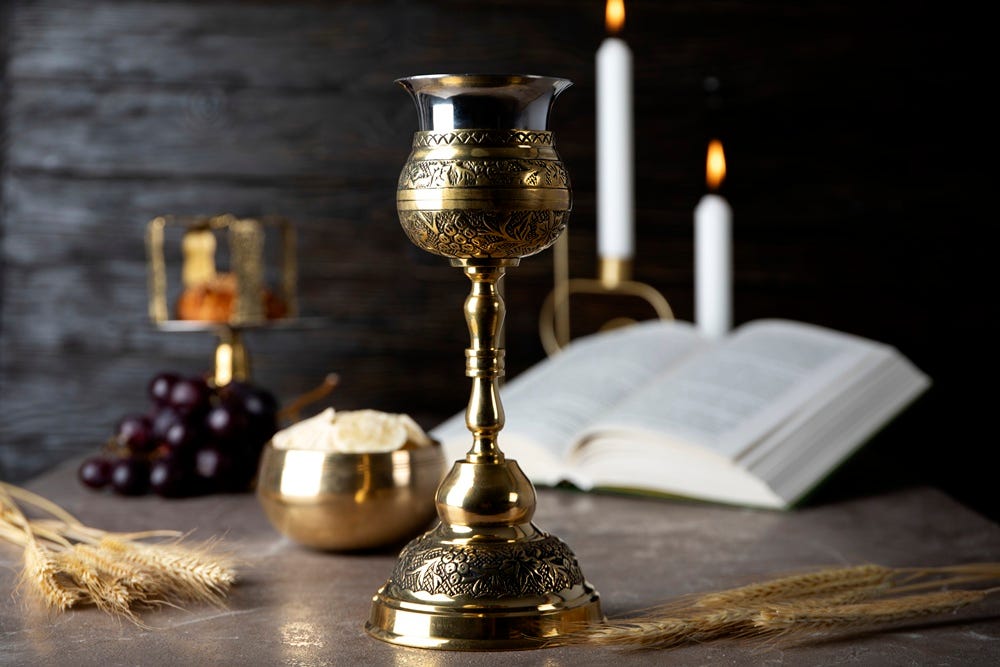
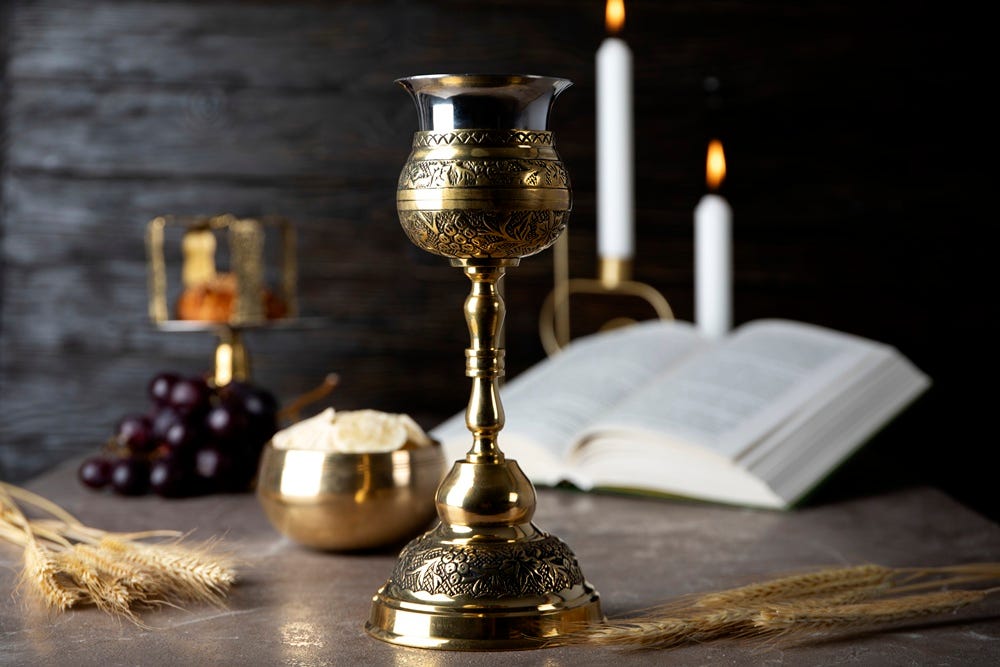
Christianity adopted wine and assigned it a weight that shaped centuries of devotion. In the Eucharist, the wine represents the blood of Christ. It is not appreciated for aroma or acidity, but for its deep symbolic meaning. Remembrance, sacrifice, and renewal reside in a single cup. Some communities use wine while others prefer grape juice, yet the message remains intact. Throughout history, a chalice on an altar has stirred more emotion than the grandest wine cellar.
Hindu traditions add their own colourful variation. In most practice, alcohol is avoided, yet certain regional and Tantric rites employ wine as part of tightly controlled ceremonies. These are not opportunities for unabashed merriment. They are precise acts of symbolism, where wine represents transformation and the dissolution of the ordinary self. It functions as a tool for spiritual insight rather than indulgence. The focus is not the palate, but the philosophy.
Ancient Greece and Rome, never shy about fun and festivals, embraced wine with dramatic flair. Dionysus and Bacchus presided over events where wine symbolised freedom, joy, and the delicious tension between order and ecstasy. Despite modern imagination, the symposium was not a reckless drinking spree. It was structured conversation aided by wine, not drowned by it. It encouraged debate, reflection, and occasionally a highly optimistic attempt at poetry or song writing. The ancients understood that a shared cup could unlock a shared state of mind.
Across indigenous and traditional cultures, fermented beverages hold their own sacred authority. Georgian Qvevri wine is blessed at seasonal rituals. Andean Chicha is offered to Pachamama. African palm wine marks marriages, harvests, and rites of passage. In these settings, the drink represents continuity, ancestry, and profound respect for the land – a reminder that life sits atop deep cultural roots.
Take away the stylistic differences and a simple truth emerges. Wine is a small everyday miracle in a glass, a reminder that grapes can improve dramatically with a little patience and the right conditions. People often do the same, especially when a balanced red in your glass gives the world around you a gentle glow.
Of course, everyone knows at least one person who can turn a casual wine tasting note into a theological argument about oak, climate, and the moral duty of proper decanting. When that happens, the best remedy is to drink more wine. You will find peace, and even the most agnostic person in the room will hear the angels sing.
Image Credit: https://freepik.com
_ _ _
© CHURRASCO PHUKET STEAKHOUSE / ALL RIGHTS RESERVED
Reprinting, reposting & sharing allowed, in exchange for a backlink and credits
Churrasco Phuket Steakhouse serves affordable Wagyu and Black Angus steaks and burgers. We are open daily from 12noon to 11pm at Jungceylon Shopping Center in Patong / Phuket.
We are family-friendly and offer free parking and Wi-Fi for guests. See our menus, reserve your table, find our location, and check all guest reviews here:
https://ChurrascoPhuket.com/
#Churrascophuket #jungceylon #phuketsteakhouse #affordablewagyu #wagyu
by lspeed | Dec 17, 2025 | BLACK BOX: RANTS, RAVES, REVIEWS & RECIPES
If like me you ever stood in front of the cheese section wondering why one type of Parmesan costs as much as a small holiday, while another sits there looking shy and affordable, you are not alone. The world of Italian hard cheese is full of tradition, rules, and the occasional identity crisis.
So let us take a calm walk through what makes real Parmesan real, why Grana Padano is its no less respectable cousin, and why the word Parmesan can mean very different things to many people, depending on which part of the world you park your shopping trolley.
Real Parmesan?
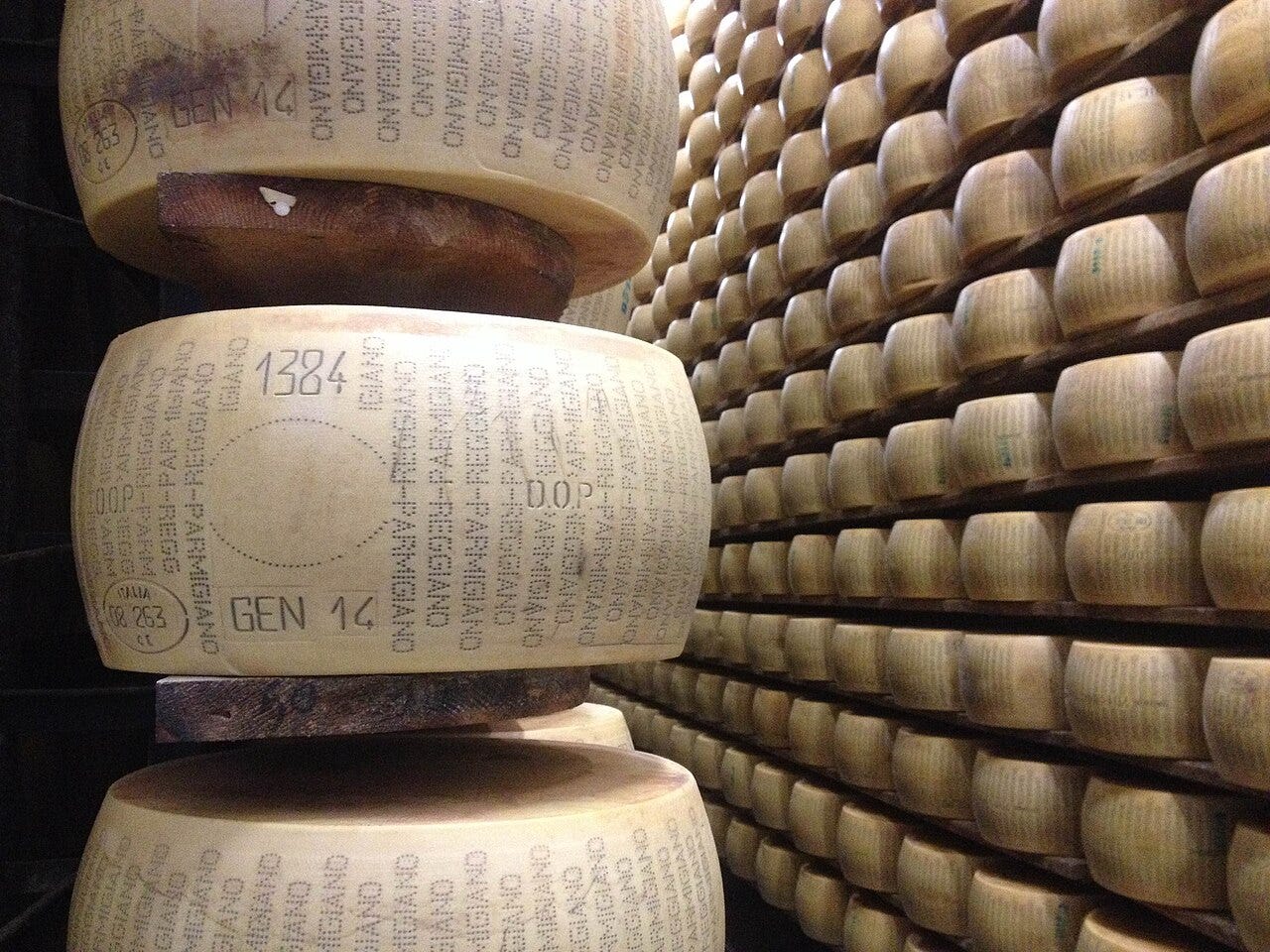
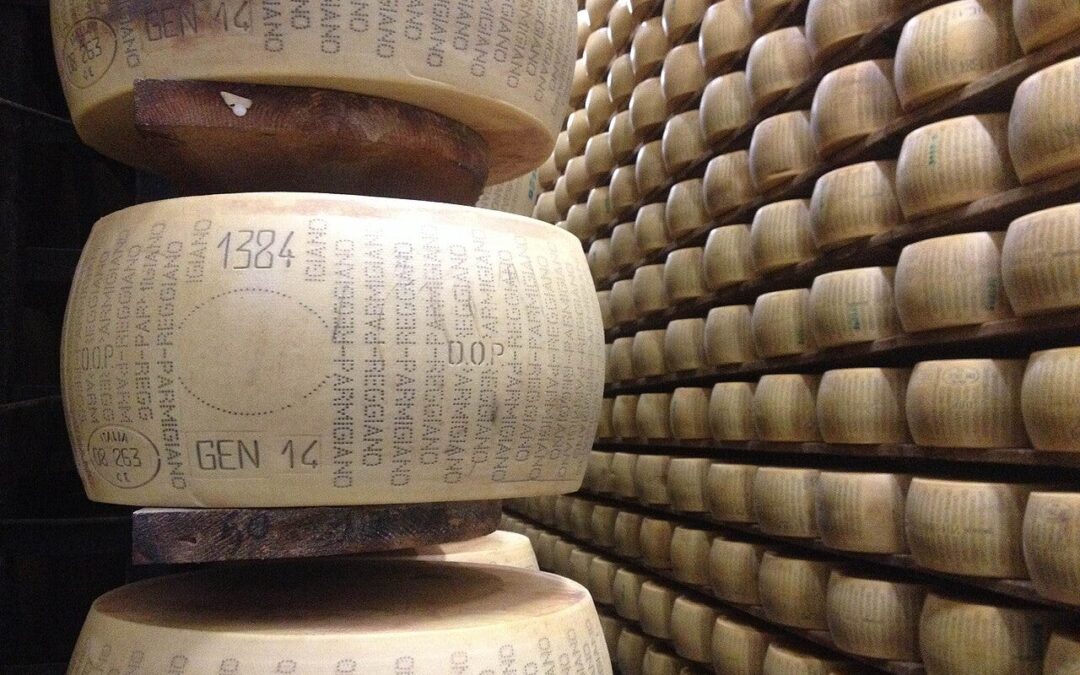
Within the European Union, there is only one cheese legally allowed to call itself Parmesan, and that is Parmigiano Reggiano. The name is a protected origin designation, which is lawyer speak for “mess with this and you answer to Italy.” True Parmigiano Reggiano can only come from a very specific zone in northern Italy covering Parma, Reggio Emilia, Modena, and carefully drawn parts of Bologna and Mantua.
The recipe is as pure as it gets. Raw milk, salt, and rennet. That is it. No preservatives, shortcuts, or creative additives. The cows are fed grass and hay which sounds idyllic because it is. Absolutely no silage is allowed, a fermented feed that would speed things up but also raise many bushy eyebrows in Italy.
The cheese must mature for at least twelve months, but most of the wheels that achieve greatness sit quietly for twenty four or even thirty six months. Only after passing a strict inspection by the Parmigiano Reggiano consortium does a wheel get the famous branded mark on its rind.
It is cheese with a passport, a security check, and a protected name – but only within the EU. Since a landmark ruling by the European Court of Justice in 2008, Parmesan is considered a clear reference to Parmigiano Reggiano, and therefore protected. So if you buy something called Parmesan anywhere in the EU, it must contain actual Parmigiano Reggiano. No budget imitations, just the real cheese wheel.
Outside the European Union, the story changes dramatically. In the United States, Canada, Australia, and many other places, Parmesan is seen as a generic cheese term somewhat like ketchup or sandwich bread. Not helpful for world peace, but useful when you are shopping in Kansas City or Bondi Beach. The result is a product that is usually industrially made, matures much less, and is allowed to contain additives that would give Italian cheesemakers palpitations and hair loss.
A famous example is the American Parmesan powders that often contain cellulose, which is a polite way of saying wood pulp. It keeps the powder from clumping although the taste effect resembles Parmesan only in the same way that a postcard resembles Venice.
Parmigiano vs. Grana Padano
Both cheeses enjoy protected origin status, and both are beloved Italian hard cheeses. Yet they part ways in three important areas:
Cows’ Diet: Parmigiano Reggiano forbids silage and the cheese contains no preservatives. Grana Padano allows silage which makes production more flexible. As a result, producers must often add lysozyme which is an enzyme from egg white used to keep unwanted bacteria away.
The Region: Grana Padano comes from a much larger area that spans almost the entire Po Valley. That greater scale makes it more available and usually more affordable.
Taste & Time: Parmigiano Reggiano ages longer and develops more complex flavours and that crumbly crystal texture loved by cheese enthusiasts. Grana Padano matures for a shorter period starting at nine months and tastes milder and more buttery. It is the cheese you choose when you want character but not a full flavour assault.
Maturity Levels
Parmigiano Reggiano has four notable stages, and even uses coloured labels to guide the shopper. Twelve to nineteen months known as Delicato, still soft for a hard cheese with a milky profile. It works well as a snack, especially if you want to look sophisticated without breaking a tooth. Twenty to twenty six months is the Classic range, which shows the first real crumble and fruit notes, while twenty-two months offers balance between sweet and savoury.
Thirty to thirty nine months is called Aromatico, or “the golden label”. It is very crumbly and intensely savoury. Ideal with a drizzle of balsamic and a moment of “me-time” away from the kids. Over forty months is for the committed cheese fans. Darker, drier, sandy in texture and packed with layers of aroma from leather to mushroom to a hint of smoke. This is a cheese that has seen and heard many things.
Grana Padano offers three official stages. Nine to sixteen months is mild, creamy, pale, and easy going. A friendly cheese that melts beautifully and never argues back. Over sixteen months begins to show the classic grainy structure. Flavour becomes more pronounced but remains smooth. A very good kitchen all rounder. Over twenty months called Riserva has more crystals, more depth, and a fuller flavour that brings it closer to Parmesan. People often enjoy it on its own which tells you everything.
The Choice
The longer the cheese matures, the less water it holds. That means it gets drier, firmer, saltier, and packed with flavour. The little white protein crystals that crunch pleasantly are not flaws. They are nature’s way of saying you chose well. In short, not all Parmesan is created equal. Some cheeses are ambassadors of centuries of craft. Others come with a faint whiff of a sawmill.
Choose wisely, and your pasta and restaurant guests will love you.
Image Credit: https://www.wikipedia.org
_ _ _
© CHURRASCO PHUKET STEAKHOUSE / ALL RIGHTS RESERVED
Reprinting, reposting & sharing allowed, in exchange for a backlink and credits
Churrasco Phuket Steakhouse serves affordable Wagyu and Black Angus steaks and burgers. We are open daily from 12noon to 11pm at Jungceylon Shopping Center in Patong / Phuket.
We are family-friendly and offer free parking and Wi-Fi for guests. See our menus, reserve your table, find our location, and check all guest reviews here:
https://ChurrascoPhuket.com/
#Churrascophuket #jungceylon #phuketsteakhouse #affordablewagyu #wagyu
by lspeed | Dec 14, 2025 | LIQUORS: LIFT YOUR SPIRITS
Fine Scotch whisky tends to inspire reverence. For many, it is less a beverage and more a cultural artefact – swirled slowly, discussed seriously, and occasionally defended with the kind of passion usually reserved for national football teams. Yet its history is far more grounded than the myths that surround it. Scotch wasn’t born in a lightning bolt of genius, or handed down by ancient Highland sages who gazed into the mist, whispered a spell, and conjured liquid gold into being. It was built patiently over centuries by farmers, monks, smugglers, tinkerers, and later by the sort of industrial minds who believed good things should be made at scale.
Friar Cor and the Fiery Beginning
The first written mention arrives in 1494, tucked into Scotland’s Exchequer Rolls, where King James the Fourth supplied Friar John Cor with enough barley to produce aqua vitae. That early spirit – though admirable for its time – bore little resemblance to what we sip today. It was strong, sharp, and decidedly un-aged. A drink taken more out of necessity or remedy than leisurely indulgence. Nobody was nosing for hints of honey or lingering finish. Survival, not sophistication, defined the era.
Distillation Arrives by Way of Europe
Few Scots will admit that Scotland didn’t actually invent distillation. The practice travelled through Europe courtesy of monks, physicians, and alchemists, who were often pursuing medicine rather than merriment. In rural Scotland, distilling became part of agricultural life, a practical way to convert surplus grain into something preserved and portable. These early makers weren’t thinking about terroir or brand identity. They were simply ensuring that good grain was converted into something valuable, drinkable, and dangerously flammable. The artistry we associate with whisky today would take centuries to emerge.
Oak Casks: The Happy Accident
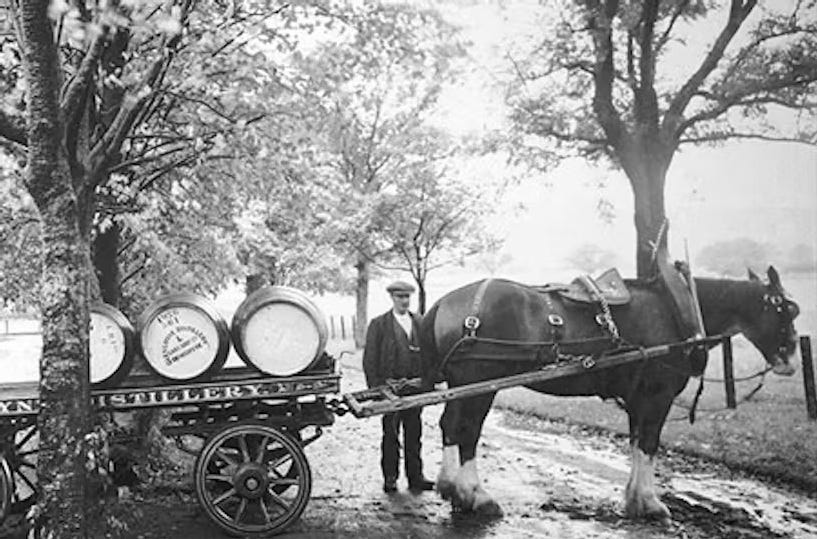
Modern whisky lovers speak of cask influence with deep respect, but those early distillers did not lovingly select oak for its flavour properties. Nobody expected them to impart flavours of vanilla, toast, and gentle smugness. Oak was durable, abundant, and useful for transport. Yet over time, it revealed itself as a quiet craftsman. Spirit stored in oak softened, deepened, and transformed. The magic only became apparent over time, when spirit went into the cask angry and came out surprisingly pleasant. What started as a logistical solution became an integral part of the craft. Generations of distillers refined the practice, turning accident into tradition and tradition into standard.
The Illicit Years: Creativity Faces The Taxman
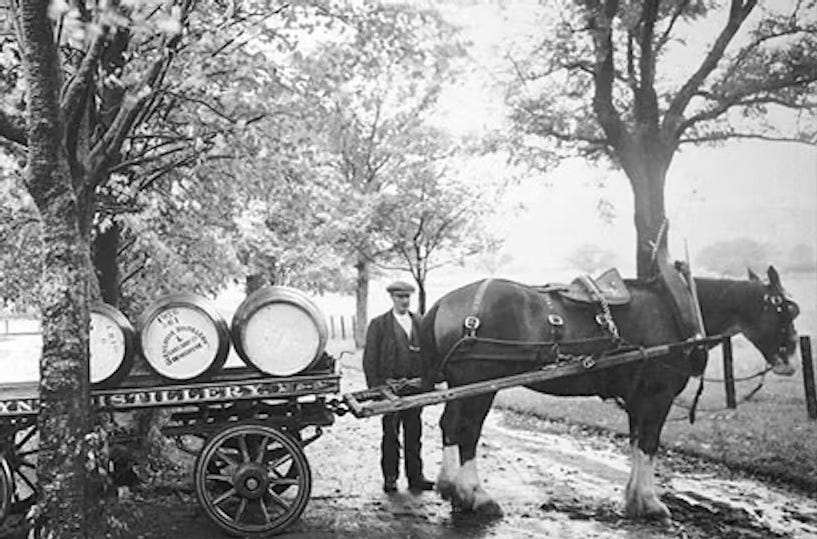
By the seventeenth and eighteenth centuries, taxation had become a defining force. Heavy duties made legal production nearly impossible for small-scale distillers, and so they adapted. Illicit stills dotted the landscape, operated with ingenuity and discretion. Quality ranged from rough to excellent, depending on who was running the still and how much haste was involved. Some was excellent, others could strip paint. These whiskies were almost always young, for obvious reasons. A cask left to slumber for a decade risked being discovered long before it became drinkable.
1823: The Year Scotch Went Respectable
The Excise Act of 1823 marked the great turning point. Suddenly, legal distillation became not only possible but sensible. A reasonable licence fee and more practical duties encouraged distillers to step into the light. With legality came stability. With stability came investment. Better equipment, longer ageing, and consistent practices took root. Scotch whisky began its steady march from rustic firewater to refined national treasure. Think of it as the moment the whisky industry collectively put on a clean shirt and decided to stop running from the authorities.
Innovation Arrives: The Coffey Still
In 1830, Aeneas Coffey patented his continuous still, a piece of engineering that changed production forever. It allowed for cleaner, lighter grain spirit to be produced at scale. When blended with traditional malt whisky, it created a balanced, approachable style that suited global markets. Rather than replacing the pot still, the Coffey still broadened the palette. Scotch could now be nuanced in more ways, its character shaped by blending as much as by place. Even better, it could be produced in quantities large enough to satisfy the ever-thirsty British Empire. Blended Scotch was practical, scalable, and still tasted recognisably Scottish.
Blends Conquer the World
Blended Scotch did not triumph through romance but through human stubbornness. It was consistent, versatile, and far easier to produce in the quantities needed abroad. The combination of malt complexity and grain elegance created something both distinctive and accessible. And perhaps that is its true charm. Every sip is a reminder that great things often come from imperfect beginnings. Blended Scotch became the global ambassador for the craft, opening the doors that single malts would later walk through proudly.
The Final Dram
Let us always remember that Scotch whisky did not arrive fully formed. It evolved, stumbled, improved, and eventually triumphed. Its romance lies not in legend but in truth. Its history honours the many hands that shaped it, from monks and farmers to modern distillers who continue the work with both discipline and pride. A reminder that great crafts are not invented, but earned over time.
Image Credit: https://www.glengoyne.com/our-way/our-legacy
_ _ _
© CHURRASCO PHUKET STEAKHOUSE / ALL RIGHTS RESERVED
Reprinting, reposting & sharing allowed, in exchange for a backlink and credits
Churrasco Phuket Steakhouse serves affordable Wagyu and Black Angus steaks and burgers. We are open daily from 12noon to 11pm at Jungceylon Shopping Center in Patong / Phuket.
We are family-friendly and offer free parking and Wi-Fi for guests. See our menus, reserve your table, find our location, and check all guest reviews here:
https://ChurrascoPhuket.com/
#Churrascophuket #jungceylon #phuketsteakhouse #affordablewagyu #wagyu
by lspeed | Dec 7, 2025 | BLACK BOX: RANTS, RAVES, REVIEWS & RECIPES
Olive oil has been around longer than taxes, bad restaurant playlists, and the persistent belief that quinoa is enjoyable. For thousands of years, this golden liquid has been poured over food, rubbed on bodies, burned in lamps, and blamed for stains that ruined countless white shirts. Everyone is an expert, ranging from chefs, doctors, grandmothers, lifestyle gurus, and that one friend who spent a week in Tuscany and now feels spiritually Mediterranean.
But before the modern world began arguing about antioxidants and drizzle techniques, olive oil shaped entire civilisations. In ancient Greece, athletes were not only muscular but also extremely slippery. They coated themselves in olive oil before competitions, presumably to make it harder for an opponent to grab hold of them. The Romans used olive oil for almost everything, from cooking to medicine to rituals, and also as a symbol of wealth.
In Egypt, olive oil was so prized that it often travelled long distances as a diplomatic gift. If a Pharaoh wanted to impress his latest Cleopatra, olive oil could be part of the winning package. It seems that even in antiquity, people understood the true priority in life, which is of course deliciousness.
Fast forward to today and olive oil enjoys a reputation somewhere between culinary treasure and miracle tonic. Health claims include softening arteries, sharpened brains, longevity, and make everything from grilled vegetables to life itself taste better. If you drizzle olive oil on your salad, you feel virtuous. If you drizzle it on your steak, you feel sophisticated. If you drizzle it on your ice cream, you need help.
Much of the confusion comes from the labels. There are more categories than the average wine list, and each one sounds slightly judgmental. At the top sits Extra Virgin Olive Oil. This title raises questions, the most obvious being how anything can be more than virgin. In truth, the term simply means the oil is made from the first pressing of the olives and produced without heat or chemical interference. Nothing scandalous.
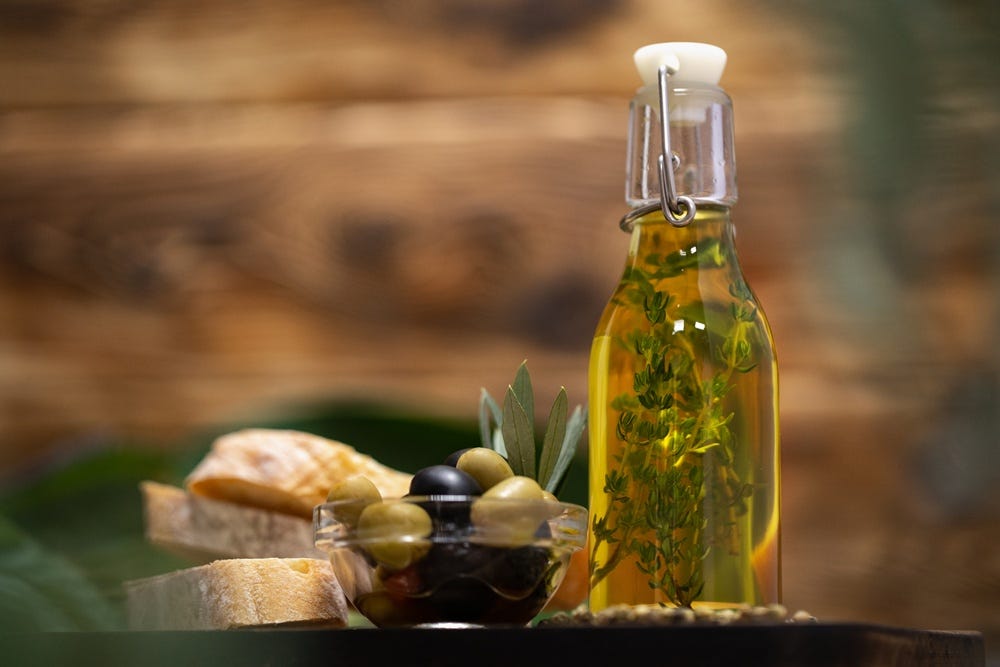
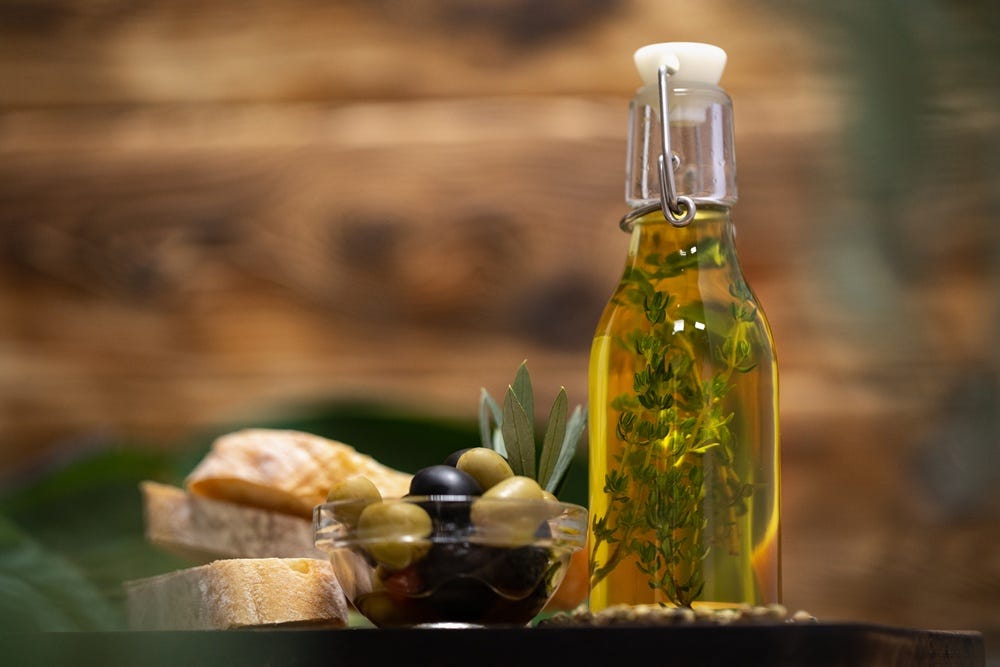
Extra Virgin Olive Oil is the purest and most flavoursome form, with low acidity and a rich aroma. Proper producers treat it with reverence. They discuss it the way sommeliers discuss wine, looking for notes of grass, artichoke, almond, pepper, green tomato, even freshly cut shrubbery. It is best used for finishing, dipping, drizzling, and showing off.
Below this exalted status sits Virgin Olive Oil. It is still good quality but has slightly higher acidity and a milder flavour. Think of it as extra virgin’s less glamorous sibling. Virgin oil works well for cooking and general daily use without the pressure of being the star of the plate.
Then we have Refined Olive Oil, which is processed to remove bitterness and imperfections. Producers use heat or charcoal filtration, producing a neutral tasting oil. This is the workhorse of many kitchens. It is not there to impress, but to get the job done as it behaves predictably in a pan.
Another label to understand is Cold Pressed Olive Oil. Despite the romantic image of farmers pressing olives beneath the soft Mediterranean sun, the term simply means that the extraction temperature stayed below a critical threshold. Lower heat preserves flavour and nutrients. Hot pressed oils are extracted at higher temperatures, yielding more liquid but less nuance. In short, cold pressed is for taste, hot pressed is for efficiency.
At the bottom of the hierarchy sits Pomace Olive Oil, made from the leftover pulp after the first pressing. It is extracted using heat and solvents, then blended with a small amount of higher grade oil to make it palatable. While not considered premium, Pomace has a high smoke point and is useful in kitchens that fry large quantities of food. It will not win any awards, but it will keep your deep fryer humming.
The true magic of olive oil lies in its ability to transform food. A simple slice of bread becomes an elegant snack. A mundane tomato becomes a statement dish. A piece of grilled fish becomes an homage to the sea. It brings coherence to a dish, warmth to a table, and a sense of Mediterranean ease to a dinner party.
Whichever bottle you reach for, remember that olive oil is not just an ingredient. It is history, culture, flavour, and sometimes comedy, particularly when someone insists they can taste the difference between twenty seven varieties.
They probably cannot, but it is fun to watch.
Image Credit: https://freepik.com
_ _ _
© CHURRASCO PHUKET STEAKHOUSE / ALL RIGHTS RESERVED
Reprinting, reposting & sharing allowed, in exchange for a backlink and credits
Churrasco Phuket Steakhouse serves affordable Wagyu and Black Angus steaks and burgers. We are open daily from 12noon to 11pm at Jungceylon Shopping Center in Patong / Phuket.
We are family-friendly and offer free parking and Wi-Fi for guests. See our menus, reserve your table, find our location, and check all guest reviews here:
https://ChurrascoPhuket.com/
#Churrascophuket #jungceylon #phuketsteakhouse #affordablewagyu #wagyu

by lspeed | Nov 30, 2025 | RESTAURANT BUSINESS: BEHIND THE KITCHEN DOOR
Long term restaurant owners invest decades of sweat, intuition and determination into a business that becomes an extension of their personality. When the time comes to scale back or retire, many discover that succession can be harder than building the restaurant in the first place. The transition from founder to successor is a high risk moment. I have seen several examples of what can happen, both good and bad. A hand-over affects culture, guest experience and relationships, staff morale, vendor trust and credit, financial stability, even the survival of the brand.
Whether the next chapter involves hiring a professional general manager, grooming a family member, or selling the business to an individual or hospitality group, the same truth applies: succession does not happen by accident. It is a process, and it requires thought, planning, and discipline. Let’s look at the issues, the psychology behind “founder syndrome”, and some practical tips to help the business thrive after the owner steps back.
The Problem No One Talks About
Owners tend to delay succession planning because it forces them to confront two uncomfortable realities. First, that their own time in the business is not infinite. Second, that the restaurant will need to succeed without their daily involvement. Many wait too long, begin planning only when health or burnout forces the issue, then scramble to hand over with little structure.
Three challenging scenarios appear:
Outside Manager
Bringing in a professional general manager seems like a clean solution, but it is rarely simple. External managers come with their own leadership style, their own systems and their own interpretation of what constitutes good service. Staff often test boundaries, compare the new leader to the founder or resist changes. The founder, still emotionally invested, often hovers. If boundaries are not made clear, the incoming manager ends up with the title but not the authority.
Family Member
Family succession sounds romantic, but it can be the most complicated path. The next generation may have different ambitions, education and leadership preferences. They may modernise in ways that the founder finds uncomfortable. Meanwhile, other family members might question the fairness of roles, salaries or ownership shares. Without structure, expectations collide.
Selling Out
A sale solves ownership, but not necessarily transition. Buyers usually insist on a handover period. If the founder micromanages or contradicts the new owner during that phase, the relationship deteriorates quickly. Groups in particular seek scalable systems, brand uniformity and data driven decision making. If the founder resists, post acquisition friction becomes inevitable.
The Founder Syndrome
From personal experience I can attest that this is a silent deal killer. Restaurants thrive on personality and consistency. The founder has usually done everything himself at some point, from building the kitchen line to charming VIP tables. Letting go feels dangerous, even insulting.
Symptoms include:
-
Insisting on approval for every decision
-
Undermining new systems with “we have always done it like this”
-
Correcting the successor in front of staff
-
Reversing decisions because they do not match the founder’s habits
-
Hovering in the background, quietly influencing opinions
-
Rejecting data or modern systems in favour of instinct
-
Treating the restaurant as an extension of personal identity rather than a business
The irony is that founders create instability by trying to protect stability. Their ongoing interference often causes the very failures they fear. Successful succession requires the founder to recognise these tendencies early and set rules to avoid them. It is often the hardest part for all parties involved.
Preparing The Groundwork
Succession should begin two to three years in advance. Key steps include:
Document Everything
Individual restaurants often rely on verbal routines and habits passed through culture rather than manuals. That is a red flag. Systems must be written, updated and accessible, meaning recipes, prep lists, cost controls, vendor contacts, guest recovery protocols, reservation process, opening and closing procedures, HR policies, finance reporting and marketing guidelines. A successor cannot follow what does not exist.
Define Non-Negotiables
A founder should identify what truly defines the restaurant. Examples: no discounting, consistent doneness standards, strict wine storage and documentation, precise plating, certain service rituals or music ambience. Distinguish between brand values and personal preferences. A successor cannot maintain your identity if you cannot articulate it.
Strengthen Management
Succession is easier when there is a capable sous chef, assistant manager or floor leader who already understands the DNA of the restaurant. Investing in middle management training reduces dependency on any single individual.
Clean Up Financials
Many independent restaurants carry informal arrangements, outdated pricing, unrecorded owner perks or messy vendor relationships. A successor, especially a buyer, needs clarity. Transparent financials increase confidence and valuation.
Executing The Transition
Once the successor is identified, the transition requires structure.
Set Clear Authorities
Staff must know exactly who is in charge going forward. The founder should publicly endorse the successor, state the new decision making hierarchy and stick to it. No backdoor approvals or emotional reversals.
Create A Timeline
Plan a structured schedule over several weeks, such as week one – shadowing, week two – joint decision making. week three – successor leads with founder observing, month two – founder steps back to scheduled check ins only. A timeline turns vague intentions into measurable milestones.
Agree On Founder’s New Role
If the founder remains involved, define specific responsibilities, such as brand ambassador, training advisor, menu consultant or quality spot checks. Boundaries prevent confusion. The founder cannot be half retired and half in charge.
Support, Don’t Override
If the successor introduces new systems, technology or service flow, support the decision publicly even if you disagree privately. Change is part of progress. The worst possible move is to quietly revert to “the old ways.”
Long Term Touchpoints
Even after the actual transition is complete, succession must be maintained.
Schedule Check Ins
Monthly or quarterly strategy meetings allow the founder to provide insight without meddling. Focus on trends, long term issues and brand direction rather than day to day decisions.
Accept Evolution
The restaurant will change. The menu, service rituals, pricing, staffing or marketing style may shift. Evolution does not equal disrespect. A restaurant that never changes becomes irrelevant.
Support Successor’s Authority
If staff approach the founder seeking alternative decisions, redirect them to the new leader. Unity is essential.
Let Everyone Breathe
A big part of successful successions is the founder’s ability to emotionally detach. The restaurant is no longer an extension of self. It is a legacy managed by another hand.
Into The Sunset
Succession is not a farewell. Letting go is not weakness. It is a redesign of leadership so the restaurant can thrive beyond the founder’s shadow, the ultimate act of stewardship. The statement “we have always done it like this” is neither a strategy nor a plan for the future. A structured, humble and disciplined approach to succession is. Enjoy your retirement.
Image Credit: https://freepik.com
_ _ _
© CHURRASCO PHUKET STEAKHOUSE / ALL RIGHTS RESERVED
Reprinting, reposting & sharing allowed, in exchange for a backlink and credits
Churrasco Phuket Steakhouse serves affordable Wagyu and Black Angus steaks and burgers. We are open daily from 12noon to 11pm at Jungceylon Shopping Center in Patong / Phuket.
We are family-friendly and offer free parking and Wi-Fi for guests. See our menus, reserve your table, find our location, and check all guest reviews here:
https://ChurrascoPhuket.com/
#Churrascophuket #jungceylon #phuketsteakhouse #affordablewagyu #wagyu