by lspeed | Sep 7, 2025 | BLACK BOX: RANTS, RAVES, REVIEWS & RECIPES
You probably feel it too, that weird mix of curiosity and fear whenever someone mentions AI and restaurants in the same sentence. On the one hand, it sounds like salvation. On the other, it feels like a threat. And if you’ve spent any real time in this business – grease under your fingernails, short-staffed on a Friday night, praying your vendor actually delivers the tomatoes before lunch service – you know exactly what’s at stake.
AI promises help. Real help. But it also threatens to flatten what makes restaurants human. So let’s break it down. Where it belongs, where it absolutely doesn’t, and why you might lose the very thing that keeps your guests coming back.
Where AI Belongs: In the Boring Back Office
First, you should use AI, especially for the parts of the business that burn you out.
Inventory Management
How many hours have you lost trying to figure out why your lettuce order always overruns by Thursday? AI-powered inventory tools can forecast usage based on historical sales patterns, flag anomalies, and even recommend restocking amounts. It’s like having a data analyst on your team, minus the salary.
Scheduling
Nightmare, right? Especially when two team members switch shifts without telling anyone and you only find out during the Saturday brunch rush. AI can generate optimized rosters based on availability, footfall predictions, and labor cost ceilings. And notify everyone automatically.
Menu Profitability
You probably have dishes you love but they don’t sell. Or worse, dishes that do sell but barely turn a profit. AI-driven POS systems can flag these in seconds. You’ll find yourself looking at data like contribution margin, guest satisfaction scores, and prep time all in one dashboard. That’s not just useful, it’s essential.
Real-life Example
One restaurant using an AI-enabled POS discovered their most popular item, an avocado chicken burger, was dragging down margins due to seasonal produce spikes. By trimming portion sizes and up-selling add-ons, they reversed the loss and increased profit by 20% in two months. That’s power you can’t ignore.
Where AI Doesn’t Belong: The Heart of Hospitality
Now the hard truth: AI can’t replace what you and your team do at the front of house. It can mimic it. It can script it. But it can’t be it. Three very real reasons why:
AI Can’t Read People (and People Lie)
You’ve probably had your own Mr. Fussy—that guest who always finds something wrong. The steak’s too charred, the wine too cold, the sauce too rich. Every time. And if you’re new to this, you might try to fix the food. But give it a few weeks, and you learn the truth: it’s not about the food. It’s a game. Maybe a need for control. Maybe just habit. But when you call their bluff, with a bit of empathy, not confrontation, they usually back off.
AI would never catch that. It would tag them as “frequent complainer,” maybe flag their account. But you? You know when a complaint isn’t really a complaint. And you know how to handle it without alienating someone who, ironically, might be your most loyal guest. That instinct is an emotional radar and can’t be trained into an algorithm. Not yet. Hopefully not ever.
AI Can’t Create Magic Moments
Every restaurant has them. A couple on the verge of tears. A solo diner nervously scanning the room. A family too tired to speak. And then something shifts. You comp a dessert, send out a small amuse-bouche, or simply stop by to say, “We’re really glad you’re here tonight.”
One place did this when they noticed a woman alone on Valentine’s Day. They brought her a rose and a mocktail on the house, no questions asked. She posted about it later, tagging the restaurant and calling it the “kindest gesture of the year.” That’s not something AI is going to suggest in a pop-up window.
It’s not about trends or customer data, it’s about presence. You’re there, in the moment, reading the energy of the room. Adjusting. Caring. You can’t code that.
AI Doesn’t Lose Sleep Over a Bad Review
You know that awful feeling you get when someone posts a two-star review? And it’s vague? “Food was okay. Service meh. Not sure I’d return.” You rack your brain trying to figure out what happened. You go over receipts, ask the floor manager, check who was on shift. Because it matters.
AI? It’ll log the review. Maybe send an apology email. Maybe suggest a service training module. But it won’t carry the weight of it. You do. Because that’s what professionals do. You care. And weirdly, that’s the difference between good restaurants and great ones. The people behind them take things personally. Not in a fragile way, but in a way that says: “This matters. You matter.” That’s not something AI understands.
Don’t Over-Automate
If you rely too heavily on automation with QR-code menus, robotic service, or zero human interaction, you risk killing the very reason people dine out in the first place. People want convenience. But they also want connection. They want to feel welcomed, seen, cared for. Especially post-pandemic, when human contact became rare and precious. Strip that away, and you’re no better than a vending machine with mood lighting.
So What To Do?
AI is amazing at structure, systems, and spotting what you miss in the rush. You want it in your spreadsheets, your fridge logs, and your scheduling software. But don’t let it creep into the part of the business that’s actually alive.
Use AI like a sous chef, not the executive chef. Let it handle the math. Let it flag blind spots. Let it streamline the parts of the business that suck your time and kill your creativity.
But never let it handle the magic. Because for the time being at least, that job is yours.
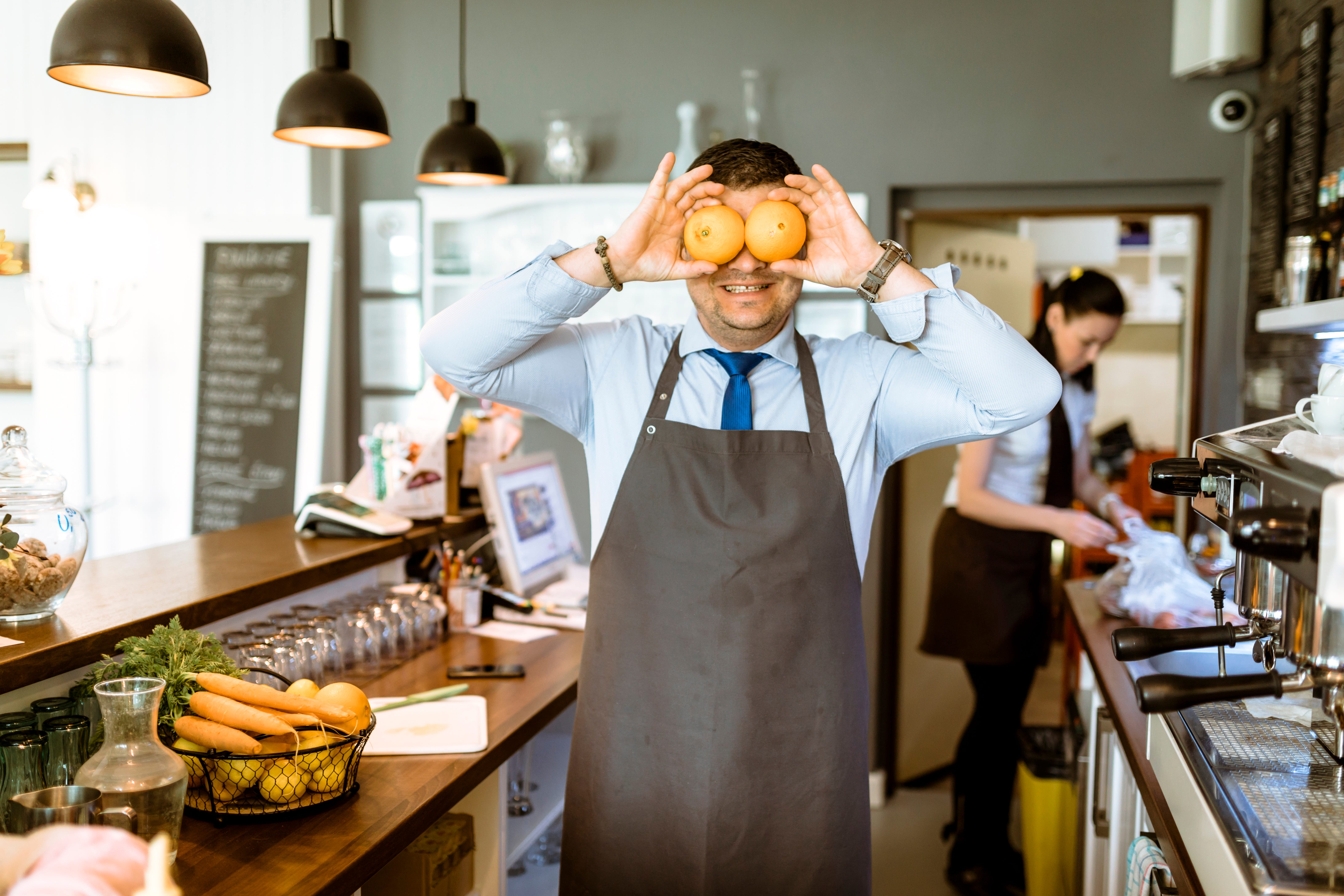
Image Credit: https://https://www.freepik.com/free-photo/barman-with-fruits_2280596.htm
_ _ _
© CHURRASCO PHUKET STEAKHOUSE / ALL RIGHTS RESERVED
Reprinting, reposting & sharing allowed, in exchange for a backlink and credits
Churrasco Phuket Steakhouse serves affordable Wagyu and Black Angus steaks and burgers. We are open daily from 12noon to 11pm at Jungceylon Shopping Center in Patong / Phuket.
We are family-friendly and offer free parking and Wi-Fi for guests. See our menus, reserve your table, find our location, and check all guest reviews here:
https://ChurrascoPhuket.com/
#Churrascophuket #jungceylon #phuketsteakhouse #affordablewagyu #wagyu
by lspeed | Aug 24, 2025 | BLACK BOX: RANTS, RAVES, REVIEWS & RECIPES
Great hospitality is about controlled magic, not contained mayhem. A team working in sync with a room full of strangers offers the illusion that the entire evening is seamless and effortless. When it works, guests feel looked after without noticing the mechanics behind it. The timing is right, the service unobtrusive, the energy warm. For a moment, they believe the universe revolves around their table and them.
But that illusion rests on an unspoken contract between restaurant and guest. Increasingly, that contract is breaking. Phones and selfies dominate the table. Children wander around the dining room unchecked. Meals are filmed more than they are eaten. Some guests treat restaurants as backdrops for content, others as stages for their own performance. This behaviour isn’t entirely new, but is becoming routine and ever harder to manage.
Once, experienced floor leaders absorbed the friction. A Maître D’ could redirect a situation with authority and charm. A senior server or bartender knew how to diffuse tension before it spread. Today, such professionals are rare, often stretched thin or pulled off the floor entirely. Without them, responsibility falls on less experienced staff who lack both the authority and the support to hold the room together.
The guest’s side of the contract has also shifted. Long before Covid, technology and consumer culture were reshaping expectations. Social media rewards the individual over the collective. The rise of customization, once a hallmark of service, has been warped into the idea that every order should bend entirely to one person’s preferences. After Covid, guests returned impatient, out of practice in social norms, and a lot more entitled. Meanwhile, restaurants returned with leaner teams and less seasoned leadership. The result is a service environment where staff face more disruption but with fewer tools to manage it.
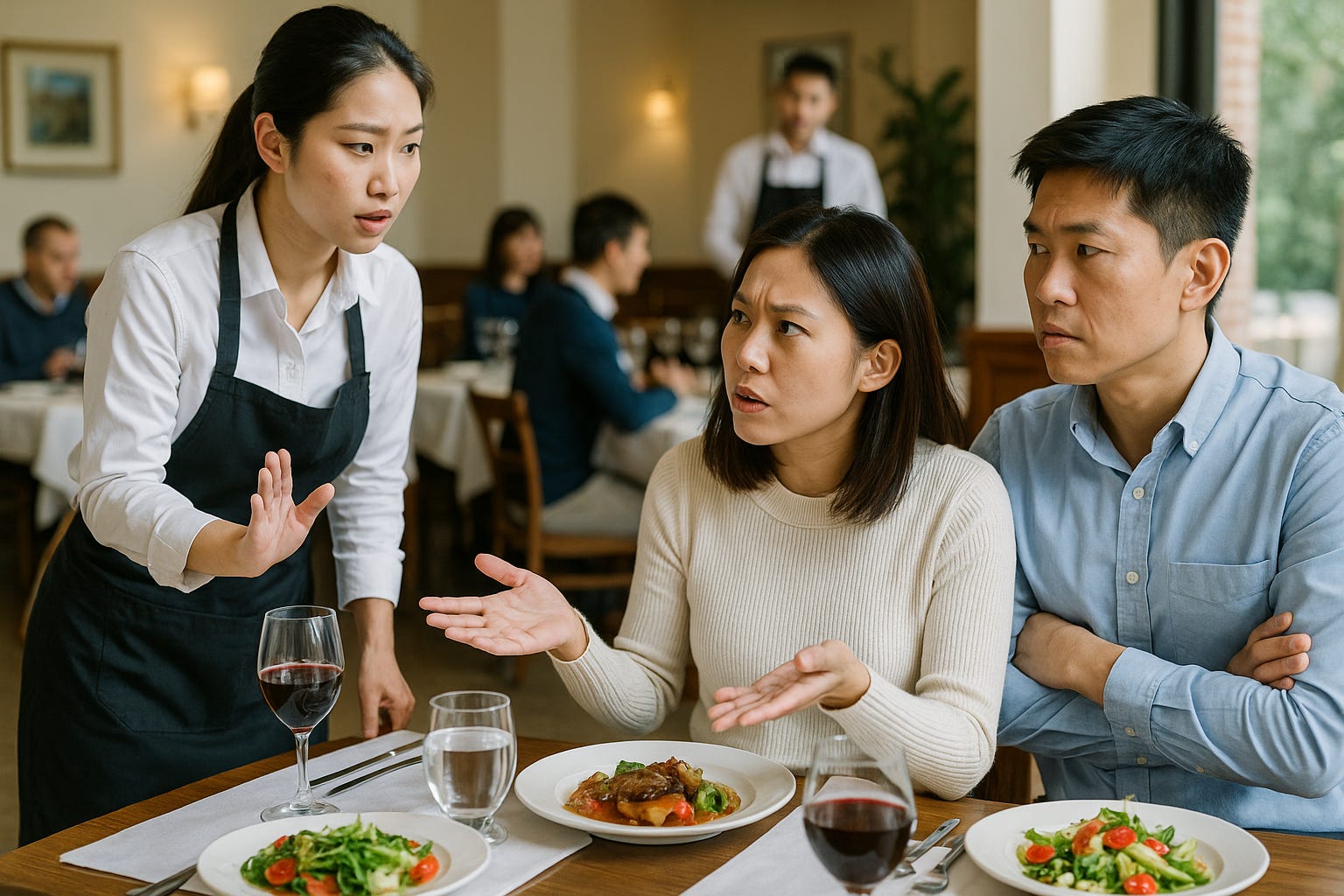
This is where the old mantra, “the guest is always right,” begins to show its cracks. It was never true. Guests can be wrong, misinformed, or simply acting out. What great professionals know is how to make guests feel right without undermining the standards of the house. That requires what might be called benevolent authority, meaning assertiveness wrapped in warmth and professionalism. It’s the skill of setting boundaries with charm. But that skill is impossible to exercise if leadership doesn’t back the team.
Too often, teams are told to “just make them happy.” The default solution becomes comped desserts, apologies on repeat, and giving way to unreasonable demands. Short-term, it defuses the moment. Long term, it drains morale, drives turnover, and erodes the culture and standards. The hidden cost of endless appeasement is not the free dessert but the loss of talented people unwilling to work in a system where their dignity isn’t protected.
Hospitality is not and has never been about servitude, it’s about a skill and balance. A mutual exchange, where the restaurant delivers thoughtful service and the guest brings basic respect for the shared space. When that balance holds, the dining room thrives. When it breaks, staff feel unsupported, standards slip, and the atmosphere turns awkward. Every operator knows the difference between a room humming with conviviality and one that feels like a powder keg waiting for a spark.
For restaurant owners and managers, the path forward is not about doubling down on slogans or tightening rulebooks. It’s about investing in human leadership on the floor. That means training leaders to manage people as much as service flow. It means empowering staff to make judgment calls rather than forcing them into rigid scripts. And most importantly, it means creating a culture where dignity is valued on both sides of the table.
The guest is not always right. But handled properly, they should leave feeling as if they were, because the team was skilled, fully supported, and there confident enough to manage the situation without compromise.
That’s the standard the hospitality trade must recover. Not deference at all costs, but dignity for both guest and team.
Image Credit: https://churrascophuket.com
_ _ _
© CHURRASCO PHUKET STEAKHOUSE / ALL RIGHTS RESERVED
Reprinting, reposting & sharing allowed, in exchange for a backlink and credits
Churrasco Phuket Steakhouse serves affordable Wagyu and Black Angus steaks and burgers. We are open daily from 12noon to 11pm at Jungceylon Shopping Center in Patong / Phuket.
We are family-friendly and offer free parking and Wi-Fi for guests. See our menus, reserve your table, find our location, and check all guest reviews here:
https://ChurrascoPhuket.com/
#Churrascophuket #jungceylon #phuketsteakhouse #affordablewagyu #wagyu
by lspeed | Jul 27, 2025 | BLACK BOX: RANTS, RAVES, REVIEWS & RECIPES
Right up front – none of these reviews were written about us, but we collected them because they’re too odd not to share. We also use them for training purposes of our service team. So here, for your amusement and maybe disbelief, are 20 of the weirdest steakhouse reviews we have found over time.
1. “Too much meat.”
“Everything was meat. Where were the salads? I left feeling like a caveman.”
Salads are great, but this is a steakhouse, not a spa café.
2. “They refused to cook it well-done twice.”
“Sent it back to be more well-done. Chef refused. It’s my steak. I should decide.”
At some point, it’s not steak—it’s charcoal.
3. “Too smoky. Smelled like steak.”
“Place smelled like grilled meat. Clothes reeked after. Not cute.”
We’re assuming this wasn’t meant as a compliment, but we’ll take it.
4. “Too many steak knives on the table.”
“Each person got a big knife. Felt a bit aggressive, like we were gearing up for battle.”
We call it being prepared. It’s a steakhouse, not a salad bar.
5. “The cow probably had feelings.”
“Felt bad eating steak. Cows are emotional beings. Won’t come back.”
We get it—but we’re still a steakhouse.
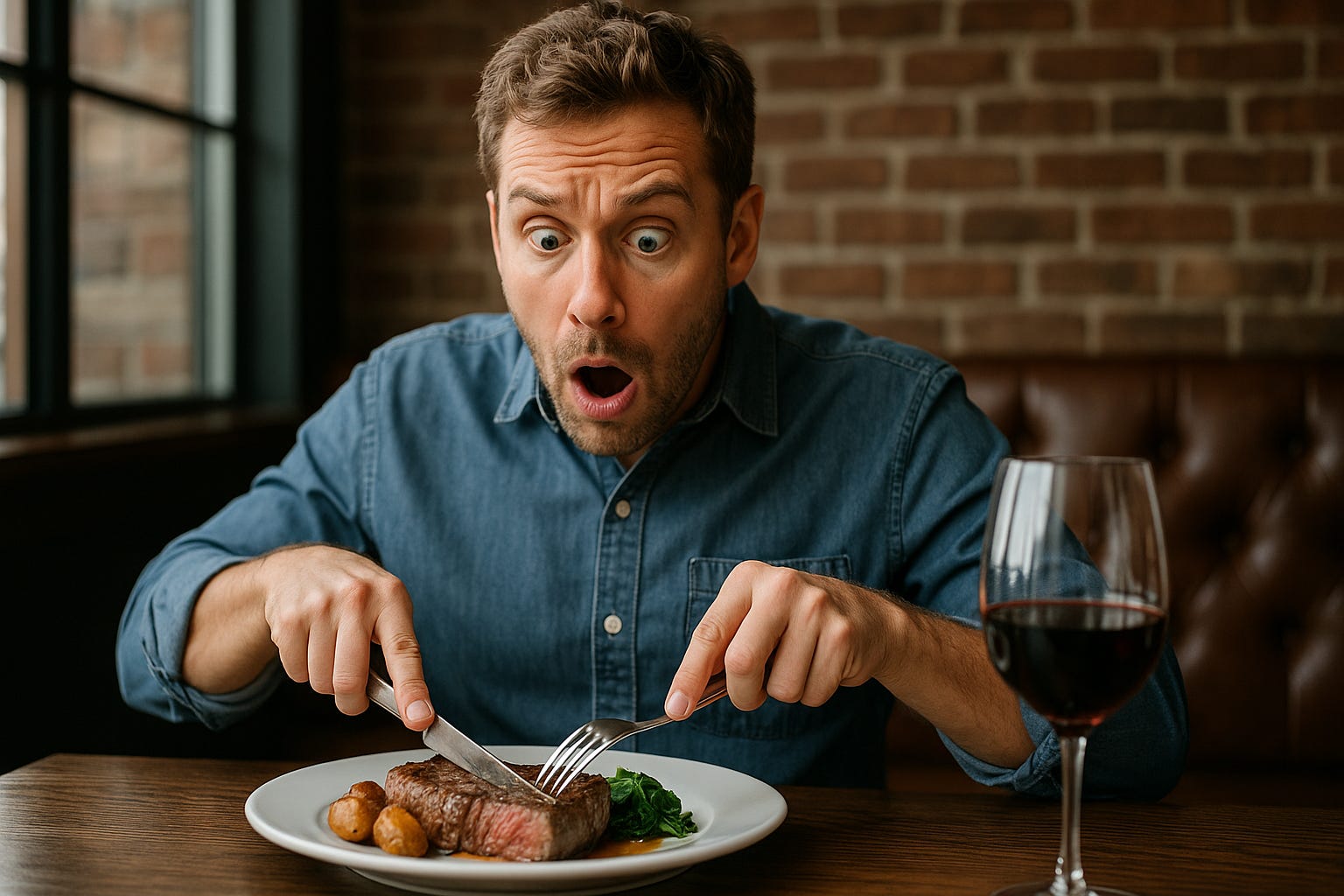
6. “The steak was pink inside. That’s raw!”
“Ordered medium. It came pink and juicy. That’s raw meat. Disgusting.”
That’s actually how it’s supposed to be. Science agrees.
7. “The menu had too many types of steak. Got stressed.”
“There were like ten different cuts. I got overwhelmed and just ordered a burger. Felt judged.”
We offer variety so you can find your favorite—but no pressure, the burger’s great too.
8. “Too quiet. I could hear people chewing.”
“The vibe was too silent. All I heard was knives and chewing. Gross.”
Bring friends. Or earbuds.
9. “Didn’t do the steak dance like in Brazil.”
“In Brazil they spin knives and do shows. Here, just boring meat service. No entertainment.”
Sounds like someone booked the wrong continent.
10. “The steak tasted like beef.”
“Not a fan. It had a strong beef flavor. Not what I expected.”
…that’s kind of the idea.
11. “Didn’t offer gold flakes on my Wagyu.”
“Wagyu was good but didn’t feel luxury enough. Should’ve had truffle or gold flakes.”
This isn’t a Vegas nightclub.
12. “The steak wasn’t Instagram-worthy.”
“Looked brown and boring. Doesn’t pop in photos. Lost likes. 2 stars.”
We grill for mouths, not timelines.
13. “The steak made me full.”
“It was so rich and heavy I couldn’t finish. Felt overly satisfied. Not ideal.”
You’d be shocked how often this complaint actually shows up.
In Closing
In the world of hospitality, you hear everything, from heartfelt praise to utterly mystifying comments. If you’ve ever worked in hospitality, you will know this list is just the tip of the iceberg. If you’ve got a favorite weird review of your own, send it our way. We’re always collecting … we might even feature it next.
Image Credit: https://churrascophuket.com
_ _ _
© CHURRASCO PHUKET STEAKHOUSE / ALL RIGHTS RESERVED
Reprinting, reposting & sharing allowed, in exchange for a backlink and credits
Churrasco Phuket Steakhouse serves affordable Wagyu and Black Angus steaks and burgers. We are open daily from 12noon to 11pm at Jungceylon Shopping Center in Patong / Phuket.
We are family-friendly and offer free parking and Wi-Fi for guests. See our menus, reserve your table, find our location, and check all guest reviews here:
https://ChurrascoPhuket.com/
#Churrascophuket #jungceylon #phuketsteakhouse #affordablewagyu #wagyu
by lspeed | Jul 13, 2025 | BLACK BOX: RANTS, RAVES, REVIEWS & RECIPES
In the restaurant world, the phrase “the customer is always right” is often treated as untouchable. But anyone who’s spent time in hospitality knows it’s far from universally true. Guests can be wrong. They can be rude, unreasonable, manipulative, or even outright dishonest. Pretending otherwise helps no one. Not the team, not the business, and often not even the guest themselves. At the same time, it’s crucial to remember: guests are still guests. That status carries weight. How an establishment handles difficult moments, without losing professionalism, integrity, or warmth, often defines the experience more than the food or setting ever could.
There’s a fine line every restaurateur or manager has to walk: protecting staff morale and operational integrity while still making guests feel respected, even when their behavior is far from ideal. The goal isn’t to reward bad behavior, nor to engage in conflict, but to guide situations toward resolution with clarity and poise. Below are five all-too-common guest scenarios, along with proven techniques to defuse tension and redirect things in a constructive direction.
1. The Table Tyrant
Scenario: A guest is pushy, demanding immediate seating, rushing orders, or addressing staff in a disrespectful tone.
Defusing Technique: Calm Reframing with Boundaries
Instead of reacting emotionally, it helps to calmly reinforce fairness and order:
“We’ll make sure everything runs smoothly for you — and we’re working through all tables in order to ensure everyone is treated equally. Thanks for your patience.”
This resets expectations without escalating the tone, and reminds the guest that others are being considered too.
2. The Review Blackmailer
Scenario: A guest uses the threat of a negative online review to demand freebies or preferential treatment.
Defusing Technique: Shift Focus to Direct Resolution
Rather than respond to the threat, it’s better to bring the conversation back to real-time problem solving:
“We care about every guest’s experience, and would rather fix any issues now than hear about them later. Let’s talk through what’s not working so we can make it right.”
This establishes fairness without giving in to coercion.
3. The Drunk
Scenario: A guest becomes intoxicated and starts to disrupt the atmosphere — through volume, behavior, or attitude.
Defusing Technique: Quiet Concern and a Gentle Redirect
It’s important to approach this discreetly and with care:
“Just checking in — everything alright? If you need a moment or some water, we’re happy to help.”
By framing the intervention as concern rather than correction, it tends to reduce defensiveness and keeps the tone non-confrontational.
4. The Dish Denier
Scenario: A guest claims their meal is incorrect or unsatisfactory only after finishing most of it.
Defusing Technique: Empathetic Acknowledgment and a Path Forward
Rather than accuse or dispute, acknowledge the concern and move forward:
“Thanks for bringing this up — we want you to enjoy your meal fully. Let’s find a way to improve the experience from here.”
Even if the complaint seems disingenuous, a composed response avoids escalation and often reveals the guest’s true intent.
5. The Disruptive Group
Scenario: A large, lively group becomes too loud or disruptive for other diners.
Defusing Technique: Tap into Group Leadership
Engaging the most influential person at the table one-on-one can shift the dynamic:
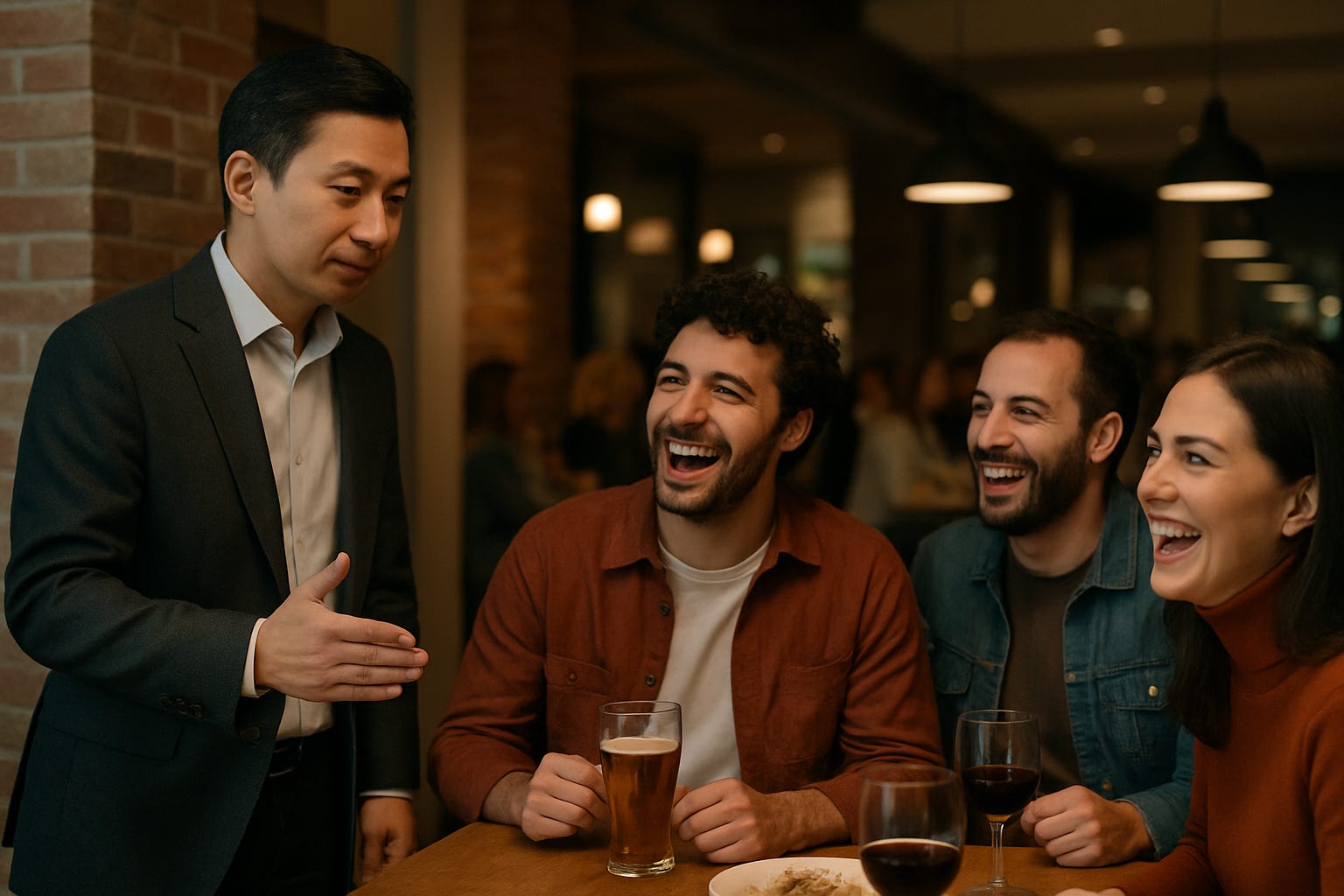
“Looks like everyone’s having a great time, which we love to see. Just a small favor — a couple nearby guests are struggling to hear each other, so we’d appreciate your help in keeping things enjoyable for everyone.”
This technique avoids public embarrassment while encouraging self-moderation from within the group.
Balancing, Not Absolutes
These situations are part of the fabric of hospitality. They can’t be eliminated, only managed — and how they’re managed reflects the philosophy of the business itself. Hospitality is not submission. It’s not about letting guests behave however they please. But neither is it about asserting control or being “right” at all costs.
The aim is to uphold a respectful environment, keep the atmosphere intact, and resolve friction with professionalism. The saying needs updating: guests aren’t always right, but they are always guests. And when that principle guides how a restaurant responds to tension, the outcome is almost always better for everyone involved.
Image Credit: https://insider.churrascophuket.com
_ _ _
© CHURRASCO PHUKET STEAKHOUSE / ALL RIGHTS RESERVED
Reprinting, reposting & sharing allowed, in exchange for a backlink and credits
Churrasco Phuket Steakhouse serves affordable Wagyu and Black Angus steaks and burgers. We are open daily from 12noon to 11pm at Jungceylon Shopping Center in Patong / Phuket.
We are family-friendly and offer free parking and Wi-Fi for guests. See our menus, reserve your table, find our location, and check all guest reviews here:
https://ChurrascoPhuket.com/
#Churrascophuket #jungceylon #phuketsteakhouse #affordablewagyu #wagyu
by lspeed | Jun 29, 2025 | BLACK BOX: RANTS, RAVES, REVIEWS & RECIPES
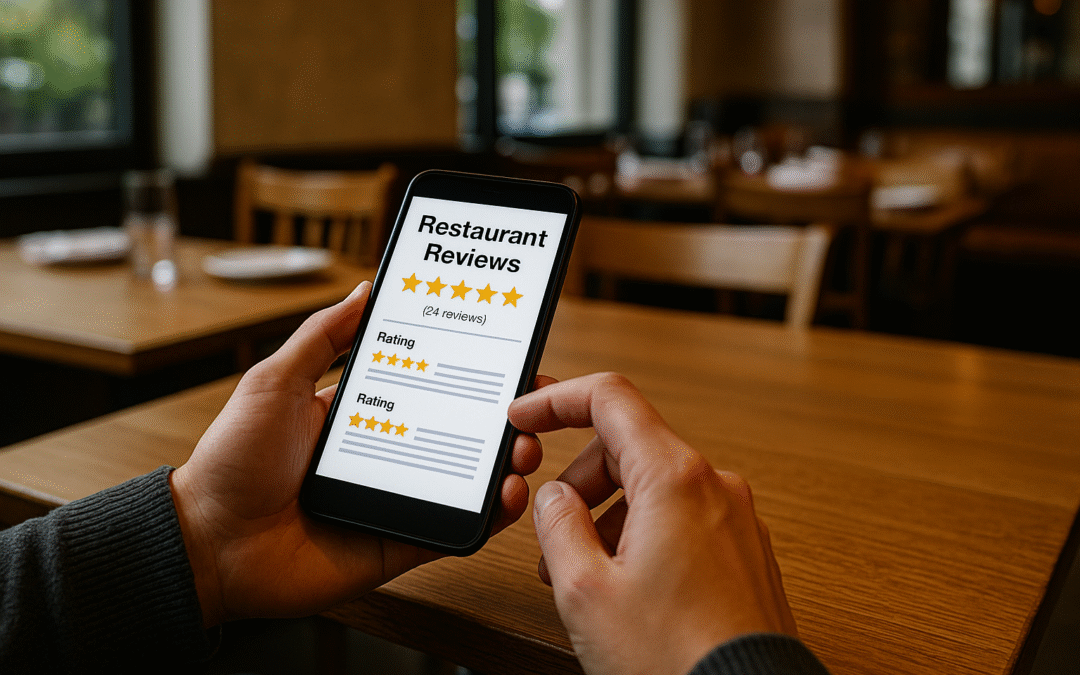
As a restaurant owner, I welcome honest feedback. It helps us grow, keeps us accountable, and drives business. But over the past few years, online reviews have shifted from being helpful to increasingly hazardous. What once empowered consumers and businesses alike is now riddled with credibility issues, flawed filtering systems, and an absence of accountability on the platforms that host them.
Google’s AI Nonsense
Google, for instance, recently implemented AI-driven moderation of reviews. In theory, this should help weed out fake or malicious content. But in practice, the algorithm is blunt. We’ve had several legitimate, positive reviews from real guests disappear without explanation. These weren’t bots or spam—they were detailed, genuine accounts from happy diners. Yet there’s no recourse. No appeal. No person to talk to. Once the system flags a review, it vanishes into the void.
TripAdvisor’s Freefall
Once the go-to platform for travelers and diners, the platform always had and still has major flaws. The problem isn’t just fake reviews, it’s the lack of any interest in addressing them. For years, restaurant owners pleaded with them to investigate suspicious reviews or restore wrongly removed ones, only to be met with canned responses (if at all), or stone cold silence. It’s no surprise the platform’s popularity is in free fall. When businesses are treated as adversaries rather than partners, trust erodes fast.
The Litigation Response
In Germany, the situation has flipped in the opposite direction. Restaurateurs there have started using the country’s notoriously complex legal system to demand the removal of negative reviews. Send a legal notice to Google, and the company removes the review, no questions asked. That might sound like a win for business owners, but it’s just another flawed extreme.
And it’s not just a Germany problem. In Italy, businesses routinely sue for defamation over TripAdvisor reviews. Some courts have sided with them, leading to jail time for fake reviewers in some cases. In Thailand, strict defamation laws mean even a negative but truthful review can bring legal threats.
Reviewers themselves now have no way to contest such takedowns. Transparency is lost, and the public ends up with a sanitized picture rather than the full truth. So now guests self-censor, and platforms overreact to avoid litigation.
Three Suggestions
-
Transparent Moderation Logs: Platforms should provide businesses and reviewers with a clear log of why a review was removed or rejected. If an AI flagged it, say why. If a human did, provide evidence. No more silent deletions.
-
Verified User Programs: Require at least a shred of proof-of-purchase or visit confirmation for reviews to be published. Some platforms have flirted with this idea but never implemented it meaningfully. A verified review is more credible for everyone.
-
Balanced Appeal Systems: Both reviewers and businesses should be able to challenge decisions, whether it’s removal or publication. A basic arbitration step (even automated) would be fairer than the current black box approach.
The review ecosystem that is broken from both ends. Businesses are frustrated, guests feel powerless, and platforms offer little clarity. We need to move toward a review culture that rewards honesty, not manipulation, whether algorithmic or legal. Until platforms invest in real accountability, we’ll continue living in a world where the loudest voices, not the truest ones, shape reputations.
Image Credit: https://www.churrascophuket.com/
_ _ _
© CHURRASCO PHUKET STEAKHOUSE / ALL RIGHTS RESERVED
Reprinting, reposting & sharing allowed, in exchange for a backlink and credits
Churrasco Phuket Steakhouse serves affordable Wagyu and Black Angus steaks and burgers. We are open daily from 12noon to 11pm at Jungceylon Shopping Center in Patong / Phuket.
We are family-friendly and offer free parking and Wi-Fi for guests. See our menus, reserve your table, find our location, and check all guest reviews here:
https://ChurrascoPhuket.com/
#Churrascophuket #jungceylon #phuketsteakhouse #affordablewagyu #wagyu

by lspeed | Jun 15, 2025 | BLACK BOX: RANTS, RAVES, REVIEWS & RECIPES
If you owned a spot in a tourist-heavy area, your rank on TripAdvisor wasn’t just a number, it was currency. Guests would literally walk in, phone in hand, quoting your position on the local ranking like it was gospel. Back then, we all played the game. We monitored our reviews, responded diligently, and hoped to climb just a little higher in the rankings. It wasn’t perfect, but it mattered.
Fast forward to today, and it’s a different story. TripAdvisor doesn’t hold the same weight in the restaurant world. It’s not completely irrelevant, but it’s not where most of us are focusing our attention any more. The reasons are tech shifts, changing customer habits, and some serious missteps on TripAdvisor’s part.
Google Changed The Game
These days, when someone searches for a place to eat, they don’t head to TripAdvisor, they Google it. And Google doesn’t just give you directions. It hands you reviews, photos, menus, opening hours. It lets you book a table or order online, all without ever leaving the search page. As restaurant owners, we see the difference. A few years ago, customers used to say, “I found you on TripAdvisor.” Now, it’s almost always Google. That shift has made TripAdvisor feel more like an afterthought than a must-have.
Trust Took a Hit
TripAdvisor’s credibility problem has been brewing for a while. Sure, it’s still possible to find thoughtful, honest reviews there, but it’s also been plagued by manipulation. Positive reviews can be bought or pushed. Negative ones can be weaponized. And while TripAdvisor claims to filter fake reviews, most of us in the business have seen questionable ones slip through. Google isn’t perfect either, but it has one thing going for it: accountability. Reviews are usually tied to real accounts, sometimes even with location data verifying the visit. That extra layer makes a difference.
Using TripAdvisor Feels… Tired
Managing a restaurant listing on TripAdvisor is clunky. The backend feels like it hasn’t changed in a decade. Messaging tools are clumsy, updates are slow, and the constant push to pay for “profile upgrades” gets old fast. From a guest’s point of view, it’s not much better. The site is ad-heavy, laggy, and awkward to navigate, especially when compared to the fast interfaces of Google, Instagram, or TikTok. In 2025, that matters.
Diners Have Moved On
Let’s face it: people don’t discover restaurants through text-heavy review sites anymore. They find them in a reel, a TikTok, a beautifully shot photo with a “must-try” caption. A single viral video can fill a dining room faster than a hundred glowing write-ups on TripAdvisor. And in different parts of the world, regional platforms have taken over. OpenRice, TheFork, even Facebook groups are where the local buzz lives now.
We’re Not Sad to See It Go
Here’s something many restaurant owners won’t say out loud: we’re relieved to see TripAdvisor lose its grip. For years, we felt held hostage by a platform that offered little recourse when someone left a false or malicious review. The appeal system was opaque at best, indifferent at worst. You could shout into the void and rarely get a reply. That kind of carelessly wielded power left a bad taste, and seeing that influence fade is a welcome change.
What We Focus on Now
These days, we keep our Google presence polished. We stay active on Instagram. We make sure menus are updated and that the guest experience feels authentic and engaging, online and offline. TripAdvisor is still there, but it’s turning into background noise. We glance at it now and then, but we don’t build our strategy around it. Unless TripAdvisor undergoes a serious reinvention, its future looks limited. To stay relevant, it would need to rebuild trust, modernize its tools, and actually respond to the needs of the businesses it relies on.
The Next Shift: AI & the End of Endless Reviews
There’s something else on the horizon, too: conversational AI. People can now ask tools like ChatGPT for restaurant suggestions tailored to their mood, location, and dietary needs, and get answers instantly. These AI tools pull from aggregated data, summarizing thousands of reviews without users needing to read a single one. The power is shifting from platforms that host reviews to tools that distill them.
For us as restaurant owners and managers, it means being consistent across platforms and making sure the overall online picture — photos, menus, hours, reviews — reflects what we really offer. Because in a world of AI summaries, one bad outlier can carry more weight than ever.
Image Credit: https://churrascophuket.com
_ _ _
© CHURRASCO PHUKET STEAKHOUSE / ALL RIGHTS RESERVED
Reprinting, reposting & sharing allowed, in exchange for a backlink and credits
Churrasco Phuket Steakhouse serves affordable Wagyu and Black Angus steaks and burgers. We are open daily from 12noon to 11pm at Jungceylon Shopping Center in Patong / Phuket.
We are family-friendly and offer free parking and Wi-Fi for guests. See our menus, reserve your table, find our location, and check all guest reviews here:
https://ChurrascoPhuket.com/
#Churrascophuket #jungceylon #phuketsteakhouse #affordablewagyu #wagyu