
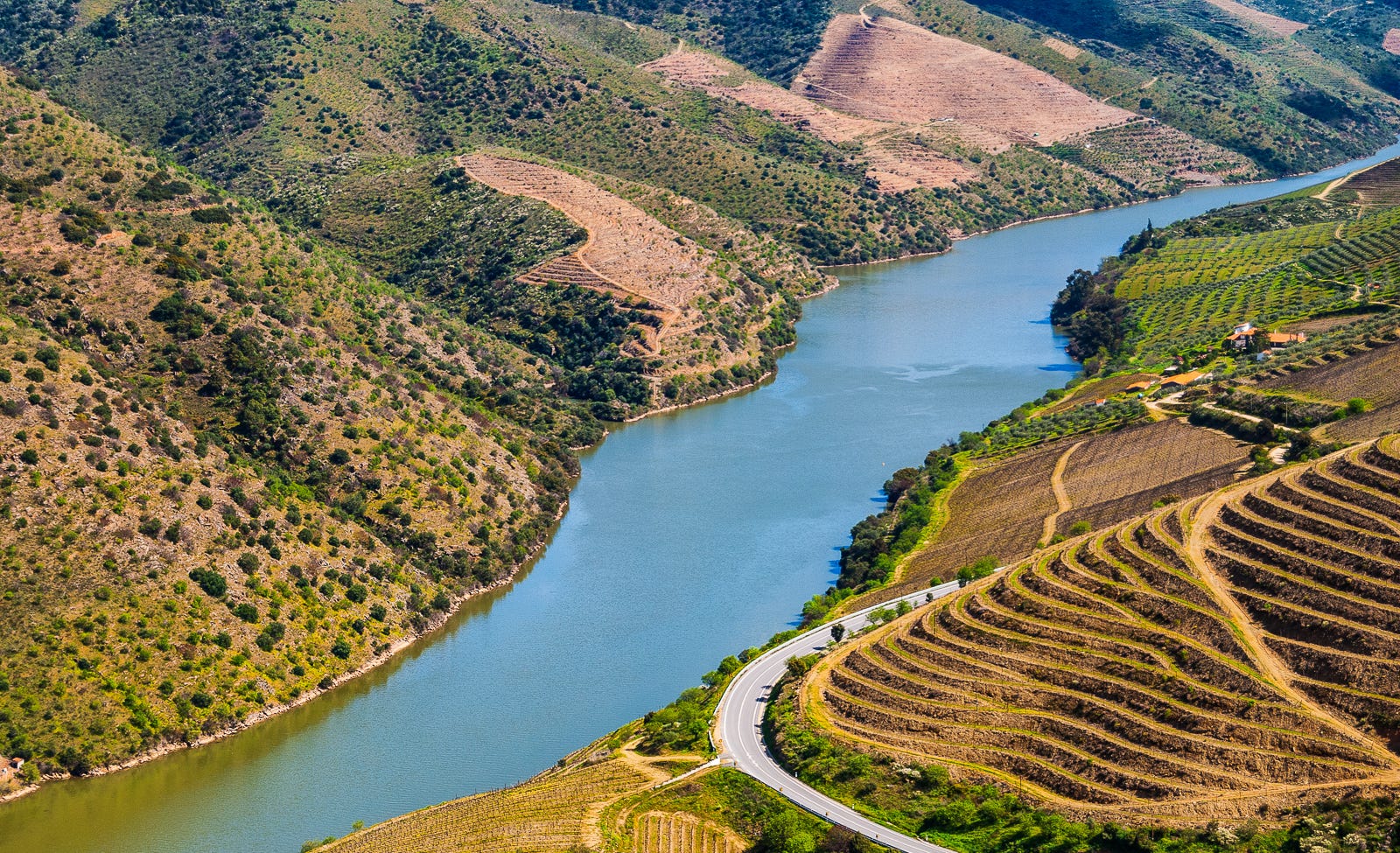
Since we launched our Churrasco South American Steakhouse in Phuket in 2012, our wine list at has leaned heavily towards Argentina and Chile, with Spain playing a supporting role. This suited both our steaks and our guests, who were familiar with the names and happily reached for their regular Malbecs or Riojas. So when our supplier suggested adding Portuguese wines during our latest wine list revamp, we were less than enthusiastic.
Beyond Port, which we already carried, and Vinho Verde, Portugal’s lightweight white wine, the country was a blank spot on our wine map. Portugal seemed relevant to our dessert menu, but not as a serious contender alongside our Malbecs or Zinfandels. Our supplier made us taste a few labels (one of the hardships we endure as steakhouse owners), and one particular blind-tasted Douro red caught our attention and affection. It has since become one of our popular all-round reds, leaving us wondering how a region with so much winemaking history had stayed off so many wine lists, including ours.
In the Shadows
The short answer is Port. During the late seventeenth century, Britain wanted alternatives to French wine, a country it was constantly quarrelling with. The sweet character of Port appealed to British tastes, and fortification with grape spirit made the wine more stable during shipping and storage. For a trading nation with a huge navy and merchant marine, that was a considerable advantage. British merchants subsequently helped turn the Douro into Port country, and in 1756 the region was formally demarcated for its production.
For much of the twentieth century, grapes suitable for premium Port were channelled into fortified wine, while dry reds remained commercially invisible. Ferreira’s pioneering Barca Velha demonstrated their potential as early as 1952, but broader change only gathered momentum after Portugal joined the European Community in 1986.
Producers such as Niepoort, Quinta do Crasto, Quinta do Vale Meão and Wine & Soul developed a distinctive dry-wine identity around indigenous varieties including Touriga Nacional, Touriga Franca and Tinta Roriz. Meanwhile, Portugal’s international image remained dominated by Port and Vinho Verde, leaving its dry reds struggling for recognition. The wines had established their quality credentials, but their international reputation has yet to catch up. For operators like us, that gap is where things get interesting.
The Value Case
Few guests have a reference price for Douro wines in their heads. This allows us to offer a red with genuine structure and complexity at a price below that of many comparable French or Italian bottles. In Thailand, where import duties make almost any bottle look expensive, that matters. It’s the same logic we apply to our Wagyu and Black Angus beef – quality at a price that encourages guests to order rather than admire and pass over.
It also gives our regulars something new to explore, without moving into another price bracket. I wouldn’t count on this value gap lasting forever. The Douro’s steep terraces, labour-intensive cultivation and rising production costs are putting pressure on growers. And greater international recognition rarely comes without higher prices.
The Trade-Off
Selling wine from an unfamiliar region means the wine list cannot do all the work. A Malbec or Rioja needs little introduction, but a Douro red needs someone mentioning it at the table. That puts responsibility on our floor team, because a server who cannot explain an unfamiliar wine is unlikely to sell many bottles of it.
What worked for us was positioning the Douro against wines our guests already knew – a fresh alternative for Malbec drinkers, and a natural partner for our steaks. Our Portuguese wine experiment has exceeded our expectations, not because we launched an elaborate sales campaign, but because the wine is excellent, filled a gap in our selection and earned the confidence of our team.
Most guests who order it still know nothing about British Port merchants or Barca Velha, and that’s fine. What matters is that they enjoy the wine, appreciate the recommendation and are happy to come back for another bottle.
And they don’t flinch when the bill arrives.
Image Credit: https://commons.wikimedia.org/w/index.php?curid=35076867
_ _ _
© CHURRASCO PHUKET STEAKHOUSE / ALL RIGHTS RESERVED
Reprinting, reposting & sharing allowed, in exchange for a backlink and credits
Churrasco Phuket Steakhouse serves affordable Wagyu and Black Angus steaks and burgers. We are open daily from 12noon to 11pm at Jungceylon Shopping Center in Patong / Phuket.
We are family-friendly and offer free parking and Wi-Fi for guests. See our menus, reserve your table, find our location, and check all guest reviews here:
https://ChurrascoPhuket.com/
#Churrascophuket #jungceylon #phuketsteakhouse #affordablewagyu #wagyu