
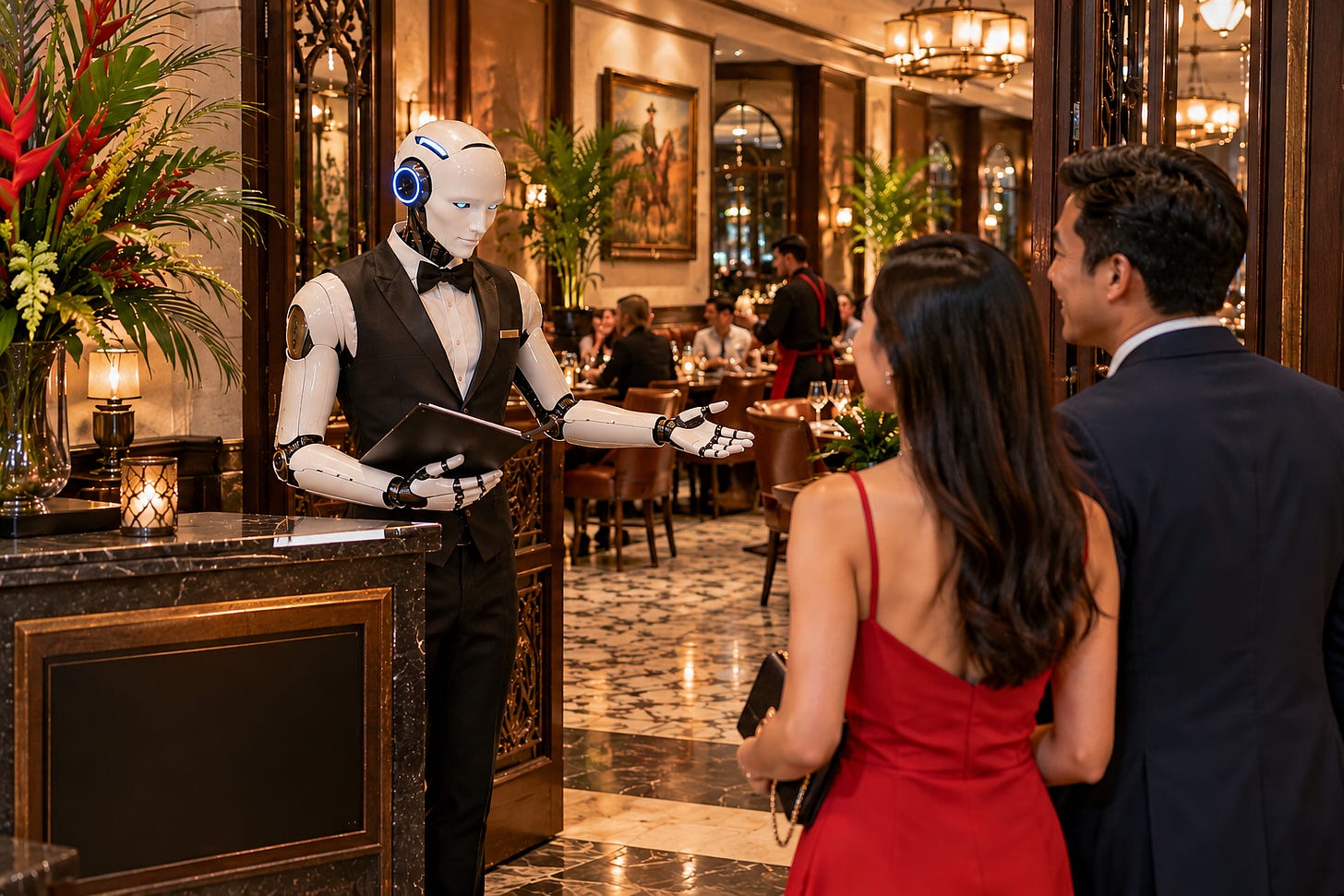
Waiter, there’s an algorithm in my soup
Call me old-fashioned, but am I the only one who thinks the restaurant trade is heading down the wrong road? On a recent visit to our favourite Japanese restaurant in Singapore, I noticed that the printed menu had been replaced by an iPad that guests scroll through and order from. When asked, the staff did take our order the traditional way, though not with what I would call much enthusiasm.
I was not impressed, and this is not an isolated case. The same thing is happening in thousands of restaurants, especially in places like Singapore where labour is expensive and hard to find. It raises the question of why restaurants are so keen to introduce technology in the one spot where it does the most damage, directly between the guest and the service? Where it takes something very important away from the experience instead of adding to it.
And aren’t guests supposed to be at the heart of what we do?
At Churrasco Phuket Steakhouse, we continue to use oversized, leather-bound menus, and our staff take every order personally at the table. Technology only comes in after that. Our team enters the order into a mobile phone connected to our POS, which sends it straight to the kitchen and bar printers. The data then feeds into our AI system, to be used to analyse order flow, menu performance, and guest behaviour.
It is guest-facing, friendly and simple, but also fast and efficient. More importantly, our guests feel well looked after, and they don’t have to do what we consider our own job. That job, as I see it, is not selling food and drinks but making people happy, even if only for a few hours. Which is really what hospitality means to us.
Having got that off my chest, we welcome AI, as it does help us in many ways. It just belongs behind the scenes rather than in the guest’s face. Here are the areas where it has made a real difference in our operation without annoying anyone.
1. Purchasing and Stock Control
AI can look at past sales, reservations, weekdays, holidays and seasonal patterns to forecast what we are likely to need. This matters most with expensive fresh products. Order too much and you pay for it in waste, order too little and you either lose sales or end up buying at retail prices from the supermarket around the corner. AI won’t eliminate either problem, but it takes a lot of the gut guesswork out.
2. Staff Scheduling
Matching staff levels to business has always been difficult, even more so for a seasonal restaurant like ours, located in one of the world’s busiest tourist destinations. Guest numbers swing hugely over the year in Phuket, and our system analyses historical turnover, reservations and hourly sales to predict how many kitchen and service staff we will need.
We as owners and senior managers still decide the roster, but the system only knows how busy last Tuesday was and how busy the same Tuesday was in previous years. What it doesn’t know is which waiter can comfortably handle eight tables, and which one starts looking lost at four.
3. Menu Analysis
Because we are in such a high-traffic location and our guests change almost every week, weekly or monthly specials don’t do much for us. Instead, we fully update the menu once a year and launch it on an auspicious day with a fair amount of fanfare. That makes it important to look very carefully at the past twelve months, and with a 12 month horizon ahead of it. What sells, what doesn’t, what needs repricing, and what needs to come off.
We used to do this the hard way, working through long sales reports, cost sheets and everything else that comes with the job. Our POS already held most of the information, but AI can now compare sales volume, food cost, selling price and margin in minutes and show which dishes aren’t pulling their weight.
This year we did our first full menu analysis with AI. It saved us an enormous amount of time, and it also spared us the chef-versus-owner arguments every restaurateur knows too well. Every menu carries a few dishes that stay on longer than the numbers justify, and numbers are hard to argue with. Our chef was fully on board this time, and we all expect to both save and make more money as a result.
4. Routine Guest Enquiries
AI handles repetitive questions well. Opening hours, directions, parking, dietary options and basic reservation questions can be answered automatically on websites and messaging platforms, and in several languages, which is a real advantage in a place like Phuket. The more complicated questions are still our job, and they will stay that way.
5. Analysing Guest Feedback
We receive reviews and comments on several platforms, and which ones matter keeps shifting, especially with guests from more than 100 countries. Google is strong almost everywhere, Chinese guests check Dianping instead, and as a result of its arrogant past dealings with restaurants, Tripadvisor has lost much of the influence it once had.
AI can read through large numbers of reviews and pick out recurring themes. If complaints about waiting times are rising, management needs to know. If guests keep praising a particular dish or staff member, that is worth knowing too. One angry review may mean very little, but several mentioning the same issue should set off alarm bells.
Don’t Get Me Wrong
Clearly, AI is here to stay and has enormous potential for restaurants, but just not with a seat at the table. We use it to forecast demand, analyse costs, plan staffing, answer routine questions and understand feedback – all of it behind the scenes.
When guests arrive though, they get a cold towel and a menu, their order is taken with a smile, and we make sure that nobody leaves unhappy. Maybe that will look even more old-fashioned in ten years, and maybe some younger guests already prefer tapping on a screen.
I honestly don’t know. But for now, we are hospitality professionals. Not IT vendors.
Image Credit: https://www.churrascophuket.com (AI Generated)
_ _ _
© CHURRASCO PHUKET STEAKHOUSE / ALL RIGHTS RESERVED
Reprinting, reposting & sharing allowed, in exchange for a backlink and credits
Churrasco Phuket Steakhouse serves affordable Wagyu and Black Angus steaks and burgers. We are open daily from 12noon to 11pm at Jungceylon Shopping Center in Patong / Phuket.
We are family-friendly and offer free parking and Wi-Fi for guests. See our menus, reserve your table, find our location, and check all guest reviews here:
https://ChurrascoPhuket.com/
#Churrascophuket #jungceylon #phuketsteakhouse #affordablewagyu #wagyu