
Personally, I take great pleasure in seeing something mankind has been doing for thousand of years return as a fashionable latest greatest idea. Like walking after a meal, for example. Or taking power naps, something my grandma used to call her little snooze.
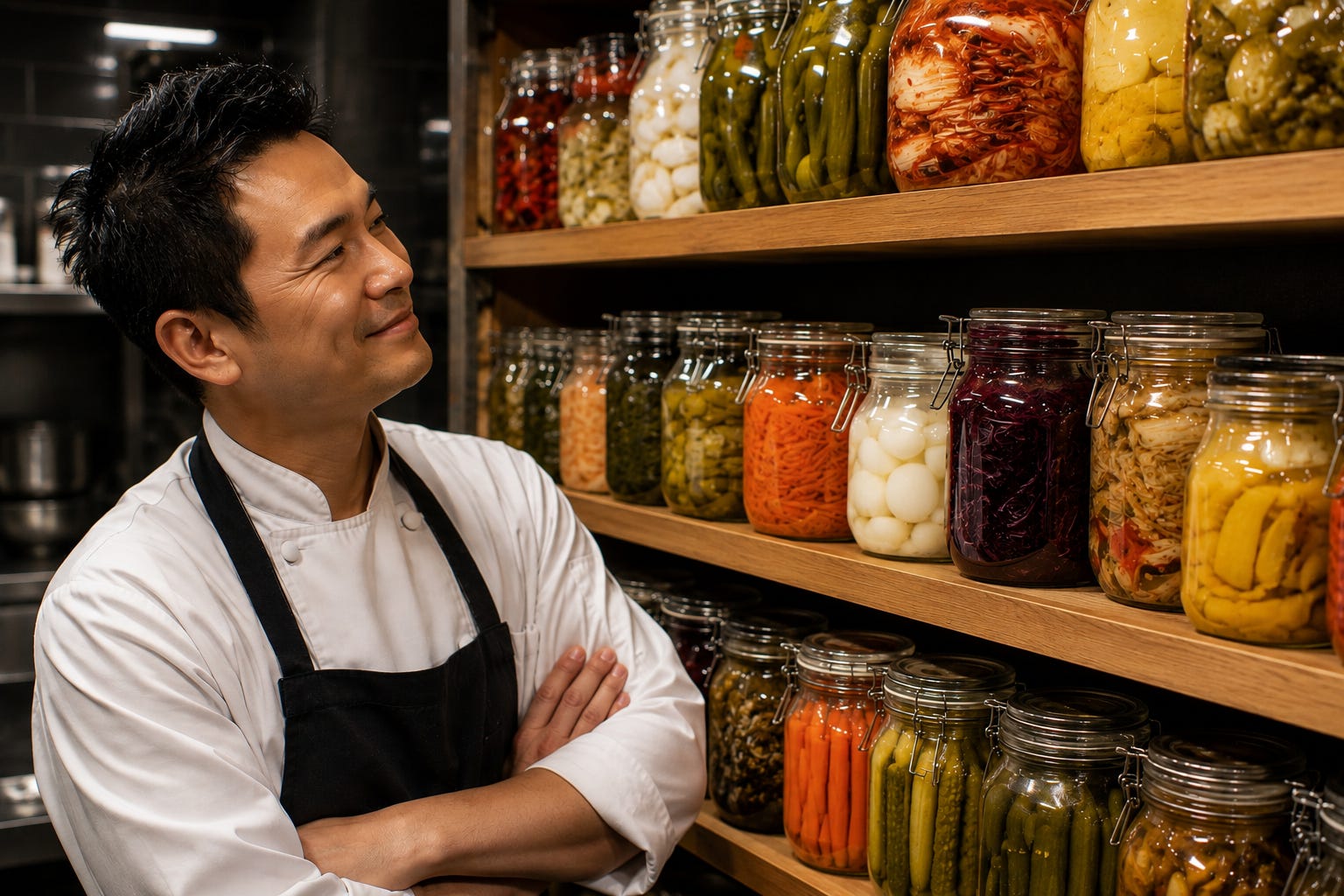
Fermentation, one of humanity’s oldest kitchen trick, is enjoying just such a moment. Kombucha occupies expensive refrigerator space. Kimchi escaped Korean restaurants and happily dwells next to burgers and scrambled eggs. Supermarkets sell Kefir to people who thought it’s a Russian airline. And when intestinal plumbing became the gut microbiome, it become fashionable enough for polite breakfast conversation.
Before Refrigerators, We Had Microbes
Our ancestors had no clue what bacteria and yeast were. They simply noticed that when handled correctly, food that should spoil instead became safer, longer-lasting and considerably more interesting.
Before refrigerators, freezers and vacuum packaging, that mattered. Fermentation helped preserve harvests and milk, while simultaneously producing new flavours. Yeast turned grain into bread, and beer and grapes into wine. Bacteria helped transform milk, vegetables and countless other ingredients. It was preservation technology with the happy side effect of making dinner better.
Eventually these practical solutions became part of national identities:
KOREA celebrates its kimchi, where salted vegetables ferment into the spicy, acidic companion to almost everything Korean.
GERMANY made us eat sauerkraut, proving that cabbage, salt and patience can survive winter and accompany a hearty sausage rather well.
JAPAN perfected it’s miso, using soybeans and koji to create one of the world’s great concentrations of savoury flavour.
The list is enormous – yoghurt, cheese, salami, sourdough, soy sauce, fish sauce, beer and wine all owe their existence to microorganisms doing unpaid kitchen work. But when refrigeration arrived, fermentation became less essential for survival. Fortunately, nobody told the cheesemakers, brewers, bakers or winemakers.
Meet Your Several Trillion Dinner Guests
Now fermentation has been rediscovered, but for a completely different reason. Research into the gut microbiome revealed vast communities of microorganisms. Rather than being unwanted passengers, they are involved in digestion, metabolism and immune function. Fermented foods have consequently attracted attention because some contain live microorganisms, while fermentation itself produces compounds that may interact beneficially with our digestive system.
Researchers are still working out exactly what constitutes an ideal microbiome, and anyone claiming to have solved the matter completely is probably trying to sell you a supplement. A recent Associated Press examination of the subject reflects the remarkable shift. Foods once eaten because they were practical, cheap and delicious are now being discussed in connection with probiotics, life and ageing science, even Alzheimer.
As they do, experts caution that fermented does not automatically mean miraculous, and that highly processed products wearing fashionable probiotic clothing are not equivalent to traditional fermented foods. The hope is that at least some people are listening, especially after they saw Dr. Google or Professor ChatGPT endorsing it so vehemently.
Enter The Delicious Irony
From our perspective as restaurant operators, the easily forgotten detail about the fermentation revival is that cooks never abandoned it in the first place. We pickle vegetables because acidity cuts through richness. We use fermented sauces because they deliver extraordinary depth, and not only since the the word umami became a thing. Bakers nurture sourdough starters, and cheesemakers cultivate bacteria. Winemakers worry obsessively about yeast, and charcutiers depend upon carefully controlled microbial activity.
None of these artisans needed the phrase gut health to justify doing so. They did it because fermentation makes food taste good. That in my opinion is the most sensible way to look at its latest renaissance. If traditional fermented foods contribute positively to the ecosystem living inside us, excellent. Science should investigate it more, and thankfully, it is.
As my grandma used to say: “Everything’s better with a pickle”.
Image Credit: https://www.churrascophuket.com (AI Generated)
_ _ _
© CHURRASCO PHUKET STEAKHOUSE / ALL RIGHTS RESERVED
Reprinting, reposting & sharing allowed, in exchange for a backlink and credits
Churrasco Phuket Steakhouse serves affordable Wagyu and Black Angus steaks and burgers. We are open daily from 12noon to 11pm at Jungceylon Shopping Center in Patong / Phuket.
We are family-friendly and offer free parking and Wi-Fi for guests. See our menus, reserve your table, find our location, and check all guest reviews here:
https://ChurrascoPhuket.com/
#Churrascophuket #jungceylon #phuketsteakhouse #affordablewagyu #wagyu