by Ross Kingsley | Jan 15, 2025 | KNOWLEDGE: MEAT ESSENTIALS
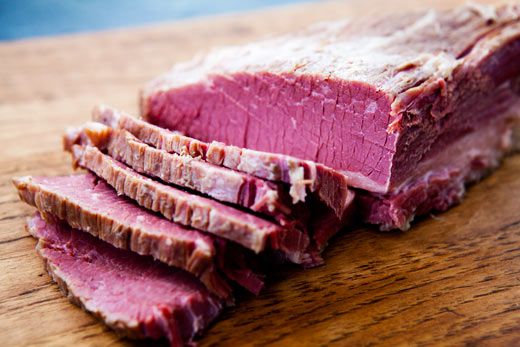
Corned Beef is a culinary staple with a wide range of uses in kitchens around the world. Despite its name, it has nothing to do with corn, of course. The term refers to the large grains, or “corns,” of salt historically used to cure the beef. This preservation method dates back centuries and was especially popular in Ireland and England, where it became a critical food source for its longevity and flavor.
Traditionally made from brisket, Corned Beef is cured in a brine seasoned with spices such as peppercorns, mustard seeds, bay leaves, and cloves. The curing process imparts a unique, tangy flavor that has become synonymous with the dish. In the 19th century, Irish immigrants brought Corned Beef to the United States, where it became a staple in American cuisine. Paired with cabbage, it became a classic dish associated with St. Patrick’s Day, though its roots lie more in immigrant ingenuity than Irish tradition.
Today, Corned Beef is celebrated for its versatility. It can be enjoyed hot or cold, sliced thin for sandwiches, or shredded as a filling for tacos or wraps. One of the most iconic uses is in a Reuben sandwich, where Corned Beef is layered with Swiss cheese, sauerkraut, and Russian dressing on rye bread. Another popular option is Corned Beef hash, a hearty mix of chopped Corned Beef, potatoes, and onions, often topped with a fried egg.
Whether you savor it in a comforting hash, a deli-style sandwich, or as part of a traditional dinner, Corned Beef is a testament to the enduring appeal of simple yet flavorful food. Its ability to blend seamlessly into diverse dishes ensures it remains a culinary favorite worldwide.
Image Credit: https://www.simplyrecipes.com/ (Elise Bauer)
_ _ _
© CHURRASCO PHUKET STEAKHOUSE / ALL RIGHTS RESERVED
>>> Reprinting, reposting & sharing allowed, in exchange for a backlink and credits <<<
Churrasco Phuket Steakhouse serves affordable Wagyu and Black Angus steaks and burgers. We are open daily from 12noon to 11pm at Jungceylon Shopping Center in Patong / Phuket.
We are family-friendly and offer free parking and Wi-Fi for guests. See our menus, reserve your table, find our location, and check all reviews here:
https://ChurrascoPhuket.com/
#Churrascophuket #jungceylon #phuketsteakhouse #affordablewagyu #wagyu
by Ross Kingsley | Jan 15, 2025 | KNOWLEDGE: MEAT ESSENTIALS
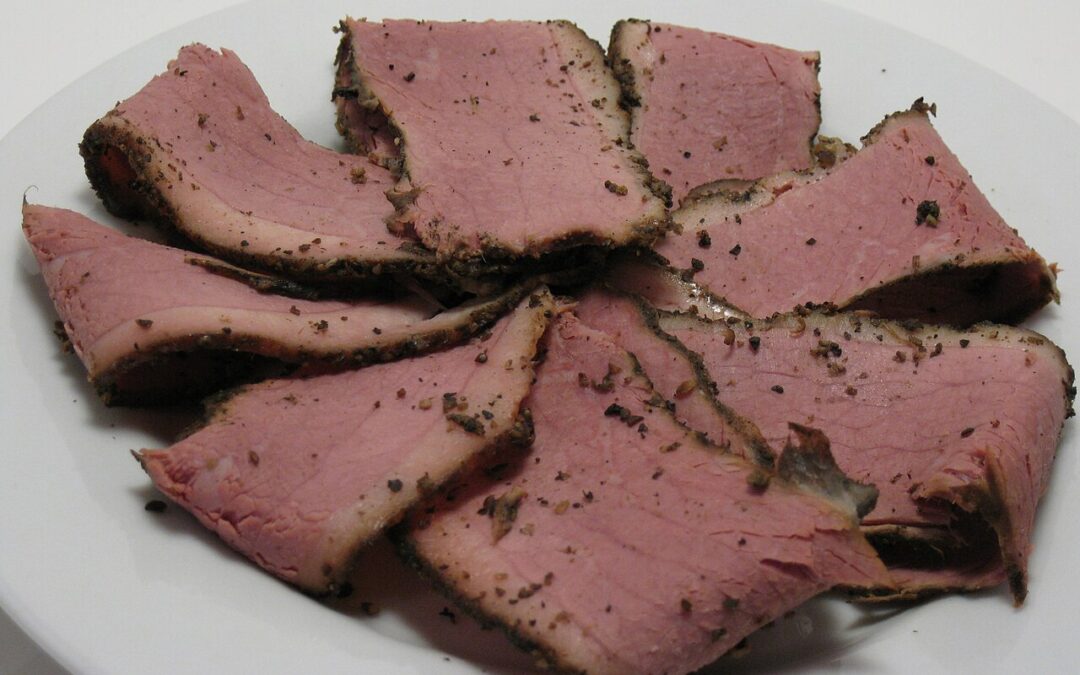
Pastrami, a beloved cured meat, has a rich history that traverses cultures and continents. Its origins can be traced back to Eastern Europe, particularly Romania, where it was known as “pastrama.” Initially, it was a method of preserving meat in the days before refrigeration. Traditional pastrami was made from mutton or goose and involved a meticulous process of curing, spicing, and smoking. The goal was to enhance flavor while ensuring the meat stayed edible for extended periods.
The journey of pastrami to global fame began in the late 19th century, when waves of Jewish immigrants brought their culinary traditions to the United States. In New York City, pastrami found a new home, evolving into the beef-based delicacy that is now iconic. The shift to beef, particularly brisket, was driven by availability and local preferences. By the early 20th century, delicatessens in New York were serving pastrami sandwiches, solidifying its status as a staple in American cuisine.
Geographically, pastrami has been embraced far beyond its roots. In the United States, it’s most closely associated with Jewish delis, particularly in cities like New York and Los Angeles. Internationally, variations exist in Turkey, where similar spiced meats like pastırma are popular, and in other regions influenced by Eastern European and Mediterranean cuisines.
The most famous pastrami dish remains the pastrami sandwich, piled high on rye bread with mustard, often accompanied by a pickle. However, pastrami also features in other dishes like pastrami burgers, pastrami hash, and even pizza toppings. Its rich, smoky flavor and tender texture make it a versatile ingredient.
From its humble beginnings as a preservation method to a global culinary icon, pastrami’s story is one of adaptation and enduring appeal of flavorful food.
Image Credit: https://wikipedia.org
_ _ _
© CHURRASCO PHUKET STEAKHOUSE / ALL RIGHTS RESERVED
>>> Reprinting, reposting & sharing allowed, in exchange for a backlink and credits <<<
Churrasco Phuket Steakhouse serves affordable Wagyu and Black Angus steaks and burgers. We are open daily from 12noon to 11pm at Jungceylon Shopping Center in Patong / Phuket.
We are family-friendly and offer free parking and Wi-Fi for guests. See our menus, reserve your table, find our location, and check all reviews here:
https://ChurrascoPhuket.com/
#Churrascophuket #jungceylon #phuketsteakhouse #affordablewagyu #wagyu
by Ross Kingsley | Jan 15, 2025 | KNOWLEDGE: MEAT ESSENTIALS
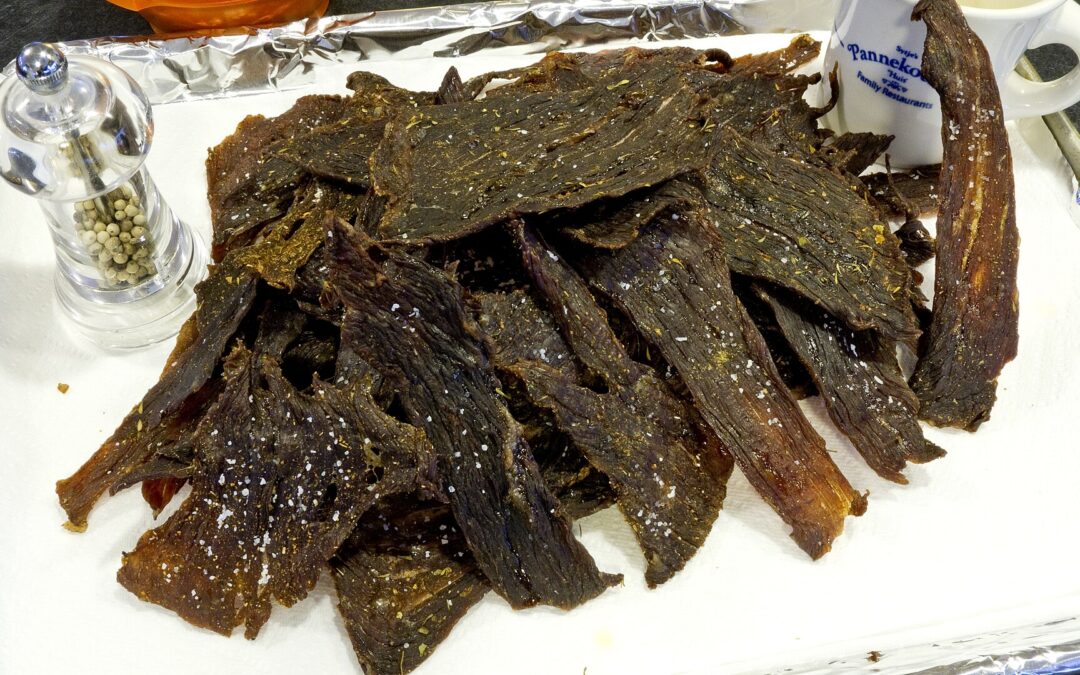
Beef jerky, with its rich history and global adaptations, is a testament to humanity’s ingenuity in preserving food. This dried, cured meat has roots tracing back thousands of years, originating as a practical solution for sustenance during long journeys or lean seasons. Among its global counterparts, the Chinese bakkwa stands out as a flavorful variation that blends tradition with culinary finesse.
The origins of jerky can be found in cultures worldwide. In South America, the Quechua people developed “charqui,” a technique of salting and sun-drying strips of meat, which influenced modern jerky. Native Americans crafted pemmican, a mixture of dried meat, fat, and berries, for endurance during harsh winters. Across continents, the necessity to preserve meat birthed unique approaches that resonate today.
In China, bakkwa (肉干), a close cousin of jerky, has been enjoyed for centuries. Unlike its drier Western counterparts, bakkwa is tender, slightly sticky, and bursting with flavor. Made from minced or thinly sliced meat—often pork or beef—it is marinated in a mixture of soy sauce, sugar, and spices before being grilled or air-dried. Traditionally associated with Lunar New Year celebrations, bakkwa has become a popular snack enjoyed year-round, bridging the gap between cultural heritage and contemporary tastes.
Modern uses of jerky, including bakkwa, extend far beyond snack food. Crumbled jerky enhances salads, soups, and flatbreads with rich, savory notes. Rehydrated strips can elevate stews and braises, infusing them with intense umami flavor. Gourmet variations of bakkwa now feature exotic meats or health-conscious ingredients, further broadening its appeal.
From South American charqui to Chinese bakkwa, beef jerky exemplifies the creative ways cultures adapt to their environment. What began as a simple preservation method has transformed into a global culinary art, celebrating the ingenuity of tradition while embracing innovation.
Image Credit: https://wikipedia.org
_ _ _
© CHURRASCO PHUKET STEAKHOUSE / ALL RIGHTS RESERVED
>>> Reprinting, reposting & sharing allowed, in exchange for a backlink and credits <<<
Churrasco Phuket Steakhouse serves affordable Wagyu and Black Angus steaks and burgers. We are open daily from 12noon to 11pm at Jungceylon Shopping Center in Patong / Phuket.
We are family-friendly and offer free parking and Wi-Fi for guests. See our menus, reserve your table, find our location, and check all reviews here:
https://ChurrascoPhuket.com/
#Churrascophuket #jungceylon #phuketsteakhouse #affordablewagyu #wagyu
by Ross Kingsley | Jan 14, 2025 | DECODING GRAPES: FROM VINES TO VINTAGE
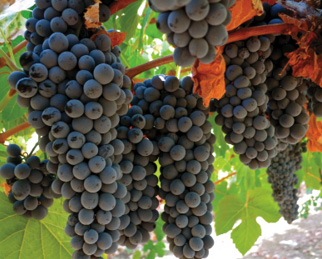
This grape is heralded as Portugal’s flagship variety, with a rich history and an enduring reputation for producing some of the country’s most iconic wines. Touriga Nacional is a name that resonates within the world of wine, particularly for those who appreciate the depth and complexity of Portuguese viticulture.
Origins and History
Touriga Nacional’s roots lie firmly in the soils of Portugal, where it has been cultivated for centuries. While its exact origins are somewhat shrouded in mystery, the grape is most closely associated with the Dão and Douro wine regions. It was historically used as a blending grape in Port production, prized for its intense flavors and tannic structure. Over time, it has also gained recognition as a stand-alone varietal capable of producing exceptional still wines.
In the mid-20th century, Touriga Nacional faced a decline in plantings due to its low yields, which made it less attractive to growers. However, modern viticultural practices and a renewed focus on quality over quantity have sparked a resurgence, solidifying its status as a cornerstone of Portuguese winemaking.
Famous Wines
Touriga Nacional is a key player in the production of Port, lending richness, depth, and age-worthy structure to this fortified wine. Beyond Port, it has become a star in dry red wines from the Douro and Dão regions. These wines often showcase bold flavors of blackberry, blueberry, and plum, complemented by floral notes of violet and a distinctive earthy undertone.
International acclaim has also brought attention to blends featuring Touriga Nacional. It is frequently combined with other native varieties like Touriga Franca and Tinta Roriz, resulting in complex and balanced wines that are both approachable and sophisticated.
Geographical Reach
While Portugal remains the heartland of Touriga Nacional, the grape’s reputation has led to its cultivation in other parts of the world. It has found a home in countries like Australia, South Africa, and the United States, where winemakers are experimenting with its unique qualities. Despite its global presence, the grape continues to thrive best in its native terroir, particularly in the granite and schist soils of the Douro and Dão.
Conclusion
Touriga Nacional is a testament to the rich heritage of Portuguese wine. Its bold flavors, complex aromas, and versatility make it a treasure for both winemakers and wine enthusiasts. Whether in a robust Port or a refined table wine, this grape offers a taste of Portugal’s winemaking legacy.
Image Credit: https://winemakermag.com
_ _ _
© CHURRASCO PHUKET STEAKHOUSE / ALL RIGHTS RESERVED
>>> Reprinting, reposting & sharing allowed, in exchange for a backlink and credits <<<
Churrasco Phuket Steakhouse serves affordable Wagyu and Black Angus steaks and burgers. We are open daily from 12noon to 11pm at Jungceylon Shopping Center in Patong / Phuket.
We are family-friendly and offer free parking and Wi-Fi for guests. See our menus, reserve your table, find our location, and check all reviews here:
https://ChurrascoPhuket.com/
#Churrascophuket #jungceylon #phuketsteakhouse #affordablewagyu #wagyu
by Ross Kingsley | Jan 14, 2025 | DECODING GRAPES: FROM VINES TO VINTAGE
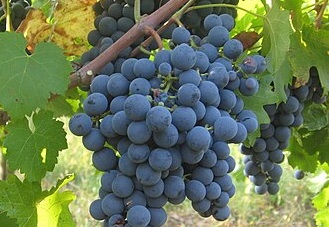
Carmenère, often referred to as the “lost grape of Bordeaux,” is a fascinating varietal with a rich history and a unique flavor. This deep red grape, once a staple in France, now thrives predominantly in Chile, where it has found a second home and gained global recognition.
Origins and History
The Carmenère grape originates from the Bordeaux region in France, where it was traditionally used as a blending grape in classic Bordeaux wines. Its name is derived from the French word “carmine,” a nod to the deep crimson hue of its wine. During the mid-19th century, a devastating phylloxera epidemic wiped out many vineyards across Europe, and Carmenère was thought to be extinct.
In the 1990s, the grape made a remarkable comeback. Viticulturists in Chile discovered that vines they believed to be Merlot were, in fact, Carmenère. This revelation reinvigorated interest in the grape and cemented Chile as its modern stronghold. Today, Chile accounts for the vast majority of Carmenère production, particularly in the Colchagua and Maipo valleys.
Flavor Profile
Carmenère wines are celebrated for their vibrant flavors and approachable structure. They typically exhibit notes of red and black fruits, such as cherry, raspberry, and plum, often complemented by hints of green pepper, tobacco, and spices. With moderate acidity, smooth tannins, and a medium to full body, Carmenère wines offer versatility and a distinctive character.
Famous Wines and Blends
Though Carmenère is sometimes used in blends to add complexity, it truly shines as a single-varietal wine. Chilean wineries such as Viña Montes and Casa Silva have crafted exceptional examples that highlight the grape’s depth and potential. Premium Carmenère wines often age well, developing additional layers of complexity over time.
Geographical Reach
While Chile is the epicenter of Carmenère production, the grape has seen limited cultivation in other parts of the world. Small plantings exist in Italy, the United States, and even China. In each of these regions, Carmenère reflects its terroir while maintaining its hallmark characteristics.
A Global Revival
Carmenère’s journey from near-extinction to global recognition is a testament to the resilience of this remarkable grape. Whether you’re a seasoned wine lover or a curious beginner, exploring Carmenère offers a taste of history, culture, and innovation.
Image Credit: https://wikipedia.org
_ _ _
© CHURRASCO PHUKET STEAKHOUSE / ALL RIGHTS RESERVED
>>> Reprinting, reposting & sharing allowed, in exchange for a backlink and credits <<<
Churrasco Phuket Steakhouse serves affordable Wagyu and Black Angus steaks and burgers. We are open daily from 12noon to 11pm at Jungceylon Shopping Center in Patong / Phuket.
We are family-friendly and offer free parking and Wi-Fi for guests. See our menus, reserve your table, find our location, and check all reviews here:
https://ChurrascoPhuket.com/
#Churrascophuket #jungceylon #phuketsteakhouse #affordablewagyu #wagyu
