
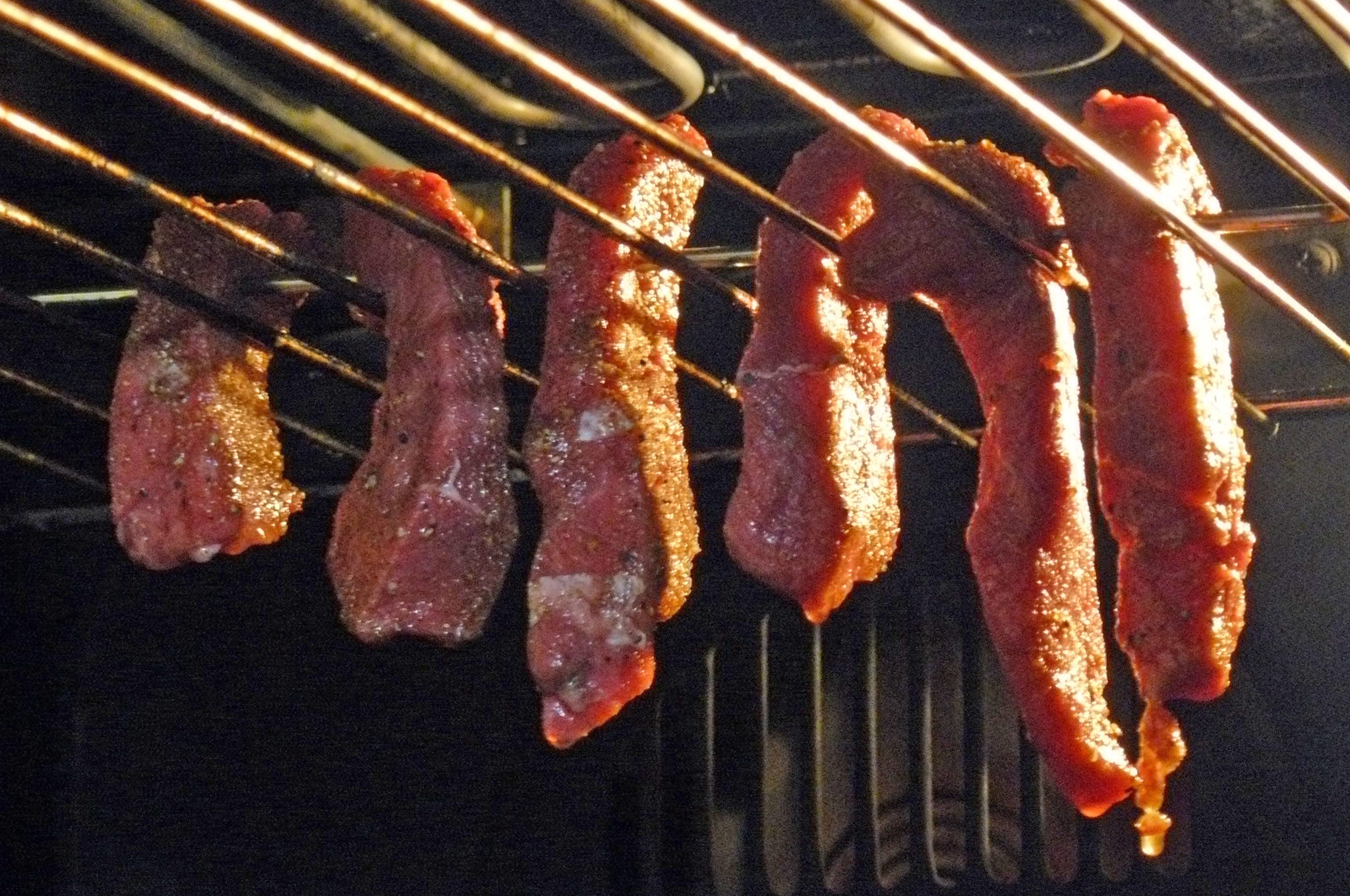
South Africa’s favourite dried meat has attitude and firm views about its American cousin
My introduction to biltong could hardly have been better staged. Years ago, on a game reserve in South Africa, we set off before sunrise and soon came across a pride of lions having breakfast. They had killed a kudu and were busy making short work of it, while we sat nearby in an open Land Rover. It was highly surreal, considering that there was nothing separating my daughter and me from a bunch of hungry lions, other than the reassurance of our guide that we were safe.
He then did something better, reaching into his bag and passing around some biltong. So there we were, watching lions munching kudu while we were nibbling on dried meat ourselves. It was one of those African Moments people like to talk about, but with the lions having gone for the fresher option. I have liked biltong ever since.
When you run a steakhouse, you develop an interest in what different countries do with beef. Argentinians throw it on fire, the French add butter, and the Americans build grills the size of small garages. South Africans, though, discovered that some good meat, salt, vinegar, spice and patience can be quite enough.
Biltong’s origins go back centuries. Indigenous people in southern Africa were preserving game with salt and air-drying it, long before Dutch settlers arrived at the Cape in the 17th century. The newcomers added vinegar and spices familiar from their Asian trade routes, particularly coriander, black pepper and cloves. Biltong emerged so successfully from that meeting of traditions that it has established itself as an enduring part of South Africa’s culinary landscape.
The name itself though is less poetic. Bil means rump or buttock, and tong means tongue or strip. A brutally practical name for a brutally practical food, and that mattered. During the Great Trek of the 19th century, Boer settlers heading inland needed protein that could travel. Biltong stepped up and solved their problems long before vacuum bags, refrigerated trucks and health-and-safety forms arrived.
Today you find it everywhere in South Africa, at butchers, petrol stations, supermarkets and rugby grounds. Beef is the standard, but there is also kudu, springbok, wildebeest and ostrich. There are thick cuts, thin shavings and dry snap sticks. Some like it dry, others want thick pieces with a softer centre and a good strip of fat. Some wine estates even offer biltong pairings, and every South African has an opinion about it.
Ask three South Africans about what real biltong is and you’ll get four answers. There is, however, one subject on which consensus rules – it is not and never will be jerky. Calling biltong that is equivalent to telling an Italian that ketchup is basically tomato sauce. American jerky is generally cut thinner, often sweeter and commonly dried using heat.
Traditional biltong is cured with vinegar, salt and spices and hung to air-dry. It takes longer, and that explains why biltong has character, while jerky often appears to have been designed for a lonely life in a glove compartment.
Biltong also crosses cultural lines in South Africa. In isiZulu it is known as umqwayiba, and regional traditions vary, with some adding fruit or local oils. Dried meat also goes into stews, adding a concentrated savoury punch. While in Cape Town, we even came across a “Creamy Biltong & Wild Mushroom Pasta” on the menu of a smart restaurant on the city’s V&A Waterfront district.
These days, Biltong is popping up in Berlin and Brooklyn, and Hong Kong and Singapore. Helped by the growing appetite for protein snacks, there is chili biltong and peri-peri biltong. And – because apparently somebody had to do it – the world now has “Exotic Truffle Fatty”, infused with black truffle oil. We will leave that last one alone.
Overall, biltong makes a lot of sense for us steak people. We all like to start with good meat, don’t mess with it too much, then give it some salt, some spice and enough time to do the rest. The lions had an even simpler breakfast recipe.
Thankfully, we didn’t end up a part of it that morning.
Image Credit: https://commons.wikimedia.org/wiki/File:BiltongUKOven.jpg
_ _ _
© CHURRASCO PHUKET STEAKHOUSE / ALL RIGHTS RESERVED
Reprinting, reposting & sharing allowed, in exchange for a backlink and credits
Churrasco Phuket Steakhouse serves affordable Wagyu and Black Angus steaks and burgers. We are open daily from 12noon to 11pm at Jungceylon Shopping Center in Patong / Phuket.
We are family-friendly and offer free parking and Wi-Fi for guests. See our menus, reserve your table, find our location, and check all guest reviews here:
https://ChurrascoPhuket.com/
#Churrascophuket #jungceylon #phuketsteakhouse #affordablewagyu #wagyu