
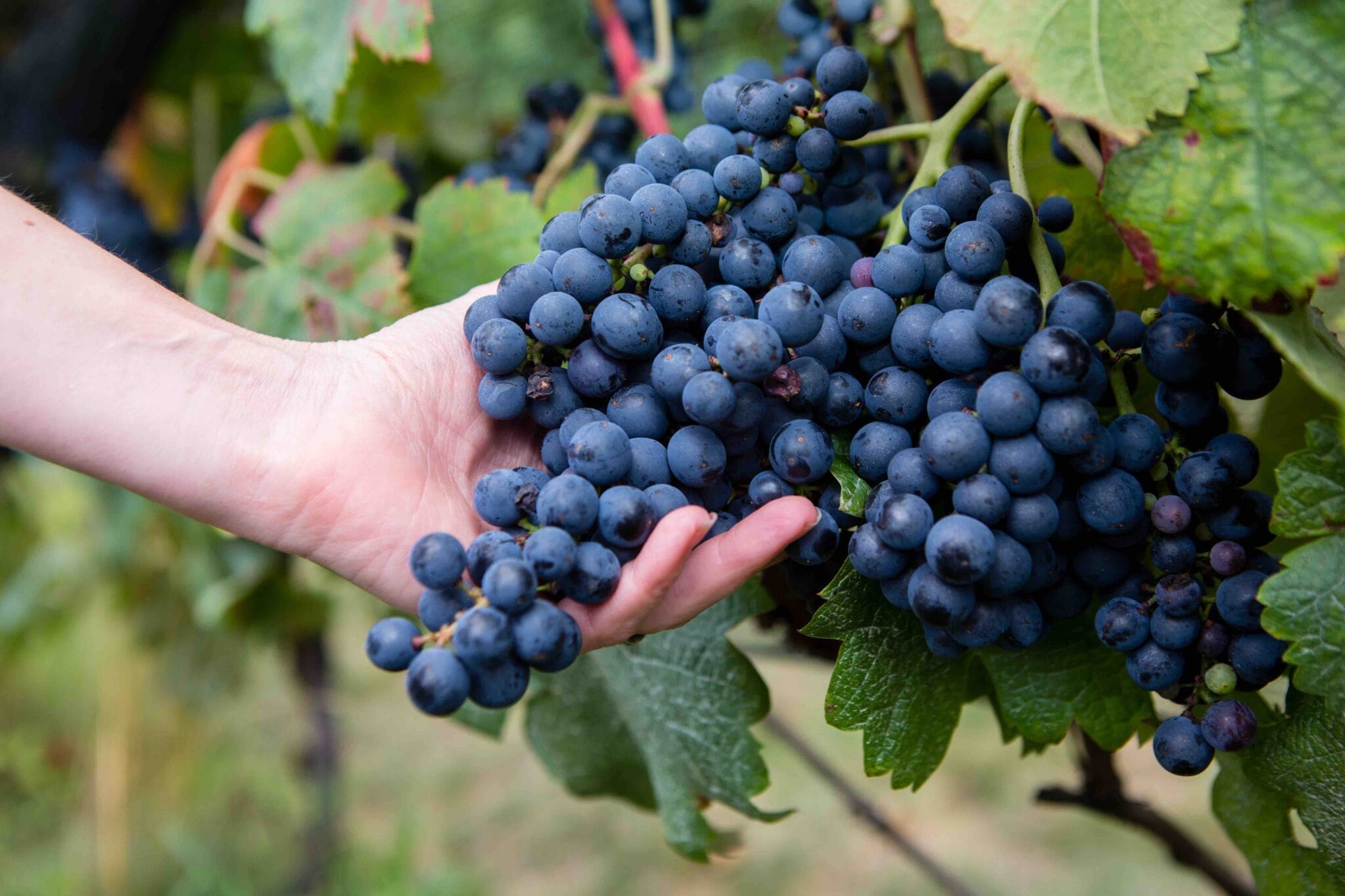
Tannat occupies a particular corner of the world of wine grapes. Not obscure, not fashionable, and certainly not too eager to please. It is a grape defined by structure first, fruit second, and charm only if time and handling permit. For sommeliers and winemakers, that makes it less a crowd-pleaser and more a study in intent.
Its classical home remains Madiran, a small appellation in southwest France where climate and culture conspired to produce wines of unapologetic density. Set between Atlantic influence and the Pyrenean foothills, Madiran combines humidity, warmth and relatively fertile soils, conditions that encourage vigour in the vineyard and demand discipline from the grower. The result was a style that prized longevity over accessibility, with wines built less for immediate pleasure than for eventual resolution, often requiring a decade or more to soften.
Tannat’s chemical profile of high levels of tannins and anthocyanins give the grape its colour saturation and formidable structure. Thick skins and small berries translate into high extract, and with it, high risk. In the cellar, Tannat offers a narrow margin between authority and excess. Maceration length, temperature control and oxygen management are critical decisions.
From this rather uncompromising base, Tannat made its way to South America in the nineteenth century, carried by Basque and Béarnais immigrants who settled in the Río de la Plata region. In Uruguay, it found conditions that allowed for a more balanced expression. Maritime influence moderates extremes, humidity softens tannic edges, and a generally longer growing season encourages phenolic ripeness without excessive harshness. The resulting wines retain structure but with a more immediate drinkability. Uruguay did not dilute Tannat, it translated it.
Modern winemaking has further shaped this second identity. Techniques such as micro-oxygenation, developed in southwest France but widely adopted in Uruguay, allow earlier polymerisation of tannins. Oak usage has become more measured, avoiding the compounding effect of wood on an already structured variety. The goal is no longer to tame Tannat, but to guide it.
Beyond Uruguay, Tannat remains a specialist’s grape, appearing in several other South American contexts. In Argentina’s Salta and other high-altitude regions, it produces wines of notable concentration, often blended but increasingly bottled varietally. In Brazil’s southern state of Rio Grande do Sul, it plays a supporting but credible role. Peru has experimented with small plantings, mostly in coastal desert vineyards, where the grape ripens easily and sheds some of its harsher edges. Production remains limited and exploratory, but growing. Even in Bolivia, at extreme altitudes, Tannat has begun to appear in niche quantities.
In the glass, Tannat is deep to opaque in colour, centred on black fruit, cocoa, dried herbs and, with age, leather and tobacco. For the sommelier, the clear proposition is that Tannat belongs with protein, with fat, with dishes that require a wine of equal presence. Decanting is compulsory in youth.
Image Credit: https://www.arterrawines.com/a-passion-for-tannat/
_ _ _
© CHURRASCO PHUKET STEAKHOUSE / ALL RIGHTS RESERVED
Reprinting, reposting & sharing allowed, in exchange for a backlink and credits
Churrasco Phuket Steakhouse serves affordable Wagyu and Black Angus steaks and burgers. We are open daily from 12noon to 11pm at Jungceylon Shopping Center in Patong / Phuket.
We are family-friendly and offer free parking and Wi-Fi for guests. See our menus, reserve your table, find our location, and check all guest reviews here:
https://ChurrascoPhuket.com/
#Churrascophuket #jungceylon #phuketsteakhouse #affordablewagyu #wagyu