
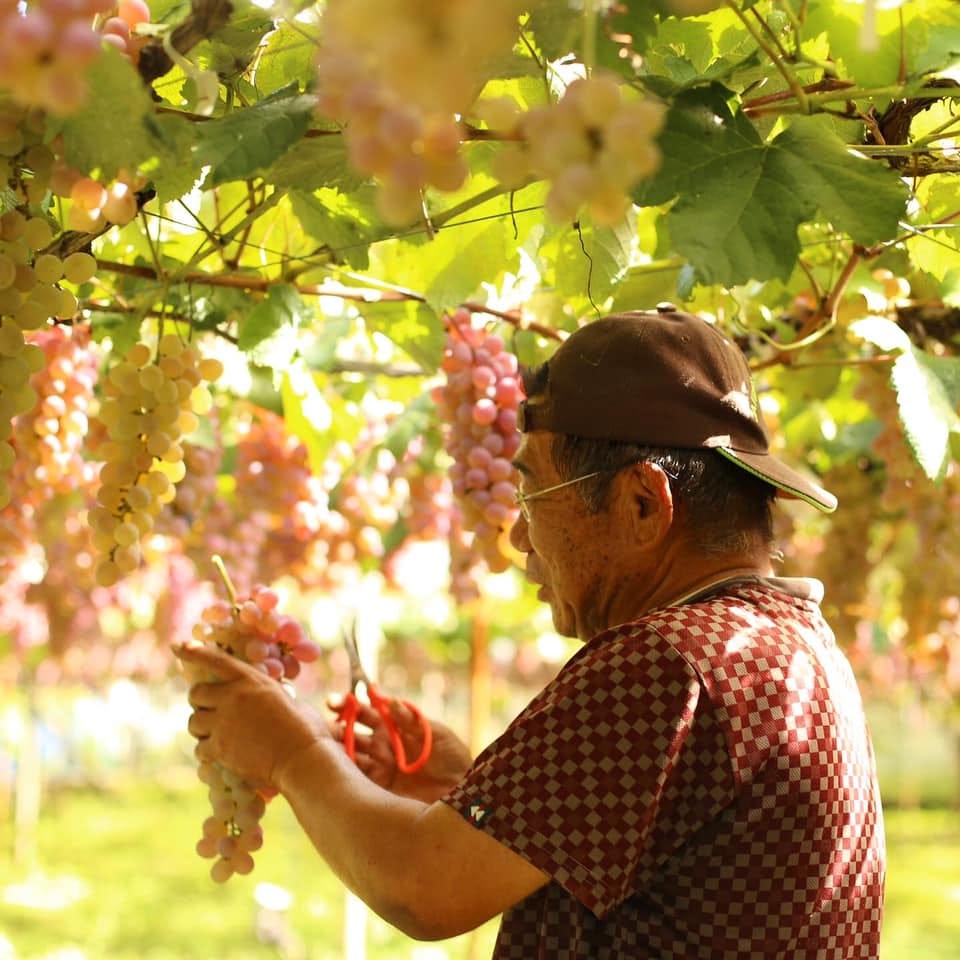
Koshu is one of those grapes that politely ignores everything the global wine market expects it to do. It has been grown in Japan for close to a thousand years, mainly in Yamanashi Prefecture at the foothills of Mount Fuji, and it has no interest whatsoever in being mistaken for Sauvignon Blanc, Chardonnay, or anything else you may recognise.
From a technical standpoint, we can clear one thing up immediately. Yes, Koshu is a white wine. It is vinified as such, fermented from clear juice with minimal skin contact, bottled pale, dry, and nervously understated. Except that this definition is about as helpful as calling a Samurai’s Katana “just another knife”.
The grape itself has pink skins, visually closer to Pinot Gris than to anything grown in Chablis. Phenolics are vanishingly low, which means even the more adventurous skin contact experiments tend to produce texture rather than tannin. Alcohol levels remain modest, acidity is clean rather than bracing, and the wines seem almost allergic to excess.
If you are looking for volume, ripeness, or swagger, Koshu will not oblige, but whisper instead. Citrus peel rather than citrus fruit. White peach rather than nectarine. Pear skin, green apple, yuzu, sometimes a saline or mineral note that feels more like an echo than a statement. Oak, when used at all, is handled with such restraint that it barely leaves fingerprints. Many producers avoid it entirely, aware that even a hint of wood risks overwhelming the grape’s naturally soft spoken character.
This is where Western tasting frameworks start to wobble. Koshu is deeply unimpressive as a solo glass. Put it in a blind tasting lineup designed around aromatic impact and it will almost certainly finish last, looking faintly embarrassed by the attention. Judge it by Western standards of varietal typicity and it seems incomplete.
Then you put food on the table and everything snaps into focus.
Koshu is not a wine built to be admired, but to behave. Japanese cuisine, with its obsession with umami and balance, has a remarkable ability to make loud wines look clumsy. High alcohol, oak driven whites and fruit forward styles often trip over sashimi, tempura, or lightly grilled fish. Koshu does not. Low phenolics avoid metallic clashes with seafood. Acidity refreshes without cutting. Fruit stays in the background where it belongs in this culinary context.
Sushi, sashimi, tempura, grilled fish, vegetable driven dishes, this is Koshu’s natural habitat. It also performs quietly well with modern Japanese and pan Asian cooking that values restraint over heat. Expecting it to handle rich sauces or aggressive spice is missing the point.
In recent years, Koshu has been gently pushed out of its comfort zone. Sparkling versions sharpen its citrus and saline edges. Amphora ageing adds texture without weight. Skin contact expressions introduce a subtle grip and herbal complexity while stopping well short of orange wine theatrics. These styles are interesting, but they all remain firmly within Koshu’s core philosophy of understatement.
Koshu’s biggest challenge is not quality but expectation. It refuses to shout, and refuses to perform tricks in the glass. In a global wine culture obsessed with power, it feels almost subversive. So yes, Koshu is a white wine in the Western sense. It sits in the white wine category, ticks all the technical boxes, and behaves exactly as it should. But philosophically, it is something else entirely. It is a wine that prioritises harmony over expression and usefulness over ego.
Main Producers & Labels:
All of these producers grow Koshu in Yamanashi’s volcanic soils and cool mountain-influenced climate, which give the wines their characteristic freshness, subtle citrus tones, and food-friendly acidity.
-
Grace Wine – Grace Koshu (multiple cuvées)
One of the benchmark producers of Koshu, Grace Wine has been a leader in Japanese wine for over a century and is widely regarded as a standard-bearer for this variety. Their Grace Koshu is pale, refined, and effortless at the table, with subtle citrus and mineral notes that show what this grape can do at its best. -
Suntory Tomi no Oka – Tomi Koshu
The Koshu bottlings from Suntory’s Tomi no Oka estate have gained serious critical attention internationally. Their Tomi Koshu was awarded Best in Show at the Decanter World Wine Awards, striking a balance of elegance and purity that highlights the finesse of the grape. -
Kurambon Wine – N Koshu / N Blanc
A smaller, artisanal family winery with a strong focus on biodynamic and minimal-intervention winemaking. Their N Koshu (often wild-yeast fermented and barrel-aged) is a deeper, more textured expression, while their unoaked, crisp versions showcase Koshu’s light, fresh side. -
Château Mercian – Koshu & Special Labels
Château Mercian is one of the longest-established Japanese wine houses and has been important in getting Koshu recognition domestically and abroad. Their Château Mercian Koshu bottlings demonstrate classic, food-driven style with delicate fruit and minerality. -
Marufuji – Rubaiyat Koshu (Barrel-Aged and Sur Lie styles)
Marufuji’s Rubaiyat Koshu range includes both traditional stainless steel ferments and barrel-aged or sur lie styles, offering a broader palette of expression. From pure and light to rounder, textural wines that still retain Koshu’s signature restraint.
Honourable mentions: Katsunuma Jyozo Winery, Morita Koshu Winery (Chanmoris), Fujiclair Koshu, and boutique producers like 98 Wines.
Image Credit: https://www.koshuvalley.com/wineries
_ _ _
© CHURRASCO PHUKET STEAKHOUSE / ALL RIGHTS RESERVED
Reprinting, reposting & sharing allowed, in exchange for a backlink and credits
Churrasco Phuket Steakhouse serves affordable Wagyu and Black Angus steaks and burgers. We are open daily from 12noon to 11pm at Jungceylon Shopping Center in Patong / Phuket.
We are family-friendly and offer free parking and Wi-Fi for guests. See our menus, reserve your table, find our location, and check all guest reviews here:
https://ChurrascoPhuket.com/
#Churrascophuket #jungceylon #phuketsteakhouse #affordablewagyu #wagyu