
Wine has been many things through history. A social glue. A quiet companion for long evenings. A diplomatic shortcut at questionable business dinners. Yet long before sommeliers debated minerality with alarming seriousness, wine was performing a far loftier task, acting as a bridge between the earthly and the divine. Humanity discovered fermentation, raised a cup, and suddenly the gods felt a touch more approachable. Perhaps they even smiled back after the third glass.
In the ancient world, the marriage between vineyards and temples was entirely logical. A drink that began life as humble grapes and ended with a pleasantly altered world view held a symbolic charm that water could never hope to deliver. In Egypt and Mesopotamia, wine appeared in offerings and royal ceremonies that tracked the seasons. To sip wine was to taste a little witchcraft. To offer it to the gods was generous, diplomatic, and motivated by the desire to avoid unpleasant surprises at harvest time.
Judaism added structure and discipline to the relationship. Wine became part of ritual in a deliberate and thoughtful way. On the Sabbath, the Kiddush blesses a cup of wine that draws a clear line between the working week and sacred time. Passover requires four cups, each representing a stage of liberation. The script is precise, and the mood is contemplative. The wine is there to lift the ceremony, not the celebrant. It is spiritual elevation with well defined boundaries.
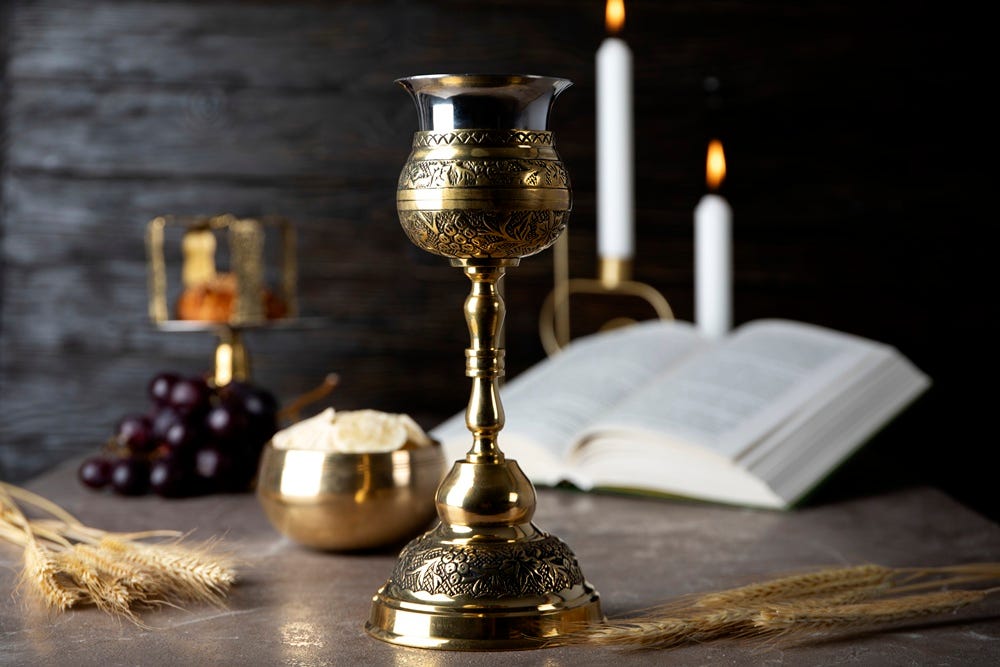
Christianity adopted wine and assigned it a weight that shaped centuries of devotion. In the Eucharist, the wine represents the blood of Christ. It is not appreciated for aroma or acidity, but for its deep symbolic meaning. Remembrance, sacrifice, and renewal reside in a single cup. Some communities use wine while others prefer grape juice, yet the message remains intact. Throughout history, a chalice on an altar has stirred more emotion than the grandest wine cellar.
Hindu traditions add their own colourful variation. In most practice, alcohol is avoided, yet certain regional and Tantric rites employ wine as part of tightly controlled ceremonies. These are not opportunities for unabashed merriment. They are precise acts of symbolism, where wine represents transformation and the dissolution of the ordinary self. It functions as a tool for spiritual insight rather than indulgence. The focus is not the palate, but the philosophy.
Ancient Greece and Rome, never shy about fun and festivals, embraced wine with dramatic flair. Dionysus and Bacchus presided over events where wine symbolised freedom, joy, and the delicious tension between order and ecstasy. Despite modern imagination, the symposium was not a reckless drinking spree. It was structured conversation aided by wine, not drowned by it. It encouraged debate, reflection, and occasionally a highly optimistic attempt at poetry or song writing. The ancients understood that a shared cup could unlock a shared state of mind.
Across indigenous and traditional cultures, fermented beverages hold their own sacred authority. Georgian Qvevri wine is blessed at seasonal rituals. Andean Chicha is offered to Pachamama. African palm wine marks marriages, harvests, and rites of passage. In these settings, the drink represents continuity, ancestry, and profound respect for the land – a reminder that life sits atop deep cultural roots.
Take away the stylistic differences and a simple truth emerges. Wine is a small everyday miracle in a glass, a reminder that grapes can improve dramatically with a little patience and the right conditions. People often do the same, especially when a balanced red in your glass gives the world around you a gentle glow.
Of course, everyone knows at least one person who can turn a casual wine tasting note into a theological argument about oak, climate, and the moral duty of proper decanting. When that happens, the best remedy is to drink more wine. You will find peace, and even the most agnostic person in the room will hear the angels sing.
Image Credit: https://freepik.com
_ _ _
© CHURRASCO PHUKET STEAKHOUSE / ALL RIGHTS RESERVED
Reprinting, reposting & sharing allowed, in exchange for a backlink and credits
Churrasco Phuket Steakhouse serves affordable Wagyu and Black Angus steaks and burgers. We are open daily from 12noon to 11pm at Jungceylon Shopping Center in Patong / Phuket.
We are family-friendly and offer free parking and Wi-Fi for guests. See our menus, reserve your table, find our location, and check all guest reviews here:
https://ChurrascoPhuket.com/
#Churrascophuket #jungceylon #phuketsteakhouse #affordablewagyu #wagyu
Thanks for sharing. I read many of your blog posts, cool, your blog is very good. https://accounts.binance.info/zh-CN/register-person?ref=WFZUU6SI
I am sure this piece of writing has touched all the internet people, its really really good paragraph on building up new weblog.
I’ll immediately snatch your rss feed as I can’t find your email subscription link or e-newsletter service. Do you’ve any? Please permit me know in order that I may subscribe. Thanks.
Hello, you used to write great, but the last few posts have been kinda boring… I miss your super writings. Past several posts are just a little bit out of track! come on!
I am sure this article has touched all the internet viewers, its really really pleasant article on building up new website.
I just couldn’t leave your web site before suggesting that I really enjoyed the standard info an individual provide on your visitors? Is gonna be again incessantly in order to check out new posts
I’ve been browsing on-line more than 3 hours today, but I by no means found any attention-grabbing article like yours. It¦s lovely value sufficient for me. Personally, if all webmasters and bloggers made just right content material as you probably did, the net will likely be a lot more useful than ever before.
Thank you for your sharing. I am worried that I lack creative ideas. It is your article that makes me full of hope. Thank you. But, I have a question, can you help me? https://www.binance.com/zh-CN/register?ref=WFZUU6SI
I am sure this paragraph has touched all the internet people, its really really good article on building up new weblog.
If some one desires expert view about running a blog after that i advise him/her to pay a quick visit this blog, Keep up the good work.
You made some really good points there. I looked on the web to learn more about the issue and found most individuals will go along with your views on this website.